
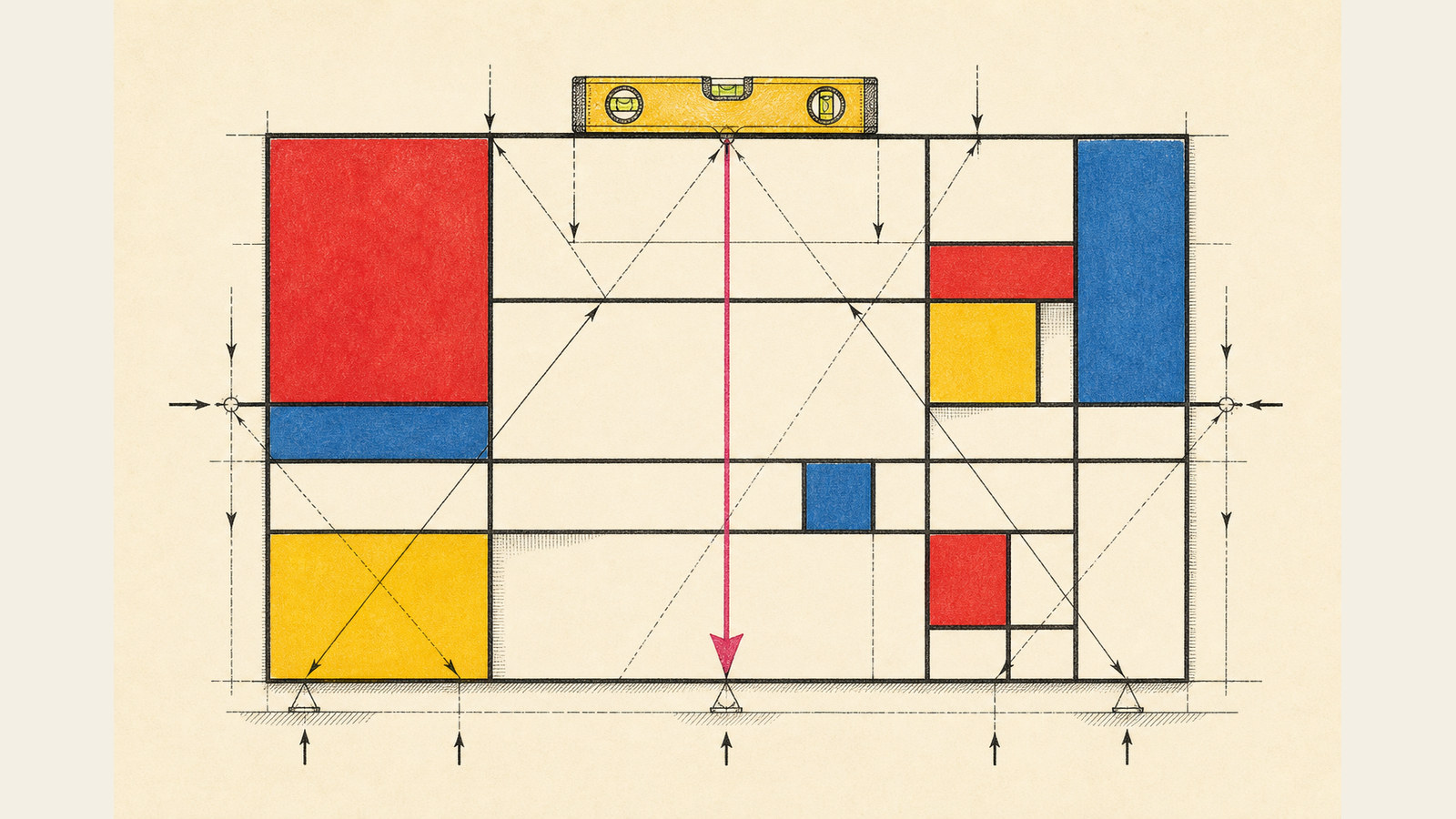
A small game about keeping a Mondrian painting from falling over. Built for a game jam celebrating the art that entered the public domain in 2026.
Balance is the second of my equilibrium studies. I made it for Gaming Like It’s 1930, a jam that marks the works passing into the public domain that year. On 1 January 2026 Mondrian’s Composition with Red, Blue and Yellow (1930) became free to use, so I built a game out of it.
The idea
The board is a Mondrian grid: primary colours, black lines, white space. It is not a puzzle with a solution. It is a structure under stress. Left alone, the composition drifts. Colours gather weight, lines take load, and the harmony slowly degrades. Your job is not to build anything. It is to step in, carefully and not too often, to keep the thing alive.
There is no score, no timer, and no goal beyond not letting it collapse. The one principle underneath it all:
Balance is not stability. Balance is continuous adjustment.
How it behaves
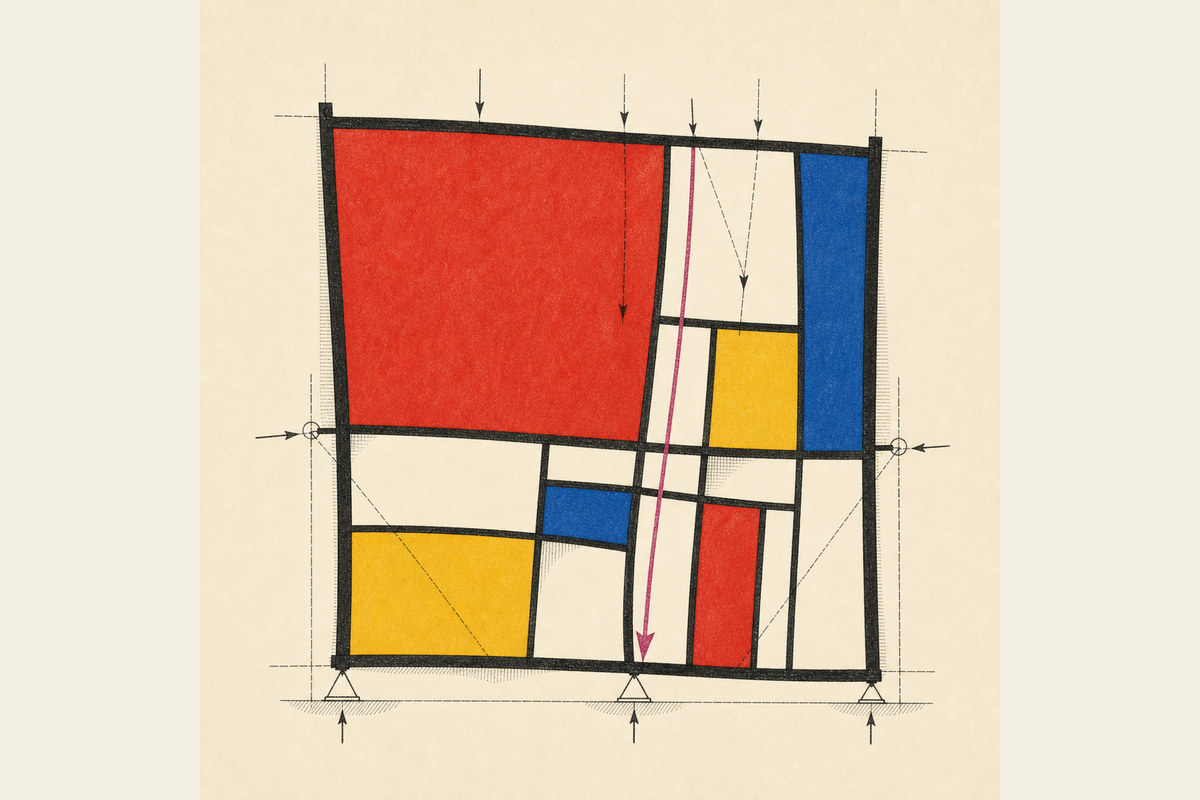
The canvas works like a physical structure. Red and blue press down, white floats. Big areas dominate small ones. Weight placed at an edge gains leverage. Lines thicken as they take the strain. You drag lines to move them, press space to split the largest rectangle, double-click to merge two of the same colour.
The game never tells you how you are doing. The feedback is in the picture. Lines grow heavy, colours fatigue, motion turns sticky. If it feels uneasy, it is. Splitting buys you flexibility at the cost of stability. Merging restores calm but risks one colour taking over. Neither move is good or bad on its own, which is the whole point.
Two modes
Balance is the gentle one, a canvas drifting like a mobile in still air. Equilibrium is the argument: the board fights your arrangements with growing force, and the only question is how long you can hold it together before it goes rigid and stops. You do not lose to a single mistake. You lose when the corrections stop helping.
You can play it in the browser, no install.