
- UK release: January 2016
- Director: Alejandro G. Inarritu · Writers: Mark L. Smith; Alejandro G. Inarritu
- Studio / distributor: New Regency; 20th Century Fox
- Genre: Survival western / revenge drama · Runtime: 156 minutes (BBFC 15)
- Main cast: Leonardo DiCaprio (The Wolf of Wall Street, The Departed) as Hugh Glass; Tom Hardy (Bronson, Warrior) as John Fitzgerald; Domhnall Gleeson (About Time, Ex Machina) as Captain Andrew Henry; Will Poulter (We’re the Millers) as Jim Bridger
- IMDb: 8.0 / 10 · Rotten Tomatoes: 78% critics / 84% audience · My rating: 8.5 / 10
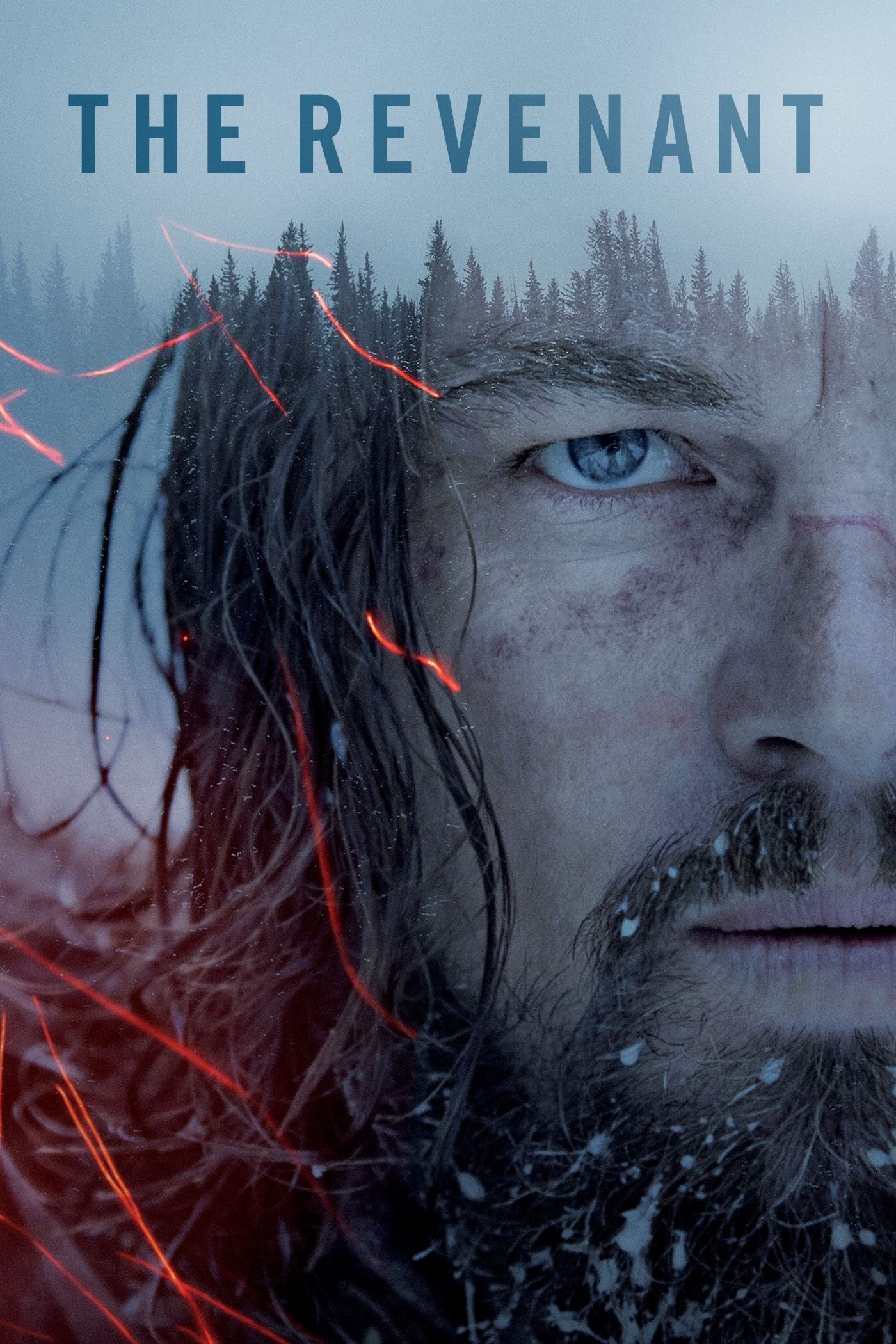
Alejandro Inarritu arrives at The Revenant straight off Birdman, the backstage one-take stunt that won him best director a year ago, and he has clearly decided that simulating a single unbroken take in a theatre corridor was too easy. This time he has dragged the whole production out into the Canadian and Argentine wilderness, shot it in sequence on natural light alone, and asked his leading man to crawl through freezing rivers and eat raw bison liver on camera. The early word from the set has been all hardship and walkouts and overrun budget. The thing nobody quite expected is how much of that suffering ends up on the screen as beauty.
The setup
Hugh Glass (Leonardo DiCaprio) is a fur trapper and guide leading a expedition company through unmapped territory in the 1820s, in country that belongs to no one and to everyone with a rifle. A native war party scatters the men, and in the retreat Glass is mauled half to death by a grizzly bear protecting her cubs. Too broken to move and too stubborn to die, he is left in the care of a few men who are paid to wait with him until the end. When one of them, John Fitzgerald (Tom Hardy), decides the waiting is not worth his life, Glass is abandoned in a shallow grave and given a personal reason to keep breathing. What follows is a long, cold haul through the wilderness, equal parts survival and the slow accumulation of a debt.
The cast
DiCaprio spends most of the film without a usable line of dialogue, and the performance is built almost entirely from breath, weight and endurance. It is a very physical piece of acting, the kind that the Wolf of Wall Street showman in him usually keeps in reserve, and it works because he commits to the cold and the pain so completely that you stop watching a movie star and start watching a body trying not to stop. Tom Hardy is the more conventionally enjoyable turn. His Fitzgerald is a coil of grievance and frontier logic, mumbling and dangerous, a man who has done the arithmetic of his own survival and is unbothered by where it leaves anyone else. Domhnall Gleeson lends the young captain a thread of decency that the country keeps trying to bleed out of him, and Will Poulter is quietly good as the boy caught between the two older men’s idea of honour.
The craft
This is where the film makes its case. Emmanuel Lubezki, who shot Birdman and Gravity, works almost entirely in available daylight, which gave the production roughly ninety usable minutes a day and gives the finished film a clarity that no amount of artificial lighting can fake. The camera drifts in close enough to fog the lens with the actors’ breath, then pulls back to set tiny figures against enormous indifferent country. The bear attack is the set piece everyone will talk about, a single seemingly unbroken assault that is genuinely hard to sit through, but the quieter landscapes do as much work: frozen rivers, low grey skies, forests that go on past any horizon. Ryuichi Sakamoto and Alva Noto’s score is a low drone of strings and electronics that sits under the picture like weather rather than music. At two and a half hours the film tests your patience on purpose, and the cold is so well photographed that you come out wanting a warm room.
How it stacks up
The obvious cousin is The Grey, Joe Carnahan’s lean man-against-wilderness film, though The Revenant trades that one’s tightness for grandeur and runs nearly an hour longer. The deeper lineage runs back to Jeremiah Johnson, Sydney Pollack’s elegiac mountain-man picture, and to Inarritu’s own Apocalypto-adjacent interest in bodies under extreme duress. Where Jeremiah Johnson romanticised the frontier, this film mostly wants to freeze you. As revenge stories go it is closer to a pilgrimage than a thriller, and viewers who arrive expecting the propulsion of a straight payback movie may find the pacing punishing. As an immersion into a place and a state of suffering, it has very few rivals.
Critics versus the rest of us
Critics are admiring but a little wary, sitting around 78%, with the praise going almost unanimously to Lubezki’s images and DiCaprio’s commitment and the reservations going to the relentless misery and the slim story stretched over a long runtime. Audiences are warmer, at 84%, which fits a film that rewards surrender rather than analysis. The recurring complaint, that it is gruelling, is true and slightly beside the point: the gruelling quality is the experience on offer, not a flaw in delivering it. The fair criticism is the thinness of the plot, which is a single straight line dressed in spectacular clothes.
Verdict
I value atmosphere and immersion and the sense of being taken somewhere I could not otherwise go, and on those terms this delivers about as completely as anything I have seen on a big screen this year. It is not a film I will reach for casually, the way I would a tighter genre piece; it is too cold and too long for a comfortable rewatch. But the craft is close to flawless, the central performance earns every bit of its hype, and the wilderness photography is the kind you remember in your bones. It loses a little for the slenderness of the story and the sheer endurance it asks of you. What it gives back is a world rendered with total conviction. 8.5⁄10.
Availability: On general release in UK cinemas now. See it on the largest screen you can find; this is a film made for scale.
Update
Added since this review first appeared: the film went on to win Inarritu a second consecutive best director Oscar and finally handed Leonardo DiCaprio the best actor award after years of near misses, with Lubezki taking a third straight cinematography prize. Its reputation has settled as an awards-season landmark that is more admired than rewatched, the survival epic people respect deeply and revisit rarely. It is now widely available on disc and digital, and streams on various platforms depending on region.
BBFC content advice
Rated 15 by the BBFC for strong violence, bloody injury detail, language, sexual violence. The notes below may contain spoilers.
Violence: Scenes of violence include people being hit by arrows and bullets, and exchanging blows including with bladed weapons. A man is attacked and tossed about by a bear.
Injury detail: The bear attack results in some focus on deep bloody wounds to the victim. There is also brief focus on bloody injuries resulting from various acts of violence, including implied scalping.
Sexual violence: There is also a scene of sexual violence in which a man rapes a woman. The sequence is brief and lacking in nudity.
Language: There are multiple uses of strong language (‘f**k’). Other bad language includes uses of ‘shit’, ‘son of a bitch’ and ‘bitch’.
Additional issues: Other issues include some sex references as a man talks about wanting a woman with ‘big tits’. The film also contains sequences showing animals fighting and being killed, including a lengthy fight between a bear and a man, although these scenes were achieved using special effects and no animals were harmed. There is also sight of dead animals being butchered, to provide both food and shelter.
Source: British Board of Film Classification (bbfc.co.uk).