- UK release: April 2010
- Director: Jon Favreau · Writer: Justin Theroux
- Studio / distributor: Marvel Studios; Paramount Pictures
- Genre: Superhero action adventure / technology fantasy · Runtime: 124 minutes (BBFC 12A)
- Main cast: Robert Downey Jr (Chaplin, Kiss Kiss Bang Bang) as Tony Stark / Iron Man; Gwyneth Paltrow (Shakespeare in Love, Se7en) as Pepper Potts; Don Cheadle (Hotel Rwanda, Ocean’s Eleven) as James Rhodes / War Machine; Scarlett Johansson (Lost in Translation) as Natasha Romanoff; Mickey Rourke (The Wrestler, Sin City) as Ivan Vanko; Sam Rockwell (Moon) as Justin Hammer
- Rotten Tomatoes: 72% critics / 71% audience · My rating: 8 / 10
Two years ago Iron Man did the thing nobody at Marvel could quite have banked on: it took a second-tier comic character, handed him to a director best known for a Will Ferrell Christmas film and an actor most studios would not insure, and turned out the most charming blockbuster of its summer. The trick was Robert Downey Jr, who played Tony Stark as a man too clever and too pleased with himself to bother being a conventional hero. The sequel arrives with all of that goodwill and a new burden the first film did not carry, because by now there is a larger plan in motion, and Iron Man 2 has been quietly handed the job of building the front porch of a shared universe while still working as a film in its own right.
The setup
When we left him, Tony Stark had told a press conference he was Iron Man, and the world has been living with that admission ever since. He has privatised world peace, irritated the United States government, who would very much like the suit handed over, and is being courted and undercut by Justin Hammer, a rival arms dealer with a fraction of the talent and twice the ambition. What Tony has told nobody is that the reactor keeping him alive is also slowly poisoning him, which goes some way to explaining why he is behaving like a man with nothing to lose.
Into this walks Ivan Vanko, a Russian physicist with a personal grudge that reaches back to Tony’s late father and the technology the Stark name was built on. He can build a version of the reactor too, and he intends to use it to take Tony apart in public. The film, then, is about a man fighting a private illness, a public enemy and a corporate rival at once, while the people closest to him try to work out whether he is still worth saving.
The cast
Downey remains the reason this works. He plays a Tony who is funnier and more reckless than before, and the performance has just enough genuine fear underneath the patter to keep the self-destruction from being a pose. Gwyneth Paltrow’s Pepper Potts is promoted from assistant to running the company, and her exasperation gives Tony something solid to bounce off; the two of them talking over each other is still the most enjoyable thing in the film. Don Cheadle takes over as Rhodes and brings a weary military patience that the role needed, even if the recasting takes a scene or two to settle.
The newcomers are where the film spends its energy. Mickey Rourke, fresh from The Wrestler, plays Vanko as a hulking, bird-keeping, gold-toothed wreck of a man, more menacing standing still than swinging his electrified whips. Sam Rockwell’s Hammer is the comic counterweight, a salesman so desperate to be Tony Stark that he cannot see how far short he falls, and Rockwell makes the flop sweat genuinely funny. Scarlett Johansson arrives as Natasha Romanoff, an undercover operative whose loyalties are not what they seem, and the espionage flavour she brings is welcome even if the film never quite knows what to do with her beyond one very good corridor fight.
The craft
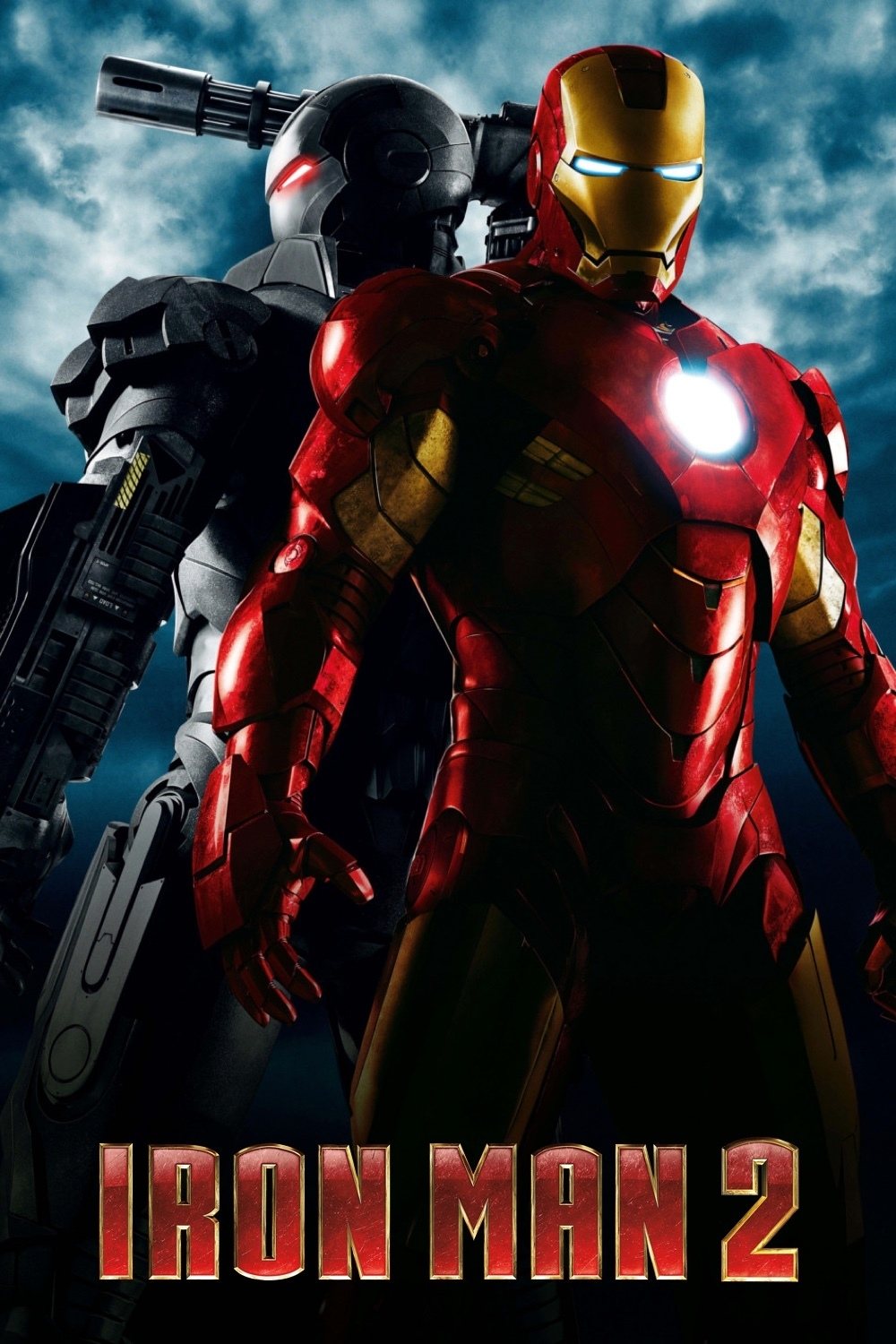
Favreau directs with the same loose, character-first touch as before, which is both the film’s charm and its weakness. The talking scenes crackle; the action is competent rather than thrilling. A mid-film attack on a Monaco racetrack is the standout, all sparks and snapped carbon fibre, but the climax collapses into the usual problem of metal men hitting other metal men in the dark, and you feel the effects budget more than you feel any danger. John Debney’s score does its job without lingering, and the design work on the suits and Vanko’s improvised hardware is, as you would hope from a film this in love with engineering, a pleasure to look at.
The larger issue is congestion. There are simply too many people in the room. Government hearings, a rival’s munitions deal, a buried family history, a spy subplot and several deliberate pointers toward films that do not exist yet all jostle for the same two hours, and the result is a sequel that often feels like it is doing administration rather than telling a story.
How it stacks up
Set against the first Iron Man, this is the busier and less satisfying film, in roughly the way most second outings are: it has more money, more characters and less surprise. The more useful comparison is with the recent run of comic-book sequels that lost their nerve by piling on villains, and to its credit Iron Man 2 keeps its antagonists clear and its tone intact where others turned to mush. It is also, more than any superhero film so far, openly the second chapter of something larger, with a post-credits sting that treats the audience as collaborators in a plan only the studio can see in full. Whether that is confidence or hubris is the open question hanging over the whole enterprise.
Critics versus the rest of us
The reception is warm but markedly cooler than for the original. Critics are sitting around 72%, audiences a shade under at 71%, and the recurring complaint is the one the film cannot really dodge: it is overstuffed, and it spends too long laying track for journeys still to come. That is fair. Where I part company is on how much it matters. The franchise-building that irritates some viewers is, for anyone who likes this kind of shared world, half the fun, and the technology daydream at the heart of it all, a man in a garage building wonders, is exactly the sort of thing I happily watch twice.
Verdict
Iron Man 2 is a worse-assembled film than its predecessor and a more entertaining one than its reputation suggests. The plot is doing three jobs at once and does none of them cleanly, the finale is forgettable, and the seams of the larger project show. None of that stops it being good company. Downey is still magnetic, Rockwell and Rourke earn their keep, and the underlying fantasy of clever people building impossible machines remains catnip to me. It is eminently rewatchable, which on my scale counts for a great deal. 8⁄10.
Availability: On general release in UK cinemas now, in 2D and on IMAX screens.
Update
Added since this review first appeared: the franchise scaffolding the film was so busy building paid off two years later in The Avengers (2012), which gathered up Black Widow, War Machine’s world and the wider Marvel cast into a single film and made the patience look like planning. Scarlett Johansson’s Romanoff, underused here, went on to anchor much of that shared universe. Iron Man 2 has settled into its reputation as the weakest of the original trilogy, the one that strained to do too much, though it is fonder-regarded now than it was at release. It is widely available on disc and digital and streams on Disney+ depending on region.
BBFC content advice
Rated 12A by the BBFC for moderate violence and bleeped strong language. The notes below may contain spoilers.
Violence: Alongside frequent scenes of moderate fantasy action, between robots and humans in advanced armoured suits, there are occasional moments of violence between human characters. These include an implied neck break, punches, a man being slammed into a metal sink, and a woman rendering a number of men unconscious using her martial arts skill and various pieces of advanced weaponry.
Threat and horror: There are intense action scenes.
Language: There is infrequent, bleeped use of strong language (‘f**k’).
Sex: There are occasional moderate but undetailed sex references, including to masturbation and prostitution.
Injury detail: There is limited sight of blood in the aftermath of violence.
Alcohol and smoking: There is sight of adults drinking, including to excess.
Source: British Board of Film Classification (bbfc.co.uk).