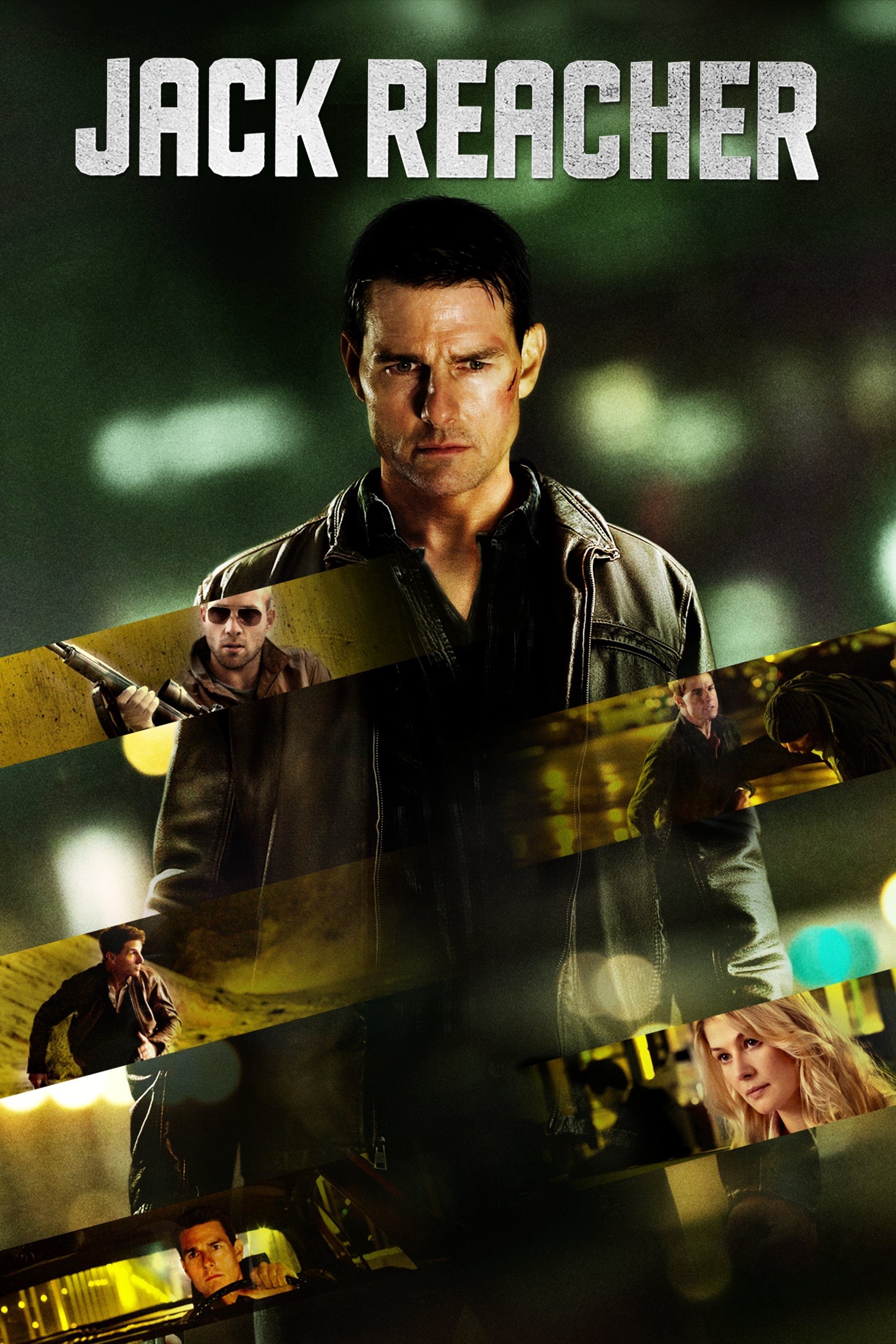
- UK release: December 2012
- Director: Christopher McQuarrie · Writer: Christopher McQuarrie (from the novel One Shot by Lee Child)
- Studio / distributor: Paramount Pictures; Skydance; TC Productions
- Genre: Investigative crime thriller · Runtime: 130 minutes (BBFC 12A)
- Main cast: Tom Cruise (Top Gun, Mission: Impossible) as Jack Reacher; Rosamund Pike (Die Another Day, An Education) as Helen Rodin; Richard Jenkins (The Visitor) as Alex Rodin; Werner Herzog (Aguirre, the Wrath of God) as The Zec; Robert Duvall (The Godfather, Apocalypse Now) as Cash
- IMDb: 7.0 / 10 · Rotten Tomatoes: 64% critics / 67% audience · My rating: 8 / 10
Lee Child’s Jack Reacher is six foot five, sixteen stone, and built like a barn door, a former military policeman who drifts across America with a toothbrush and no fixed address and breaks people who deserve it. Tom Cruise is none of those measurements, which is the first thing every reader of the books will tell you, loudly, and has been telling Paramount since the casting was announced. So the film arrives with a handicap baked in. What it has going the other way is Christopher McQuarrie, who wrote The Usual Suspects and has not directed a feature since The Way of the Gun over a decade ago, and who turns out to be exactly the right person to make a thriller that behaves like it was shot in 1975.
The setup
A sniper sets up in a riverside car park in Pittsburgh and shoots five strangers dead. The police arrest a former army marksman within hours, the evidence is overwhelming, and the man, instead of confessing, writes three words on a pad: get Jack Reacher. Reacher is already on his way before anyone can find him. He turns up to confirm the suspect’s guilt, not deny it, then starts pulling at the case anyway, because the things that look most certain are the ones he trusts least. Working alongside Helen Rodin (Rosamund Pike), the defence lawyer who happens to be the prosecuting district attorney’s daughter, he finds that a clean open-and-shut killing has been arranged a little too neatly, and that someone has gone to a great deal of trouble to be sure of the outcome.
The cast
The whole film hangs on whether you can accept Cruise as Reacher, and the surprise is how quickly the height stops mattering. He does not try to fake bulk. He plays the character as a different kind of dangerous: still, watchful, completely without nerves, a man who has already counted the exits and worked out who he will hit first. There is a coiled menace to him in the quiet scenes that is more unsettling than any amount of muscle would be. Rosamund Pike gives Helen real intelligence and keeps her from becoming the standard thriller sidekick, though the script leaves her stranded in a couple of scenes that only exist to have someone for Reacher to explain things to. Richard Jenkins brings his usual weary authority as her father. The two casting treats are saved for the edges: Werner Herzog, the director turned actor, plays the villain known only as the Zec with a soft, accented stillness that is genuinely chilling, a frostbitten old monster who chewed off his own fingers in a Siberian prison; and Robert Duvall turns up late as a gun-range owner and gives the film a shot of grizzled warmth right when it needs one.
The craft
McQuarrie directs this like a man who grew up on Seventies thrillers and is not embarrassed about it. The pacing is unhurried but never slack, the geography of every scene is clear, and the violence has real weight because it is rationed rather than sprayed. Caleb Deschanel shoots Pittsburgh as a cold, grey, functional city, and the film resists the modern habit of cutting fights into confetti. There is a car chase through the city that is mostly practical, engines and tyres and a windscreen view, and it is all the better for it. Joe Kraemer’s score keeps out of the way until it is wanted. Best of all is McQuarrie’s own dialogue, which gives Reacher a dry, deadpan wit and is happy to let a scene play as a battle of nerve rather than fists. There is a self-awareness to the writing, an enjoyment of its own genre furniture, that stops it ever feeling like a slog.
How it stacks up
This is not a Bourne film, and it is wise enough not to pretend to be. Where that series buries you in cuts and shaky cameras, Jack Reacher slows down and lets you watch a man think. The closest relatives are older: the lone-investigator thrillers of the Seventies, a touch of Dirty Harry in the hero’s contempt for procedure, and McQuarrie’s own taste for plots where the trick is in who is lying to whom. It sits a notch below the best of those, because the conspiracy at the centre is more functional than fiendish once it is laid out, but the craft of getting there is first rate. As a launch for a series built on a beloved run of novels, it makes the case that the books’ clean, propulsive plotting can survive the jump to the screen, even with the wrong-sized lead.
Critics versus the rest of us
Critics have landed mixed-positive, around the mid-sixties, and the conversation is split along a predictable line. Most admire the clean, unfashionable craft and Cruise’s commitment, while the book’s readers cannot get past the casting and a few reviewers find the whole thing a touch too pleased with itself. The audience numbers sit close to the critics’, which feels about right for a film that is squarely an entertainment and makes no grander claims. I come down higher than both camps, and the reason is straightforward: this is exactly the sort of lean, confident, rewatchable thriller I will happily put on again, and competence this unforced is rarer than the scores suggest.
Verdict
The casting objection is real and I am not going to pretend it away, but it dissolves in the watching. What is left is a tight, grown-up, expertly built thriller with a genuinely menacing villain, a hero played against type to good effect, and a director who understands that withholding the spectacle can be more gripping than piling it on. It is not reinventing anything, and the mystery is the weakest link in an otherwise strong chain. None of that stops it being one of the most purely satisfying action thrillers of the year, and the kind of film I reach for on a wet afternoon without a second thought. 8⁄10.
Availability: In UK cinemas now. One for the big screen, then a certain return visit on Blu-ray and DVD.
Update
Added since this review first appeared: the casting argument that dogged this film never quite went away, and it was eventually answered from the other direction. A second Cruise outing, Jack Reacher: Never Go Back (2016), landed with less of the original’s discipline, and the character was later recast at full size for the Reacher television series with Alan Ritchson, which leaned into the physical scale the books describe and won over many of the readers this film could not. That has, if anything, improved this first film’s standing as the lean, well-made oddity of the set: the McQuarrie partnership with Cruise that started here went on to steer the Mission: Impossible series. It streams on the usual rental and subscription platforms depending on region, and the uncut version runs slightly longer and harder than the 12A cinema cut.
BBFC content advice
Rated 12A by the BBFC for moderate violence and one use of strong language. The notes below may contain spoilers.
The film was passed 12A in November 2012 after the distributor made small cuts to reduce two moments of violence; the uncut version was later classified 15 for home release for strong violence and one use of strong language.
The BBFC’s detailed Content Advice breakdown by category (Violence, Language, and so on) could not be retrieved at the time of writing, as the BBFC release page returned a server error. The age rating and short consumer-advice line above are confirmed.
Source: British Board of Film Classification (bbfc.co.uk).