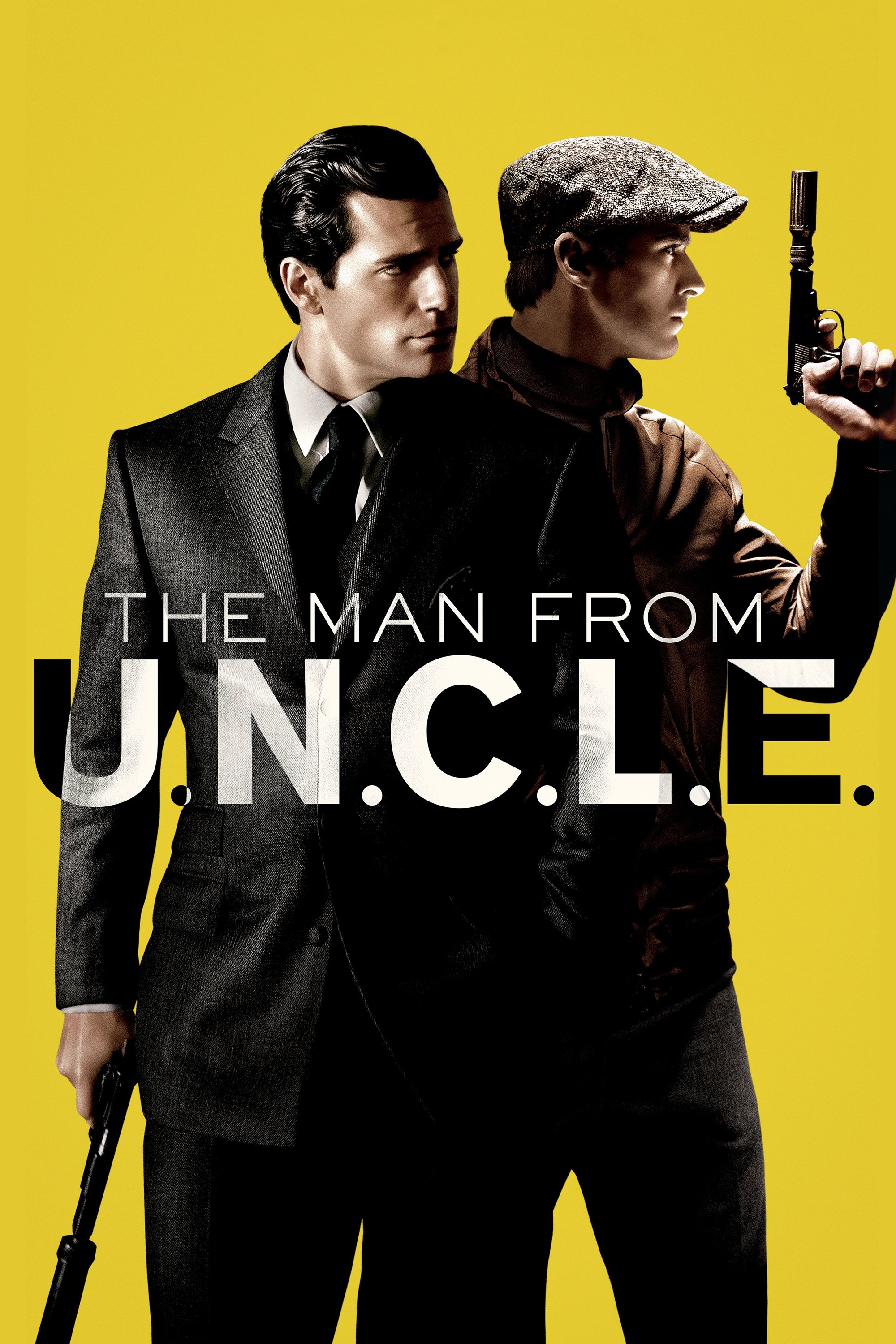

- UK release: August 2015
- Director: Guy Ritchie · Writers: Guy Ritchie, Lionel Wigram
- Studio / distributor: Warner Bros. Pictures
- Genre: Spy action comedy / period caper · Runtime: 116 minutes (BBFC 12A)
- Main cast: Henry Cavill (Man of Steel) as Napoleon Solo; Armie Hammer (The Social Network, The Lone Ranger) as Illya Kuryakin; Alicia Vikander (A Royal Affair) as Gaby Teller; Elizabeth Debicki (The Great Gatsby) as Victoria Vinciguerra
- IMDb: 7.2 / 10 · Rotten Tomatoes: 67% critics / 73% audience · My rating: 8 / 10
The film adaptation of an old television property usually arrives apologising for itself, dragging a brand name most of the audience is too young to remember. The Man from U.N.C.L.E. does the opposite. Guy Ritchie, last seen rattling through two Sherlock Holmes pictures, takes the 1964 spy series and declines to update it at all. He keeps it in 1963, dresses it impeccably, slows his own usual tempo right down, and makes a Cold War caper that is far more interested in tailoring, banter and a good split-screen than in whether the bomb goes off. The result is the most relaxed thing Ritchie has made, and one of the most purely enjoyable.
The setup
Berlin, 1963. Napoleon Solo, a CIA man with a sideline in art theft and an aristocrat’s wardrobe, is sent to extract Gaby Teller, the daughter of a missing nuclear scientist, from the East. On his tail is Illya Kuryakin, a KGB operative the size of a wardrobe and twice as tightly wound. The two spend their introduction trying to kill each other across a divided city, which makes it all the more galling when their respective masters order them to work together: a shadowy private organisation with fascist roots is close to building its own atomic weapon, and neither superpower fancies the alternative. Gaby, who turns out to be a good deal more than a damsel to be retrieved, becomes the third point of a triangle that never quite trusts itself. The plot, such as it is, is a clothes-line for set pieces, and the film knows it.
The cast
The casting is the smartest decision in the film. Henry Cavill plays Solo as a purring, faintly amused operator, all mid-Atlantic vowels and unbothered cool, and it is a revelation after the grim heavy lifting of Man of Steel: he is funny, light, and clearly enjoying himself. Armie Hammer gives Kuryakin a coiled, glowering menace that keeps tipping into comedy, a man permanently one insult away from snapping a spine. The double act works because the two never warm up too far; the antagonism is the engine. Alicia Vikander, fresh and quick, refuses to be the accessory the genre usually makes of the female lead, and Elizabeth Debicki is glacially good as the villainess, purring threats in couture. Hugh Grant drifts through the edges as a British handler, plainly having a marvellous time.
The craft
This is where Ritchie shows real discipline. John Mathieson’s cinematography gives every frame the glow of a high-end fashion shoot, all Italian sunlight, sharp suits and period production design you could move into. The action is staged for wit rather than brutality: a boat chase that cuts away to a hero calmly eating a sandwich, a split-screen assault that treats mayhem as choreography. Daniel Pemberton’s score is the film’s secret weapon, a jazzy, percussive, harpsichord-and-flute pastiche that drives scenes along and sticks in the head for days. Ritchie resists the modern blockbuster’s compulsion to go loud and long; at under two hours the film stays light on its feet and never outstays its welcome.
How it stacks up
The obvious comparisons are the ones the film invites. It has the cocktail-bar suavity of early James Bond without the body count, the team friction of Mission: Impossible without the sweat, and a knowing comic register that Kingsman hit earlier in the same year with more crudeness and less elegance. Where Ritchie wins is texture: this looks and sounds more like 1963 than any of its rivals look like anywhere. If anything it sits closest to Ocean’s Eleven, another film that prized cool, banter and the pleasure of watching attractive people execute a plan, and that is good company to keep.
Critics versus the rest of us
Critics are warm but not won over, sitting around 67%, with audiences a little ahead at 73%. The recurring complaint is that the plot is thin and the stakes never bite, and that is true: nobody will leave gripping the armrest. But it misreads the assignment. This is not a thriller pretending to be fun; it is a comedy of espionage that uses the plot as a frame for style and chemistry. Held to that standard it succeeds almost completely, and the audience score reflects people enjoying it for what it is rather than marking it down for what it never tried to be.
Verdict
I rate rewatchability highly, and this is built for it. The style, the soundtrack, the easy chemistry and the sheer good humour mean it plays beautifully a second and third time, when the slightness of the plot has stopped mattering and you are simply in good company for two hours. It is gorgeous to look at, genuinely funny, and scored to perfection. It is not a heavyweight, and it does not want to be. As a piece of espionage entertainment with style to burn, it is one of the most enjoyable things in cinemas this summer. 8⁄10.
Availability: On general release in UK cinemas now. A handsome candidate for Blu-ray when it arrives, ideally watched with the volume up for Pemberton’s score.
Update
Added since this review first appeared: the hoped-for franchise never materialised, the box office being too modest to trigger the sequel the ending teases. That has only sharpened its standing as a one-off cult favourite, the spy film people press on friends precisely because it never spawned a tired follow-up. Guy Ritchie went on to The Gentlemen and a run of Jason Statham vehicles, while Henry Cavill carried the unflappable-spy register forward into other roles. It streams across the usual platforms depending on region and is widely available on disc, where Daniel Pemberton’s soundtrack remains the thing most people remember first.
BBFC content advice
Rated 12A by the BBFC for moderate action violence. The notes below may contain spoilers.
Violence: Scenes of moderate action violence include hand-to-hand combat blows, throws and kicks, and undetailed shootings shown in an impressionistic style without sight of impact or blood. In one fight a man is hit with a tyre iron, another is briefly kicked in the face, and there is an implied but unseen stabbing, with a small blood trickle seen in the aftermath. A supposed ‘torture’ scene shows a hero in an electric chair juddering occasionally when it’s switched on, but the intensity is undermined by comic elements throughout the scene. There are also some undetailed references to torture.
Other issues: The film also contains mild innuendo, mild sex references, and sight of a woman’s bare back as she walks away from a bed. There is also mild and passing drug reference and mild bad language (‘ass’).
Source: British Board of Film Classification (bbfc.co.uk).