- UK release: September 2011
- Director: Tomas Alfredson · Writers: Bridget O’Connor; Peter Straughan
- Studio / distributor: Working Title Films; StudioCanal
- Genre: Cold War espionage thriller · Runtime: 127 minutes (BBFC 15)
- Main cast: Gary Oldman (The Dark Knight, Sid and Nancy) as George Smiley; Colin Firth (The King’s Speech, A Single Man) as Bill Haydon; Tom Hardy (Inception, Bronson) as Ricki Tarr; Mark Strong (Sherlock Holmes) as Jim Prideaux; Benedict Cumberbatch (Atonement) as Peter Guillam
- Rotten Tomatoes: 83% critics / 65% audience · My rating: 9 / 10
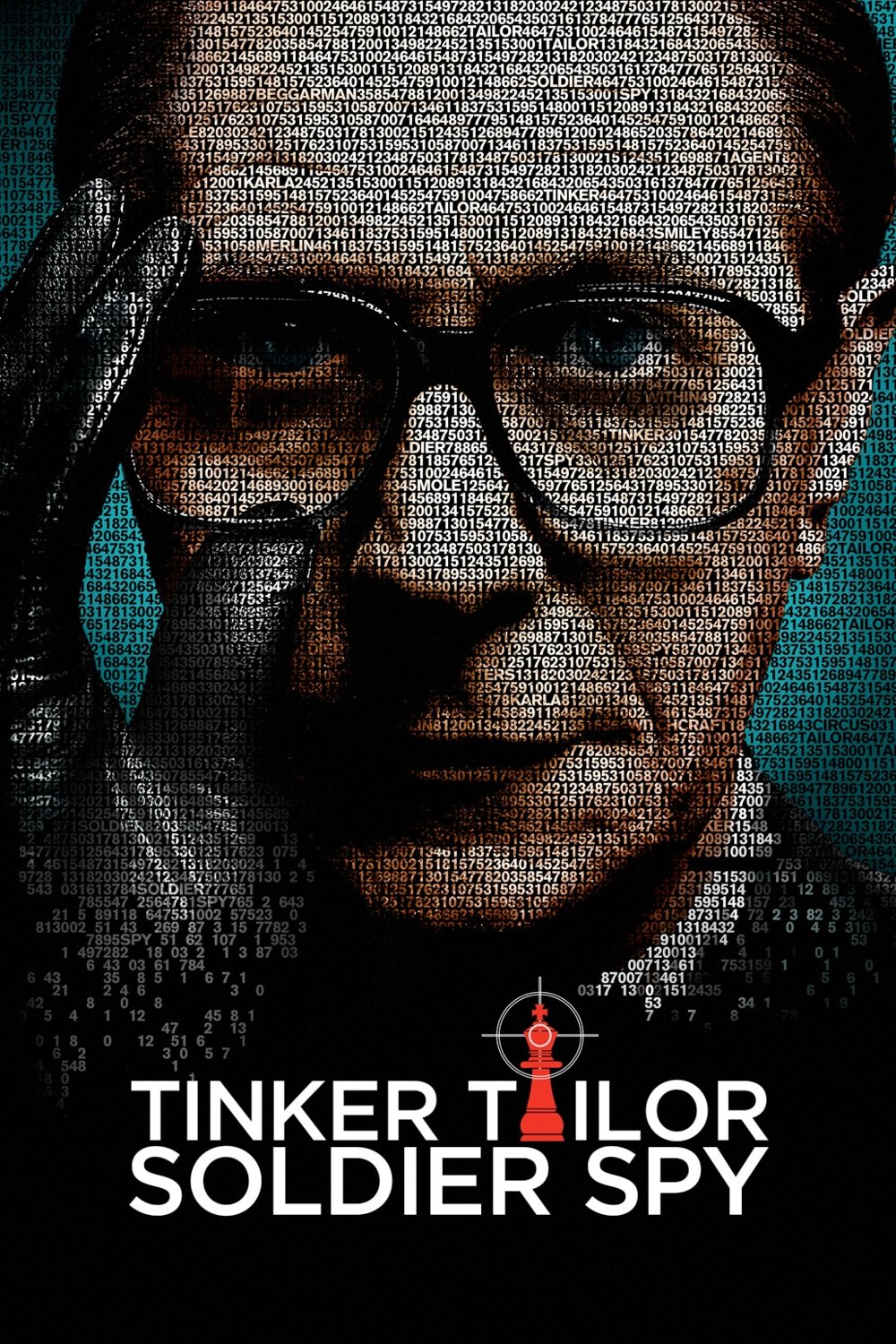
John le Carré has been adapted before, and recently the screen has tended to translate him into something busier and more conventional than he is on the page. So the first surprise about Tomas Alfredson’s Tinker Tailor Soldier Spy is who made it: the Swede behind Let the Right One In, an outsider to the very English world of the Circus, handed the job of compressing a famously dense novel into two hours. The second surprise is that he has not loosened le Carré at all. He has tightened him. This is a spy film with almost no gunfire, no chases worth the name, and a hero who spends most of it sitting very still and listening, and it is one of the most absorbing things in cinemas this year.
The setup
There is a mole at the top of British intelligence, a Soviet agent buried so deep inside the service that the hunt for him cannot be run from inside the building. George Smiley, pushed into retirement after a botched operation in Budapest, is quietly brought back to find the man, working from a rented room and a handful of trusted outsiders. The suspects are the four senior officers who run the Circus, men Smiley has known for thirty years, any one of whom could be the traitor. The investigation moves through old files, remembered conversations and the small inconsistencies in other people’s accounts, and the further in Smiley goes, the more it costs the people helping him.
The cast
Gary Oldman has built a career on volatility, which makes his Smiley a genuine act of discipline. He plays a man who has decided that the safest thing to show the world is nothing, and he holds that blankness for two hours while letting you see the machine working behind it. It is a performance with the volume turned almost to zero, and it is mesmerising. Around him the casting is close to a national stocktake of British acting. Colin Firth brings an easy, dangerous charm to Bill Haydon. Tom Hardy gives the field agent Ricki Tarr a raw, wounded energy that cuts against the surrounding restraint. Mark Strong is quietly devastating as Jim Prideaux, a man broken by something he is still trying to understand. Benedict Cumberbatch, as Smiley’s young lieutenant Peter Guillam, carries the cost of loyalty in one wordless, heartbreaking scene. There is not a weak link in any room.
The craft
Alfredson and his cinematographer Hoyte van Hoytema have made the most evocative thing about the film its texture. The 1970s here are all nicotine and damp wool, sick yellows and institutional greens, rooms that look like they smell of old paper. The Circus itself, with its soundproofed inner sanctum and its trolley of tea, is a world you believe absolutely. Editing is where a film like this lives or dies, and Dino Jonsäter keeps the timelines legible without ever spoon-feeding you; you are trusted to keep up. Alberto Iglesias scores it sparingly, a few cold, circling phrases that do the dread the dialogue is too buttoned-up to voice. The pace is deliberate, and that is the design, not a flaw. The film asks you to lean in, and rewards you for it on the second viewing more than the first.
How it stacks up
The obvious shadow is the 1979 BBC serial, which had six hours and Alec Guinness to do what this film does in two. The wonder is that the compression works at all, and that Oldman never feels like he is impersonating Guinness so much as finding his own quieter route to the same man. Set beside the other great Cold War films, it belongs with The Spy Who Came in from the Cold and The Lives of Others, films that understand betrayal as a slow administrative process rather than a gunfight. It is the opposite number to the Bourne and Bond pictures filling the same multiplexes: where they run, this one waits.
Critics versus the rest of us
Critics are admiring, sitting around 83%, with the praise going to Oldman, the ensemble and the period atmosphere. Audiences are cooler, nearer 65%, and the gap is easy to read. This is a demanding film. It withholds, it assumes you are paying attention, and if you let your mind wander for ninety seconds you will lose a thread that does not come back. Some viewers find that opacity off-putting, and that is a fair complaint to make of a single sitting. My own view sits with the critics and then some, because the very thing that frustrates a first watch is what makes the film grow on a second and a third.
Verdict
This is exactly the kind of film I want more of: intelligent, atmospheric, built on espionage as patient craft rather than spectacle, and made by people who trust the audience. It rewards rewatching more than almost anything else out this year, because once you know who the mole is the film becomes a different and richer thing, all those quiet glances suddenly loaded. The deliberate pace and the density are real, and they will lose some viewers; for me they are most of the pleasure. A near-perfect adaptation of a near-impossible book. 9⁄10.
Availability: In UK cinemas now, on general release.
Update
Added since this review first appeared: Gary Oldman’s Smiley earned him his first Academy Award nomination for Best Actor, and the film has settled firmly into the canon of great espionage cinema, regularly cited as the high-water mark of modern le Carré adaptation. The ensemble has only grown in stature since, with Cumberbatch, Hardy and Firth all going on to leading careers. It is now widely available on Blu-ray and 4K, and streams across the major UK platforms depending on the month.
BBFC content advice
Rated 15 by the BBFC for strong language, sex, violence, bloody injury detail. The notes below may contain spoilers.
Violence: A woman is shot in the head with a resultant spurt of blood onto the wall behind her. In another scene a man is shot in the cheek with clear sight of the entry wound and a trickle of blood running from it. The bloody aftermath of two murders, both of which take place off screen, is also shown. These include sight of a man with a very gory wound to the throat and a man floating in a bath full of bloody water and his own intestines.
Language: There is use of strong language (‘f**k’), as well as milder terms such as ‘prick’ and ‘shit’.
Sex: There is a scene of strong sex: a woman is seen sitting astride a man on a bed and thrusting up and down.
Additional issues: In one scene a bird is struck and killed, although it is clear that effects have been used rather than a real animal.
Source: British Board of Film Classification (bbfc.co.uk).