- UK release: November 2015
- Director: Steven Spielberg · Writers: Matt Charman, Ethan Coen, Joel Coen
- Studio / distributor: DreamWorks Pictures / Fox 2000 / Amblin; 20th Century Fox
- Genre: Cold War legal and espionage drama · Runtime: 142 minutes (BBFC 12A)
- Main cast: Tom Hanks (Saving Private Ryan, Catch Me If You Can) as James Donovan; Mark Rylance (The Other Boleyn Girl) as Rudolf Abel; Amy Ryan (Gone Baby Gone) as Mary Donovan; Alan Alda (The Aviator) as Thomas Watters
- IMDb: 7.6 / 10 · Rotten Tomatoes: 90% critics / 87% audience · My rating: 8.5 / 10
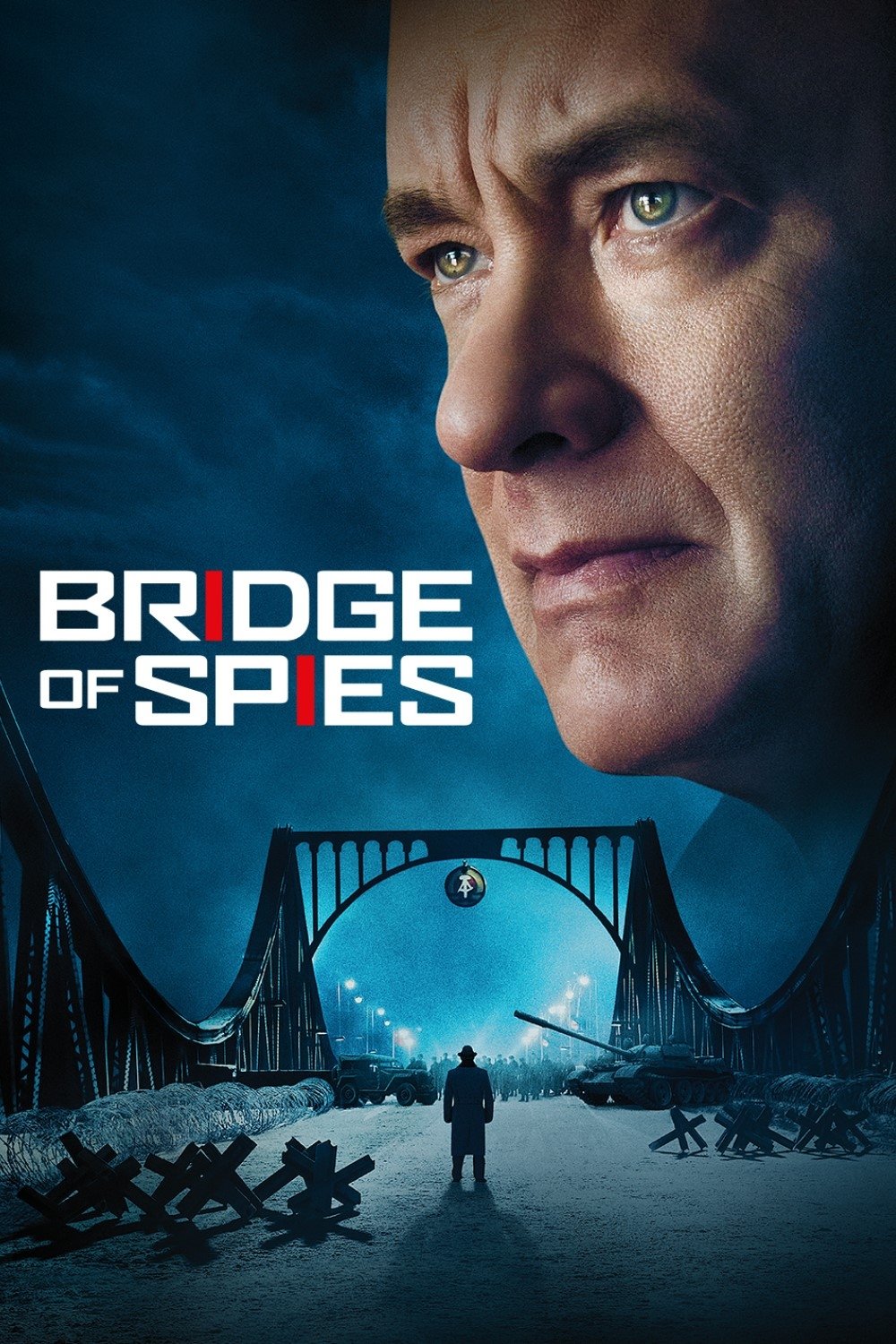
Steven Spielberg has spent the last decade or so building a second career out of the serious, talky, history-minded picture, the kind he slots in between the dinosaurs and the aliens. Munich and Lincoln were both films about men working a problem in rooms full of other men, and Bridge of Spies is squarely in that line. What gives it an unexpected charge is the writing credit: alongside the playwright Matt Charman sit Joel and Ethan Coen, who have been quietly punching up the dialogue. The result is a film that looks like prestige Spielberg and talks, every so often, like something with a wry sideways grin.
The setup
Brooklyn, 1957. James Donovan (Tom Hanks) is an insurance lawyer, good at his job and comfortable with the small print, who is handed a case nobody wants. The state has caught a Soviet agent, Rudolf Abel (Mark Rylance), and intends to give him a trial that looks fair without being fair. Donovan is supposed to provide the appearance of a defence and then step quietly aside. He declines to play that part. When an American spy plane comes down over the Soviet Union a few years later and its pilot is captured, Donovan finds himself the only man both sides will trust to broker an exchange, sent to a freezing, newly divided Berlin to trade one prisoner for another, or possibly two, with nobody quite telling him the rules.
The cast
Hanks is doing what Hanks does better than almost anyone, which is to make ordinary decency watchable for two hours. Donovan is not a crusader; he is a man who simply will not stop pointing out that the rule book applies even when it is inconvenient, and Hanks plays that quiet obstinacy as something close to comedy, the patience of a man who has read the contract and would like everyone else to read it too. The film belongs, though, to Mark Rylance. His Abel is a study in stillness, a soft-spoken painter who treats his own likely execution as one more piece of weather. Asked repeatedly whether he is worried, he replies, “Would it help?” and the line lands every time. It is a performance built almost entirely from restraint, and it is the thing you carry out of the cinema. Amy Ryan and Alan Alda fill the home and office corners cleanly, Alda in particular giving Donovan’s law partner a nicely weary establishment caution.
The craft
This is gorgeous, old-fashioned film-making. Janusz Kaminski, Spielberg’s cinematographer of long standing, shoots fifties New York in warm amber and East Berlin in a grey that gets into your bones, and the contrast does a lot of the storytelling without a word. Thomas Newman takes over the scoring duties that John Williams would normally hold, and his music is sparing and cool, content to sit back rather than swell. Spielberg directs with a confidence that has nothing to prove, holding shots, trusting faces, letting a negotiation play out as a negotiation. The Berlin Wall sequences carry a real chill, and there is one bravura passage cutting between an American schoolroom and a Berlin checkpoint that shows the old showman is still in there under the restraint. At 142 minutes it is unhurried, and a couple of the closing beats lean a touch hard on the uplift, but the patience mostly pays.
How it stacks up
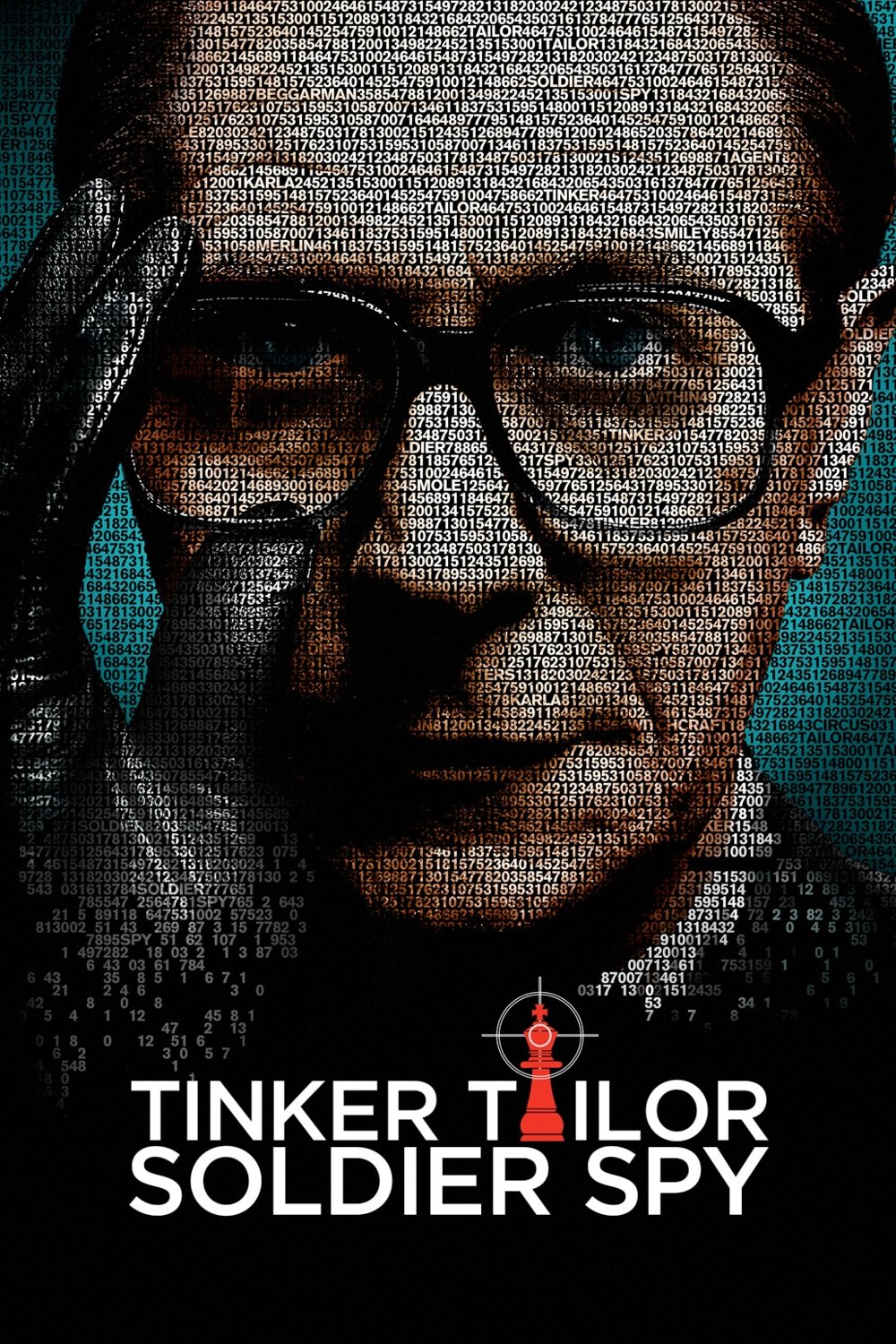
It sits naturally beside the recent run of intelligent, adult spy cinema. Tinker Tailor Soldier Spy is the obvious British cousin, another film that finds tension in paperwork, corridors and tired men keeping secrets, though Tomas Alfredson’s film is colder and more cryptic where this one wants you to feel its hero’s moral pulse. The Lives of Others haunts the Berlin scenes, the same divided city, the same sense of ordinary lives squeezed between systems. And it rhymes with Spielberg’s own Munich, another fact-based study of a decent man asked to do the state’s dirty work and quietly unsettled by it. Against all three, Bridge of Spies is the warmest and the most classical, less interested in ambiguity than in the unfashionable idea that one stubborn man holding to a principle can matter.
Critics versus the rest of us
Critics are firmly on side, sitting around 90%, with most of the praise going to the craft, to Hanks’s reliability and to Rylance, who is being talked about as the film’s secret weapon. Audiences are a little behind at 87%, and the mild grumble you hear is that it is too tasteful and too long, a handsome history lesson with the corners sanded off. There is something to that. It is not a film that will surprise you, and it wears its decency openly. I find that less of a problem than the grumblers do. The pleasure here is in watching grown-up people do difficult things carefully, and there is not enough of that around.
Verdict
This is precisely the kind of film I keep wishing more people made: an espionage drama that trusts conversation, mood and a strong central performance over chases and gadgets, set in a period it renders with real texture. It is not flawless. The final act tips into sentiment, and you can feel the running time. But it is intelligent, atmospheric and genuinely tense in its best stretches, and Rylance alone is worth the ticket. It is a film I would happily put on again on a wet Sunday, which counts for a great deal with me. 8.5⁄10.
Availability: In UK cinemas now. A DVD and Blu-ray release will follow in the new year.
Update
Added since this review first appeared: Mark Rylance went on to win the Academy Award for Best Supporting Actor for his Abel, and the film picked up Best Picture and Best Original Screenplay nominations, confirming the early sense that his was the standout turn. It also began a fruitful run between Spielberg and Rylance, who reunited soon after on The BFG. The film is now widely available on disc and digital and turns up regularly on streaming services, where its measured pace plays just as well on the sofa as it did in the cinema.
BBFC content advice
Rated 12A by the BBFC for infrequent strong language, moderate threat, violence. The notes below may contain spoilers.
Violence: People are shot as they try and climb over a wall. A prisoner faces sleep deprivation by his captors as they throw buckets of water over him. A man is hit in the stomach with a policeman’s gun.
Threat and horror: A scene shows people in distress as gun shots are fired into their family home. A man is confronted by a gang. A plane is hit by bombs and we see the pilot struggle to control it as it falls to the ground before he ejects from it.
Language: There is infrequent strong language (‘f**k’) as well as milder terms such as ‘son of a bitch’ and ‘shit’.
Suicide and self-harm: There are some undetailed references to soldiers taking their own lives rather than being captured by enemies.
Source: British Board of Film Classification (bbfc.co.uk).