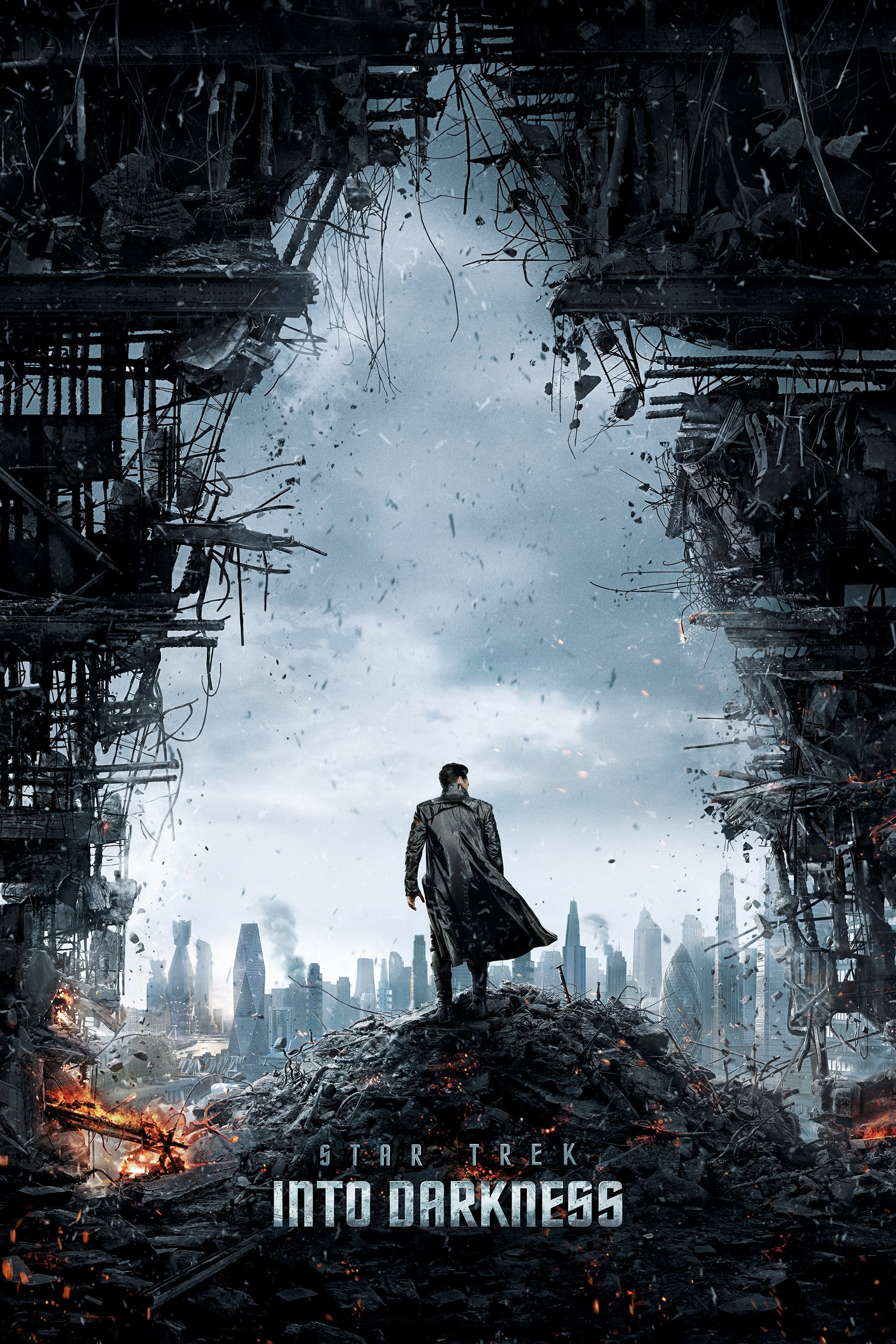
- UK release: May 2013
- Director: J. J. Abrams · Writers: Roberto Orci, Alex Kurtzman, Damon Lindelof
- Studio / distributor: Paramount Pictures; Bad Robot; Skydance
- Genre: Science fiction action adventure · Runtime: 132 minutes (BBFC 12A)
- Main cast: Chris Pine (Star Trek) as James T. Kirk; Zachary Quinto (Star Trek, Heroes) as Spock; Benedict Cumberbatch (Sherlock, Tinker Tailor Soldier Spy) as John Harrison; Zoe Saldaña (Avatar, Star Trek) as Nyota Uhura; Karl Urban (The Lord of the Rings, Star Trek) as Leonard McCoy; Simon Pegg (Shaun of the Dead, Hot Fuzz) as Montgomery Scott
- IMDb: 7.7 / 10 · Rotten Tomatoes: 84% critics / 89% audience · My rating: 8.5 / 10
Four years ago J. J. Abrams did something nobody thought possible: he took a franchise that had run aground on its own self-seriousness and made it fast, funny and popular again. The 2009 Star Trek rebuilt the Enterprise crew from the keel up, reset the timeline so it owed the past nothing, and sent the whole thing off with a swagger that the older films had long since lost. The question hanging over the sequel was always going to be the same one that hangs over every second instalment: now that the introductions are done, does Abrams have a story worth telling, or just a bigger budget to spend on the lens flares.
The setup
A single act of terror tears a hole in Starfleet from the inside. A rogue officer, John Harrison (Benedict Cumberbatch), strikes at the heart of the fleet and then vanishes to a place no Starfleet vessel is meant to go, daring anyone to come after him. Kirk (Chris Pine), grieving and furious, talks his way into a hunting party armed with experimental weapons and a brief that smells wrong from the start. What begins as a manhunt turns into something murkier, a question about who gave the orders, why Starfleet has started building warships, and whether the man they are chasing is the threat or the symptom. The crew end up caught between the enemy in front of them and the militarised machine behind them.
The cast
The pleasure of the first film was the chemistry, and it survives intact. Pine has settled Kirk into the role properly now, less the reckless cadet and more a captain learning that the chair comes with a bill attached. The Kirk and Spock double act remains the spine of the thing: Zachary Quinto plays Spock as a man permanently holding a door shut against his own feelings, and the friction between cold logic and Kirk’s gut instinct still generates most of the film’s best scenes. Around them the ensemble does its reliable work, with Karl Urban’s irascible McCoy and Simon Pegg’s harried Scotty supplying the dry humour that keeps the darkness from curdling. Zoe Saldaña gives Uhura more to do than a love interest, dropping into a hostile situation and talking her way through it.
The film belongs, though, to Cumberbatch. He plays Harrison with a stillness that the rest of the cast cannot afford, a low theatrical menace that makes every soft-spoken threat land harder than any shouted one. He is the best villain this iteration of the franchise has produced, and the camera knows it.
The craft
Abrams directs action the way few of his contemporaries can, with a clarity of geography that survives even his fondness for shaking the camera and flooding the frame with light. Dan Mindel’s photography gives the gleaming bridge of the Enterprise a tactile, lived-in shine, and the set-pieces, a plunge through a debris field, a foot chase across a future skyline, a starship falling out of the sky, are staged with real momentum. Michael Giacchino’s score does the heavy lifting underneath, returning to the soaring theme from the first film and giving the quieter beats a weight the script sometimes reaches for and misses. At 132 minutes the film barely pauses for breath, which is both its great strength and the reason its emotional swings do not always earn what they ask for.
How it stacks up
The obvious comparison is the 2009 film, and Into Darkness is the leaner, darker, more confident sequel that a successful reboot usually produces. It also leans hard on franchise history in a way the first film deliberately avoided, and how much that works for you will depend on how much affection you carry for what came before. Beyond Star Trek itself, the film sits comfortably alongside the muscular, globe-trotting blockbusters of the moment, sharing more DNA with the recent run of Mission: Impossible pictures and the harder-edged Bond of Skyfall than with the talky, ponderous Trek of the past. This is Star Trek reimagined as a chase thriller in space, and on those terms it mostly delivers.
Critics versus the rest of us
Critics have come out warmly, sitting around 84%, with audiences a little ahead at 89%, and the praise lands where you would expect: the pace, the spectacle, the cast. The grumbling, where there is any, is from the faithful, who object to the secrecy the marketing has wrapped around Harrison’s real identity, and to a third act that borrows its biggest emotional moment wholesale from an earlier, beloved Trek film and asks you to feel it again at second hand. That borrowing is the film’s weakest decision, a callback that mistakes recognition for resonance. But I am not the audience that worship gives most offence to, and as a piece of two-hour entertainment it does almost everything it sets out to do.
Verdict
This is a confident, propulsive, handsomely made blockbuster with the best villain the new Trek has fielded and a crew I am happy to spend time with. It falls just short of the first film because it trades that one’s sense of fresh discovery for a story built on secrets and second-hand sentiment, and the secrecy in particular is sillier than the film deserves. None of that stops it being eminently rewatchable, which for me counts for a great deal: it is a film I would happily put on again knowing every beat. It is not quite the equal of the reboot that earned my full marks, but it is a worthy, energetic follow-up. 8.5⁄10.
Availability: On general release in UK cinemas now. See it in IMAX 3D where you can, the space-set sequences were shot with the format in mind.
Update
Added since this review first appeared: the open secret the film worked so hard to protect, that John Harrison is Khan Noonien Singh, is now common knowledge, and the studio’s coyness about it has aged into a minor cautionary tale about over-managed marketing. The crew returned for a third outing, Star Trek Beyond (2016), which handed the chair to Justin Lin and steered the series back towards the lighter, more exploratory tone of the first film. Into Darkness has settled into its reputation as the most divisive of the Kelvin-timeline trilogy, admired for its craft and Cumberbatch’s villain, faulted by the faithful for what it does with The Wrath of Khan. It is now widely available on disc and digital, including 4K, and streams on various platforms depending on region.
BBFC content advice
Rated 12A by the BBFC for moderate violence, threat. The notes below may contain spoilers.
Violence: Frequent scenes of moderate violence includes exchanges of punches, kicks, the use of a knife, and gunfights involving futuristic weaponry. Sight of blood and injury is limited, including an implied leg break and skull crush indicated by sound rather than visuals.
Threat and horror: There are frequent scenes of threat, including characters running from arrow-firing warriors, erupting volcanoes, crashing spaceships, and collapsing buildings. Although sometimes prolonged, these scenes also include comic moments and a focus on action and adventure rather than direct or sustained threat.
Language: Occasional use of mild bad language includes ‘bastard’, ‘bloody’, ‘son of a bitch’, ‘piss’ and ‘shit’.
Sex: There are also some mild sex references, such a character waking up beside two women in bed, and a man sneaking a look at a woman in her underwear as she changes her clothes.
Additional issues: There is some sight of blood in the aftermath of violence. Adult characters drink alcohol.
Source: British Board of Film Classification (bbfc.co.uk).