
- UK release: June 2017
- Director: Edgar Wright · Writer: Edgar Wright
- Studio / distributor: TriStar Pictures; Working Title Films; Big Talk Productions
- Genre: Crime action thriller / music-driven heist film · Runtime: 113 minutes (BBFC 15)
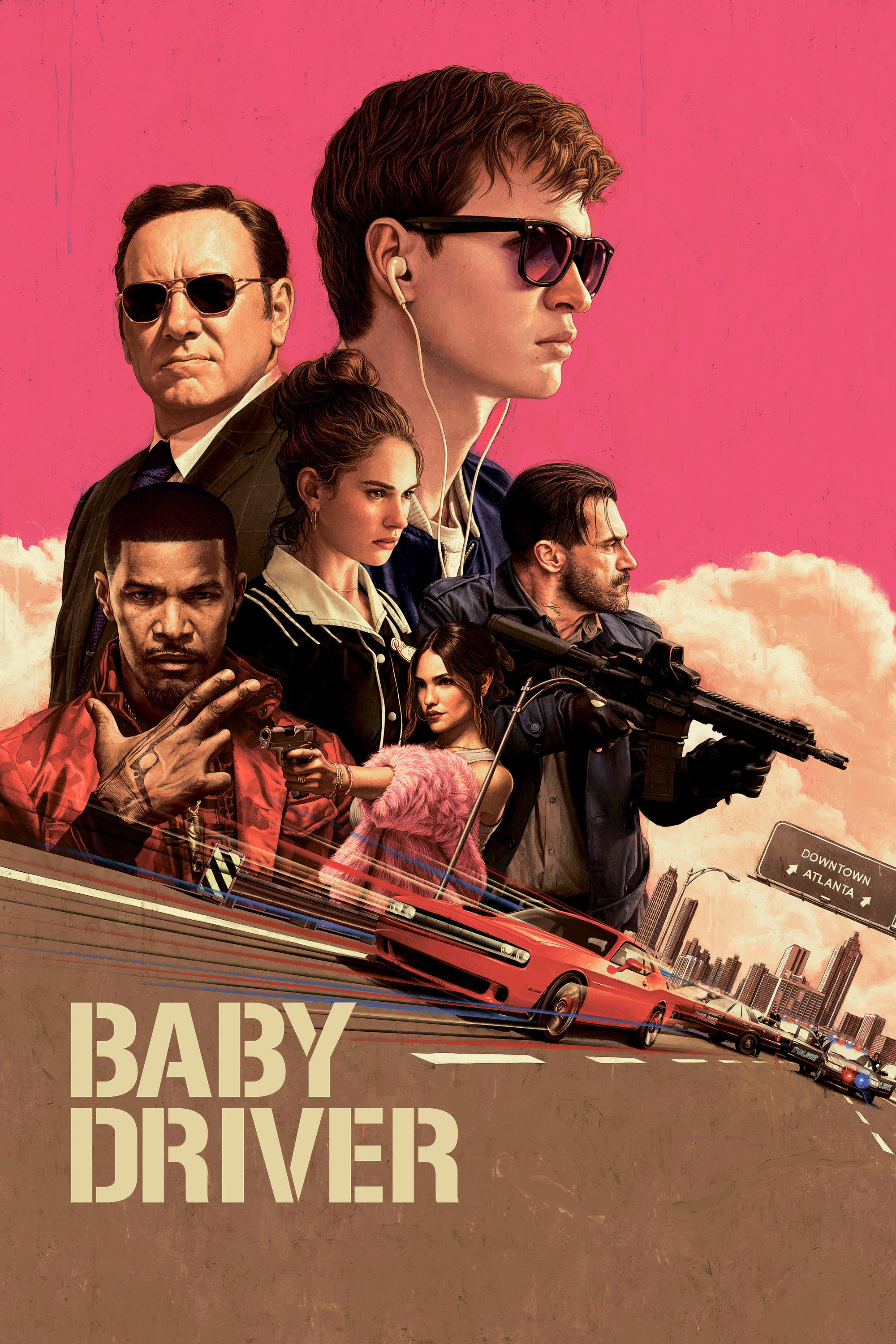
- Main cast: Ansel Elgort (The Fault in Our Stars) as Baby; Lily James (Cinderella) as Debora; Kevin Spacey (The Usual Suspects, American Beauty) as Doc; Jamie Foxx (Ray, Collateral) as Bats
- IMDb: 7.5 / 10 · Rotten Tomatoes: 92% critics / 86% audience · My rating: 8.5 / 10
Edgar Wright has spent his whole career editing to music. The Cornetto trilogy, Scott Pilgrim, even the adverts, all of them cut on the downbeat, jokes landing on a snare hit. Baby Driver takes that instinct and builds an entire film around it: a heist picture where the getaways, the gunfights and the walk to the coffee shop are all timed to the songs playing in the lead character’s ears. It is the kind of conceit that could collapse into a feature-length music video. It does not, because Wright has also written a proper crime film underneath the choreography, and he means every gear change.
The setup
Baby (Ansel Elgort) is a young getaway driver with a permanent ringing in his ears, a souvenir of a childhood accident, which he drowns out with a rotating stack of iPods and an encyclopaedic record collection. He drives for Doc (Kevin Spacey), an Atlanta crime boss who plans bank jobs with the precision of a man who never touches the money himself. Baby is working off a debt, and he is nearly clear of it when he meets Debora (Lily James), a diner waitress with the same dream of a car, a road and no particular destination. Naturally the job is not finished with him. One more crew, one more score, and the people Doc puts in the car this time, Bats (Jamie Foxx) chief among them, are not the sort who let a driver quietly retire.
The cast
Elgort has the harder job than it looks: Baby barely speaks for long stretches, and the performance lives in his face, his timing and the small private pleasure he takes in the music. He makes the stillness watchable. Lily James gives Debora more spine than the love-interest slot usually allows, and the early diner scenes have a genuine lightness to them. The crews are where the film gets its menace. Spacey plays Doc as a man whose calm is the most threatening thing in the room, and Jamie Foxx is the live wire the whole film needs, a robber who treats unpredictability as a personality. Jon Hamm and Eiza Gonzalez round out the heist crew as a couple whose chemistry curdles by the reel. Everyone understands they are in a heightened world, and nobody overplays it.
The craft
This is the work of someone who has wanted to make a car film for twenty years and finally got the keys. The opening chase, scored to a single song from first beat to last, is a statement of intent: real cars, real streets, editing locked to the music so tightly that wipers, gunshots and gear shifts all fall on the count. Bill Pope’s photography keeps the action legible, which after a decade of incoherent shaky-cam feels almost radical. The soundtrack is not decoration, it is the engine, and Wright reportedly built the action around the tracks rather than dropping needle-drops over finished scenes. The result has a propulsion that most action films would kill for, and a wit in the cutting that is unmistakably his.
How it stacks up
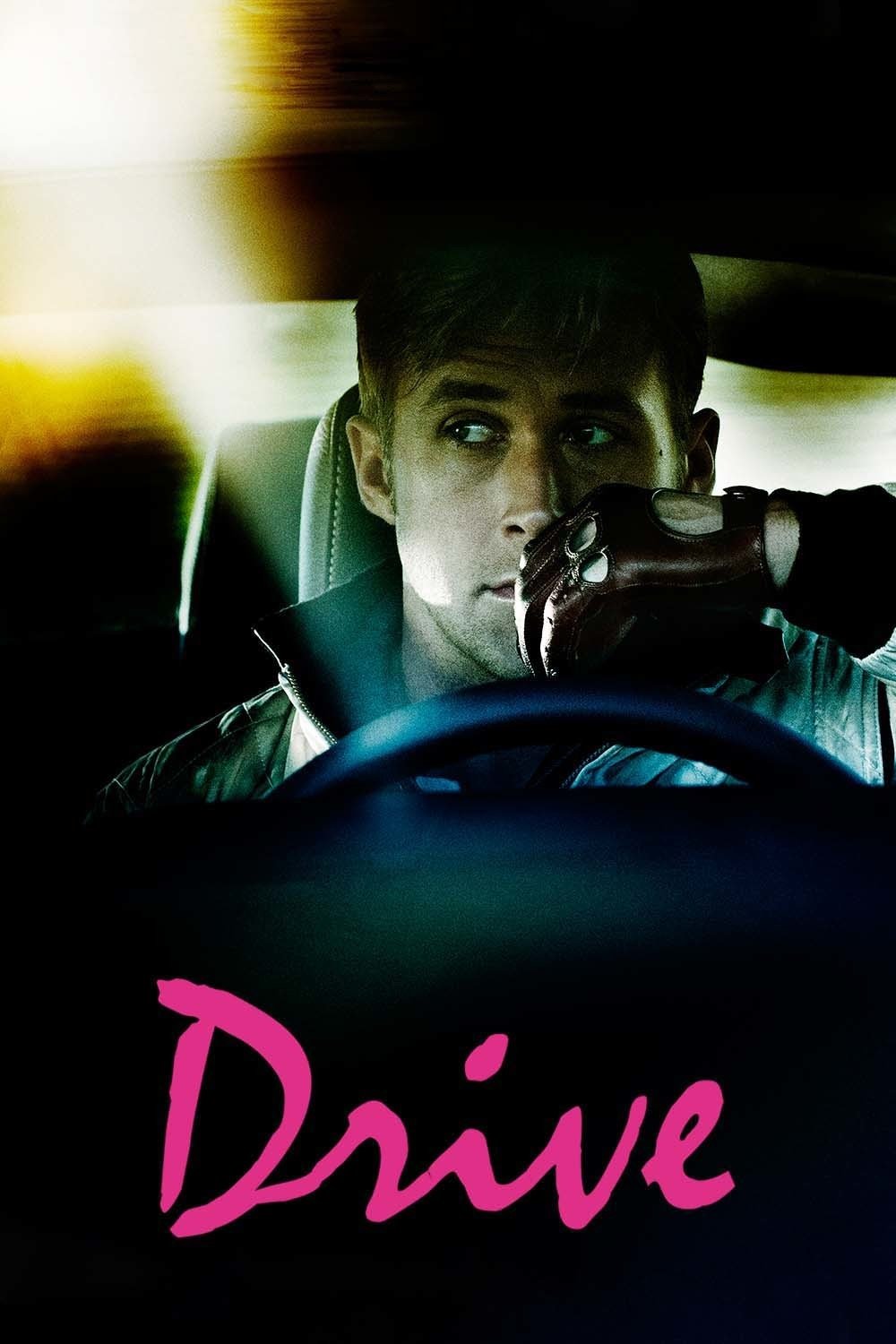
The obvious touchstone is Walter Hill’s The Driver, the lean 1978 thriller about a getaway man with no name, and Wright wears the debt openly, down to the title card. There is Drive in the iconography, the jacket, the quiet wheelman, the romance with a kind woman, though Wright’s film is sunnier and far more playful than that one’s neon fatalism. Heat hangs over every robbery that goes wrong. What separates Baby Driver from any of them is the musical chassis: this is closer to a jukebox musical than to a straight crime film, a La La Land with handguns, and it commits to that fusion completely rather than treating the songs as background.
Critics versus the rest of us
Critics have taken to it warmly, sitting around 92%, with most of the praise going to the editing, the soundtrack integration and the sheer formal control. Audiences are a touch cooler at 86%, and where there is grumbling it tends to land on the romance, which is sweet but slight, and on a third act that swaps some of the early invention for a more conventional run of shoot-outs and chases. Both fair. Neither dented my enjoyment much. The gap between the clever concept and the slightly familiar plot is real, but the concept is good enough to carry it.
Verdict
I came in sceptical that the gimmick could last two hours, and it does, mostly because Wright never lets it become only a gimmick. The film is fast, funny, beautifully cut and built to rewatch, which is the quality I value most highly and the one this delivers in spades: you will want to run that opening chase again the moment it ends. It is not the deepest thing Wright has made, and the love story is thinner than the driving, but as a piece of pure craft and momentum it is a joy. The kind of film you put on to show someone what editing can do. 8.5⁄10.
Availability: In UK cinemas now, on general release from 28 June. Worth a big screen and a loud sound system, because half the point is hearing it properly.
Update
Added since this review first appeared: the film became Edgar Wright’s biggest box-office success and earned three Oscar nominations, all in editing and sound, exactly the crafts it was showing off. Its reputation as a modern action-musical has only firmed up since. It is now widely available on disc and digital and streams across the usual platforms depending on region.
BBFC content advice
Rated 15 by the BBFC for strong language, violence. The notes below may contain spoilers.
Violence: There are intense shoot-outs, occasionally showing blood spurts when people are shot. A person is impaled on a metal pole.
Language: There is strong language (‘f**k’ and ‘motherf**ker’). Milder terms include ‘bitch’, ‘whore’, ‘pussy’ and ‘shit’.
Additional issues: There is use of the term ‘retarded’. There are moderate verbal sex references.
Source: British Board of Film Classification (bbfc.co.uk).