
- UK release: December 2011
- Director: David Fincher · Writer: Steven Zaillian
- Studio / distributor: Columbia Pictures; MGM; Sony Pictures Releasing (UK)
- Source: the novel by Stieg Larsson (first of the Millennium trilogy)
- Genre: Crime thriller / mystery · Runtime: 158 minutes (BBFC 18)
- Main cast: Daniel Craig (Casino Royale, Layer Cake) as Mikael Blomkvist; Rooney Mara (The Social Network) as Lisbeth Salander; Christopher Plummer (The Sound of Music) as Henrik Vanger; Stellan Skarsgård (Breaking the Waves, Good Will Hunting) as Martin Vanger
- Rotten Tomatoes: 86% critics / 86% audience · My rating: 8 / 10
There is a reasonable question hanging over this film before a frame of it plays, which is why it exists at all. Niels Arden Oplev’s Swedish version is barely two years old, did good business here on subtitles, and gave Noomi Rapace a career. So the charitable reading of a Hollywood remake arriving this quickly is studio opportunism, and the suspicious reading is the same thing said more loudly. What changes the maths is the name on it. David Fincher does not make films that look like anyone else’s, and the prospect of him bringing the same cold forensic eye he turned on the Zodiac killings and on Mark Zuckerberg’s deposition room to a wintry Swedish murder mystery is worth more than a shrug.
The setup
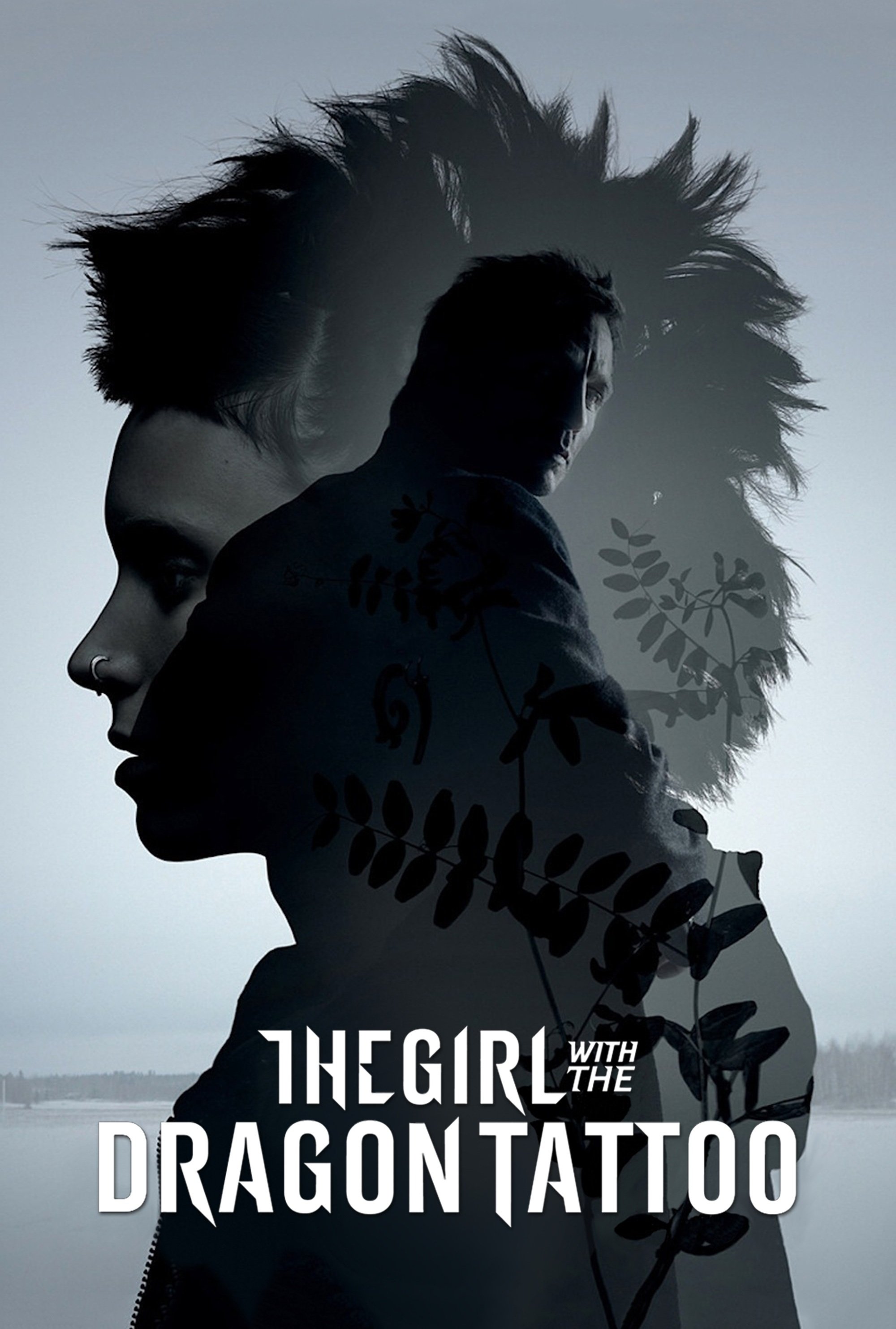
Mikael Blomkvist (Daniel Craig) is a financial journalist in disgrace, freshly bankrupted by a libel verdict, when an ageing industrialist hires him under a pretext. Henrik Vanger (Christopher Plummer) wants the truth about his great-niece Harriet, who vanished from the family’s island compound nearly forty years ago and whom he is sure was murdered by someone at the dinner table. Blomkvist takes the job partly to disappear from public view, and the deeper he digs into four decades of Vanger secrets the more he needs help. That help is Lisbeth Salander (Rooney Mara), a pierced, hostile, brilliant researcher and hacker with a state-appointed guardian and a history that has taught her to trust no institution at all. The investigation is a cold case rebuilt from photographs, ledgers and bus timetables; the more dangerous story is the one Salander is living through in parallel.
The cast
Mara is the reason to see it. She has the harder job of the two leads, taking a part already defined by Rapace and another by Larsson’s readers, and she finds her own Salander rather than impersonating either. It is a performance built from withholding: flat affect, minimal speech, a body she has shaved and pierced into a warning sign, and underneath all of it a furious competence that the film lets you see only when she chooses to show it. The role asks her through one of the year’s most punishing sequences and out the other side, and she plays the aftermath as cold arithmetic rather than trauma on display. Craig is the quieter surprise. Stripped of the Bond swagger, he makes Blomkvist a tired, fallible, slightly vain man who is good at his job and out of his depth in the cold, and he is generous enough to let Mara have the film. Plummer brings a courtly melancholy to Vanger, and Stellan Skarsgård does a great deal with very little, all reasonable surface over something you would rather not find underneath.
The craft
This is where Fincher earns the remake. With Jeff Cronenweth behind the camera he shoots Sweden as a place of perpetual blue dusk, every interior lit like a crime scene and every exterior freezing, and the digital image is so clean it feels clinical. The opening titles, a black oil-slick nightmare set to a thundering cover of Led Zeppelin’s “Immigrant Song”, announce a film with no intention of being polite. Trent Reznor and Atticus Ross follow their Social Network score with something colder and more textural, a low electronic hum that sits under the whole picture like a server room ventilating. Fincher’s editing, with Kirk Baxter and Angus Wall, makes two and a half hours of archival cross-referencing genuinely tense, cutting between Blomkvist’s paper trail and Salander’s keyboard with the rhythm of a heist. The man simply directs procedure better than almost anyone working, and a film that is largely about reading old documents has no right to be this gripping.
How it stacks up
The obvious comparison is Zodiac, Fincher’s other study of an investigation that eats the people conducting it, and Dragon Tattoo shares its patience and its faith that the work itself is the suspense. It is less haunted than Zodiac and more conventionally satisfying, because this case actually resolves. Against Seven it is colder and less operatic; against The Social Network it shares the chilly palette, the Reznor and Ross score, and the sense of brilliant antisocial people communicating through screens. The harder comparison is Oplev’s original, and honestly the two are closer than the remake’s defenders would like. Oplev’s is rawer and Rapace fiercer; Fincher’s is more controlled, better looking, and tighter in its final third. What Fincher adds is not a new interpretation so much as a level of finish, and whether that justifies the exercise depends on how much you value a director in total command of his tools.
Critics versus the rest of us
Critics have landed warm, around 86%, with audiences matching them almost exactly, and the praise clusters where you would expect: Mara, the look, the titles, the score. The reservations cluster just as predictably. Some object to the speed of the remake, some to the runtime, and many to the brutality of two particular scenes, which Fincher stages without flinching and which earn the 18 certificate on their own. I think the redundancy charge is the weakest of these. Plenty of fine films are remakes of recent ones, and the question is only whether this version is good, not whether it was necessary. The length is the fairer hit. The Harriet mystery wraps with a stretch of plot still to go, and the coda, faithful to the book, slightly deflates the tension the rest of the film has built so carefully.
Verdict
This is a glacial, gripping, beautifully made thriller anchored by a star-making performance, and Fincher’s craft is the kind I will happily watch again even knowing the answer. It loses a point for a final act that runs longer than its tension can support, and for being, in the end, a superb cover version of a song that was already pretty good. None of that stops it being one of the most absorbing crime films of the year, the sort that rewards a second viewing precisely because you can stop chasing the plot and watch how cleanly it is assembled. Cold, exacting, and not for everyone, it is exactly the film Fincher’s name promised. 8⁄10.
Availability: On general release in UK cinemas now. Not one for a casual night in; the 18 certificate is fully earned.
Update
Added since this review first appeared: Rooney Mara’s Salander brought her an Academy Award nomination, and the planned Fincher-led sequels never materialised, leaving this a one-off rather than the trilogy Sony hoped for. Fincher and his Reznor and Ross collaborators reunited soon after for Gone Girl (2014), another icy, procedural adaptation of a bestseller that makes a natural double bill with this one. The film now streams on the usual digital platforms and turns up on disc in a Fincher-supervised transfer that does the Cronenweth photography justice on a good screen.
BBFC content advice
Rated 18 by the BBFC for strong sex and sexual violence. The notes below may contain spoilers.
Violence: A woman is handcuffed to a bed and forcibly stripped before it is implied that she is anally raped. In a later sequence the character takes her revenge in a scene where she subjects her attacker to a comparable physical ordeal.
Sex: The film contains strong consensual sex, with one scene in particular featuring full nudity and sexual movement.
Additional issues: Strong violence, verbal sex references and strong language also feature.
Source: British Board of Film Classification (bbfc.co.uk).