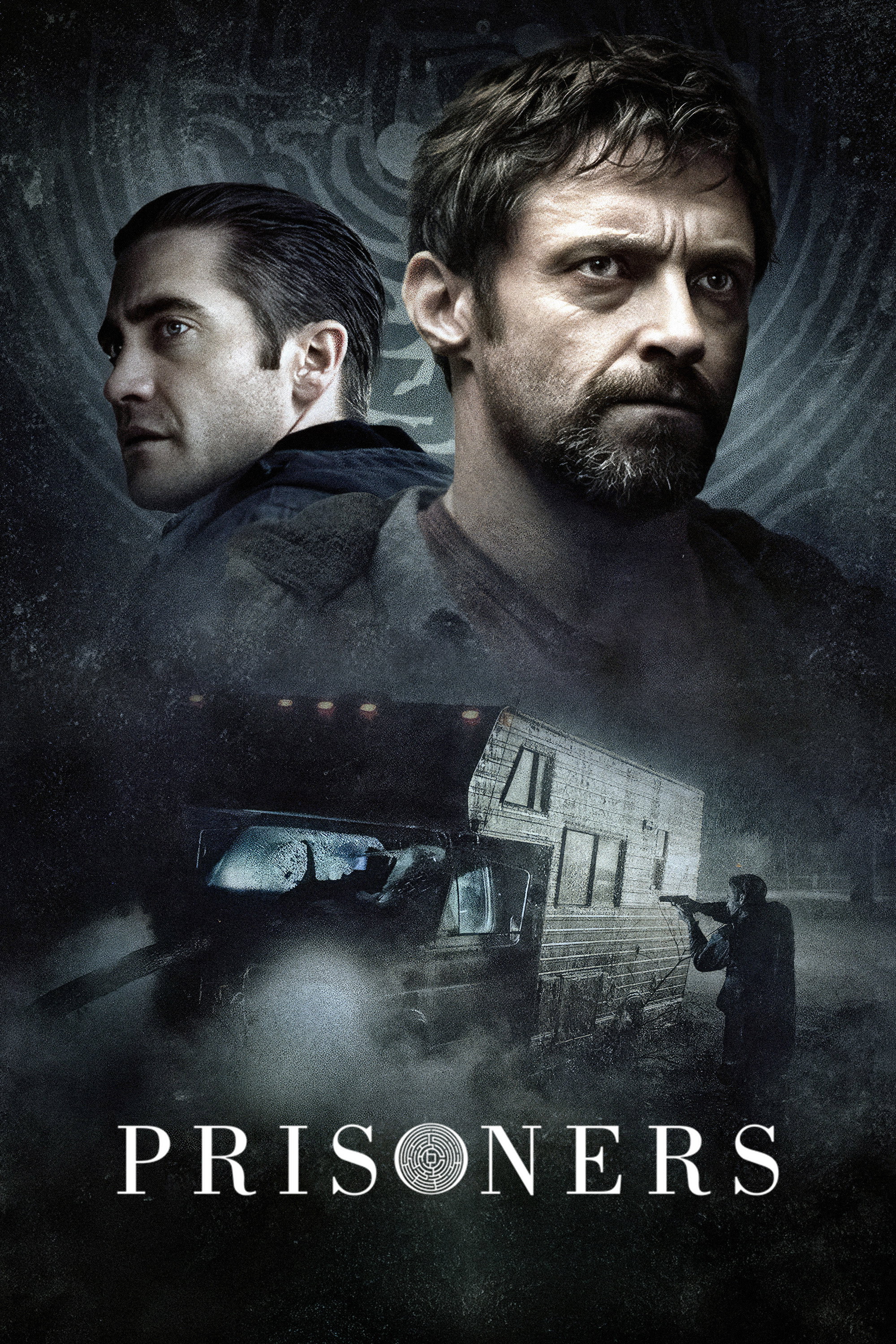

- UK release: September 2013
- Director: Denis Villeneuve · Writer: Aaron Guzikowski
- Studio / distributor: Alcon Entertainment; Warner Bros.
- Genre: Crime thriller / psychological drama · Runtime: 153 minutes (BBFC 15)
- Main cast: Hugh Jackman (X-Men, The Prestige) as Keller Dover; Jake Gyllenhaal (Brokeback Mountain, Source Code) as Detective Loki; Viola Davis (Doubt, The Help) as Nancy Birch; Paul Dano (There Will Be Blood) as Alex Jones
- IMDb: 8.1 / 10 · Rotten Tomatoes: 81% critics / 87% audience · My rating: 8.5 / 10
Denis Villeneuve is barely known outside the festival circuit, where Incendies announced a director with a real appetite for moral wreckage. Prisoners is his first film in English, handed a heavyweight American cast and a studio budget, and the surprise is how little he softens for the occasion. This is a two-and-a-half hour abduction thriller shot in the grey of a Pennsylvania winter, and it has no interest in being a comfortable night out. It wants to ask what an ordinary, decent man will do when the thing he most fears actually happens, and then it makes you watch the answer.
The setup
On a wet Thanksgiving in a small town, two young girls go missing while the families are sharing dinner. The only lead is a battered camper van and its driver, Alex Jones (Paul Dano), a slow, frightened young man whom the police are forced to release for lack of evidence. Keller Dover (Hugh Jackman), father of one of the girls, is certain Alex knows where the children are. With the clock running and the detective on the case getting nowhere fast, Dover decides the law is too slow to save his daughter, and he takes Alex. What he does next is where the film stops being a missing-child procedural and becomes something far harder to watch. The detective, meanwhile, keeps pulling at his own thread, and the two investigations move in parallel without quite touching.
The cast
Jackman is the engine here, and it is a properly brave piece of work. Stripped of the swagger and the showmanship he is best known for, he plays Dover as a survivalist and a believer slowly coming apart, a man whose love for his child curdles into something frightening. He never asks you to approve of him, only to understand how a person gets there. Opposite him, Gyllenhaal gives Detective Loki a coiled, twitchy intensity, all blinks and barely-contained frustration, a closed-off man who solves cases by sheer refusal to let go. The film is at its best when these two circle each other. Around them, Viola Davis and Maria Bello carry the grief the men keep trying to outrun, and Paul Dano, mostly silent and badly hurt, makes Alex genuinely unreadable, which the whole film depends on. Melissa Leo turns up too, quietly, doing more than the part first appears to need.
The craft
Roger Deakins photographs all of this, and you feel his hand in every frame. The town is permanently sodden, the light is the colour of an unmade bed, and the camera holds still while terrible things happen at the edge of it. Jóhann Jóhannsson’s score is a low, scraping drone rather than a melody, more weather than music, and it sits under the film like a held breath. Villeneuve directs with the patience of someone who trusts dread to do the work that jump-scares usually do. He lets scenes run long past the point of comfort, and the length, which is the film’s most divisive feature, is plainly deliberate: he wants you worn down, kept in the same fog as the people on screen. It is a film about endurance that asks the audience to endure something too.
How it stacks up
The obvious relative is Zodiac, another long, methodical, rain-grey study of an investigation that eats the people conducting it, and Prisoners shares that film’s refusal to hurry. It also stands in the long shadow of Se7en for sheer oppressive atmosphere, and of Mystic River and Gone Baby Gone for the way a crime against a child detonates inside a working-class community and exposes what the adults are made of. What sets Villeneuve’s film apart from the pure crime pictures is its argument about vigilante justice. It refuses to let Dover off the hook, and it refuses to let the audience off either, by making his reasoning horribly easy to follow. The plotting in the final stretch leans harder on coincidence than the careful first two hours quite earn, and that is the seam where the film shows its strain.
Critics versus the rest of us
Critics are broadly admiring without being swept away, parked around four-fifths approval, praising the performances, Deakins’ photography and Villeneuve’s control while raising an eyebrow at the running time and the unrelenting bleakness. Audiences are warmer, a little above the critics, which fits a film that works on you in the gut more than on the page. I land with the audience here. The reservations are all fair, the length is real and the last act creaks, yet none of that undoes the grip of the thing while it is happening.
Verdict
This is not a film I will reach for often, and that is the only thing keeping it off the very top shelf. It is too punishing for a casual evening, and Villeneuve makes you pay for every revelation. But on craft it is close to faultless, the central performances are among the best either lead has given, and it lingers for days in a way that easier thrillers never manage. As an arrival in English-language cinema it is a statement of intent: here is a director who can take a studio thriller and make it feel like an interrogation. Grim, gripping, a touch too long, and very hard to forget. 8.5⁄10.
Availability: On general release in UK cinemas now. A Blu-ray and DVD release should follow in the new year.
Update
Added since this review first appeared: Prisoners turned out to be the opening move in one of the strongest runs any director has had this decade. Villeneuve followed it with Enemy, then Sicario, Arrival, Blade Runner 2049 and Dune, and the patient, dread-soaked control on display here reads now as the blueprint for everything that came after. Jóhann Jóhannsson became his regular composer until the composer’s death in 2018. The film has settled into its reputation as a high point of the smart-thriller revival, frequently cited in best-of-the-decade lists. It is widely available on disc and digital, and streams on various platforms depending on region.
BBFC content advice
Rated 15 by the BBFC for abduction theme, strong violence and strong language. The notes below may contain spoilers.
Violence: There are several scenes of strong violence, as well as sight of bloody injuries, including in scenes where one character tortures another for information.
Language: There is frequent strong language (‘f**k’) throughout.
Theme: The film focuses on the reactions of the adults in the community, rather than following what happens to the children. There are no visual details of child abuse, although the subject is a highly emotive one.
Source: British Board of Film Classification (bbfc.co.uk).