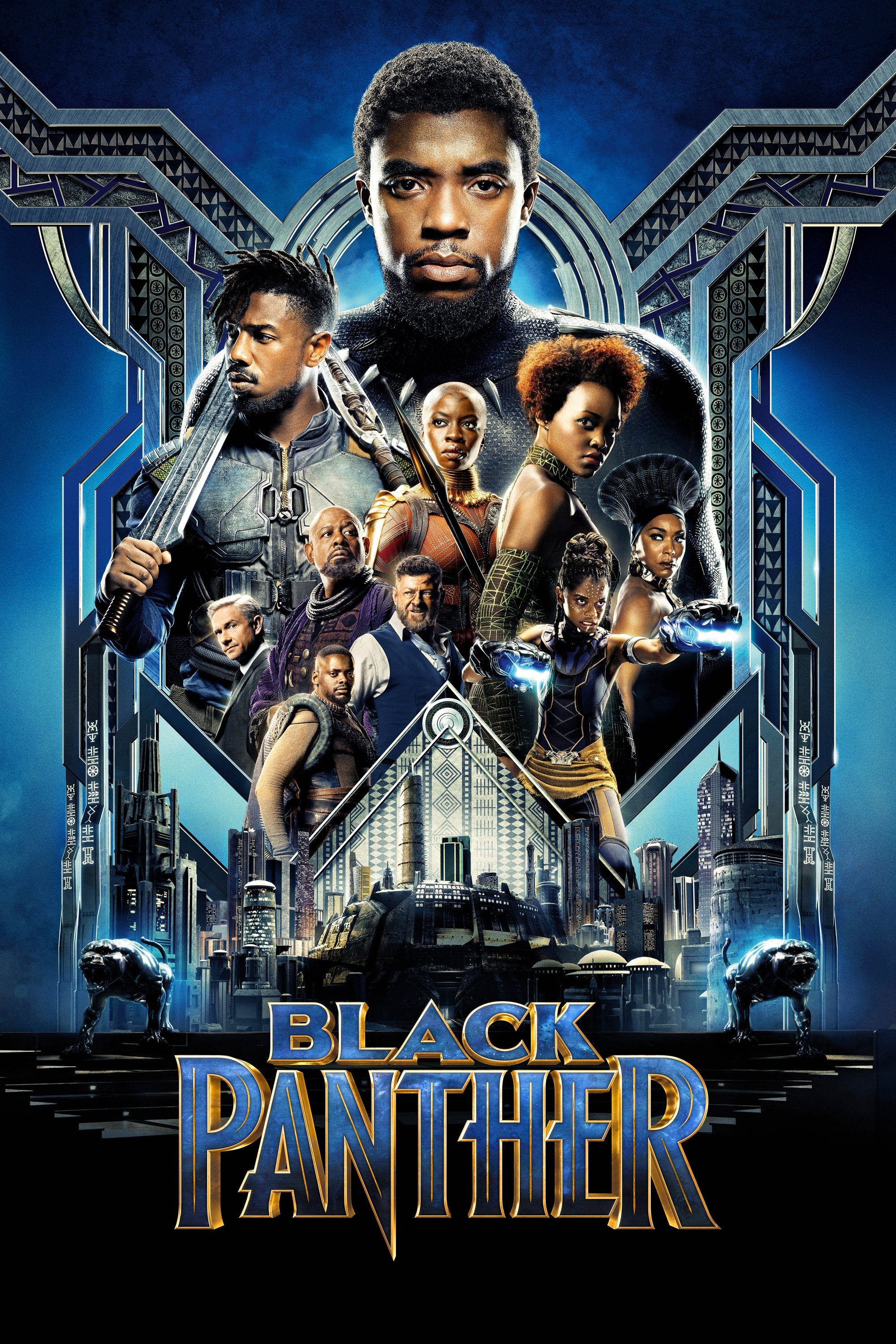
- UK release: February 2018
- Director: Ryan Coogler · Writers: Ryan Coogler, Joe Robert Cole
- Studio / distributor: Marvel Studios; Walt Disney Studios Motion Pictures
- Genre: Superhero action / Afrofuturist adventure · Runtime: 134 minutes (BBFC 12A)
- Main cast: Chadwick Boseman (42, Captain America: Civil War) as T’Challa / Black Panther; Michael B. Jordan (Fruitvale Station, Creed) as Erik Killmonger; Lupita Nyong’o (12 Years a Slave) as Nakia; Danai Gurira (The Walking Dead) as Okoye
- Rotten Tomatoes: 96% critics / 79% audience · My rating: 8 / 10
Eighteen films into the Marvel project, the worry is that the machine has flattened everyone who steps into it. Directors arrive with reputations and leave having made something competent and interchangeable. So the interesting thing about Black Panther is who has been handed the keys: Ryan Coogler, two films deep on Fruitvale Station and Creed, a director who works in close, character-first registers rather than mass spectacle. Marvel has bought itself a film-maker with a point of view, and for once you can feel it in the result. This is the rare entry that wants to be about something, and mostly manages it without dropping the third act it is contractually obliged to deliver.
The setup
T’Challa (Chadwick Boseman) returns home to Wakanda to take the throne after his father’s death. To the outside world Wakanda is a poor, land-locked African nation; in truth it sits on a mountain of vibranium, the most valuable substance on the planet, and has used it to build a hidden civilisation generations ahead of everyone else. The cost of that secret is isolation, and the new king inherits the argument over whether it can hold. The challenge, when it comes, arrives from Erik Killmonger (Michael B. Jordan), an outsider with a blood claim to the throne and a furious case for why Wakanda’s wealth should have been shared long ago. The film hangs on that disagreement, and it is a real one, which is more than most of these films can say.
The cast
Boseman gives T’Challa a still, watchful authority, a man more comfortable listening than declaiming, and that restraint leaves room for everyone around him. The women carry an enormous amount of the picture: Danai Gurira’s Okoye, all spear and unbending loyalty, is the best new presence Marvel has introduced in years, and Lupita Nyong’o’s Nakia gives the film its conscience without ever softening into a love interest. Letitia Wright walks off with whole scenes as Shuri, the king’s younger sister and the brain behind Wakanda’s technology. The film belongs, though, to Michael B. Jordan. Killmonger is the studio’s first villain whose argument you cannot simply wave away, a man shaped by abandonment whose method is monstrous but whose grievance lands. Coogler directed Jordan in Creed, and the shorthand between them shows.
The craft
Coogler and the cinematographer Rachel Morrison have built a place, not a backdrop. Wakanda has texture, a fusion of African design and impossible technology that feels lived in rather than art-directed, and the film slows down to let you look at it. Ludwig Göransson’s score, threaded with talking drums and West African instrumentation, gives the world a voice of its own and is a large part of why the film stays with you. The action is the weaker hand: an early casino set piece and a car chase through Busan have real snap, but the climactic vibranium-powered battle slides into the weightless digital scrum that afflicts the whole genre, and the effects there are the least convincing thing on screen. When the film trusts its faces and its setting it is excellent. When it remembers it owes you a spectacle, it wobbles.
How it stacks up
Set it beside the other recent Marvel films and the difference is one of intent. Captain America: Civil War juggled a roster; Thor: Ragnarok found a tone and rode it; Black Panther is trying to build a coherent world and argue a real political question inside a tentpole, which is a harder and rarer thing. The world-building invites the obvious comparison to Dune, another story of a desert-edged people sitting on the universe’s most coveted resource, and the Afrofuturist design owes a quiet debt to a tradition the genre has mostly ignored. What separates it from the pack is the villain. Most superhero films are only as good as their antagonist, and Killmonger is the strongest Marvel has fielded, which is why this film feels like it matters more than its plot mechanics would suggest.
Critics versus the rest of us
Critics are close to unanimous, parked at 96%, and the reasons are easy to see: a director with vision, a cast given something to play, a world worth the visit. Audiences are warmer than most but more measured at 79%, and that gap is honest. The cultural weight the film carries has pulled some of the praise above what is strictly on screen, and the structure underneath is still a Marvel origin film, complete with the ritual final-act collision of computer-generated armies. Both things are true at once: it is a genuinely better-made film than the studio’s norm, and it does not entirely escape the template it was built to fit.
Verdict
I value world-building, atmosphere and a soundtrack that does real work, and on those counts this delivers more than almost anything else the genre has produced lately. The villain is the best in the series, the country is one I would happily return to, and Coogler has made a Marvel film that carries an actual idea without forgetting to entertain. It loses something in a final act that defaults to genre habit, and the effects buckle exactly when they should soar, which is what keeps it short of the very top. It rewards a rewatch, mostly for the world and the cast rather than the climax. 8⁄10.
Availability: On general release in UK cinemas now, in 2D and IMAX.
Update
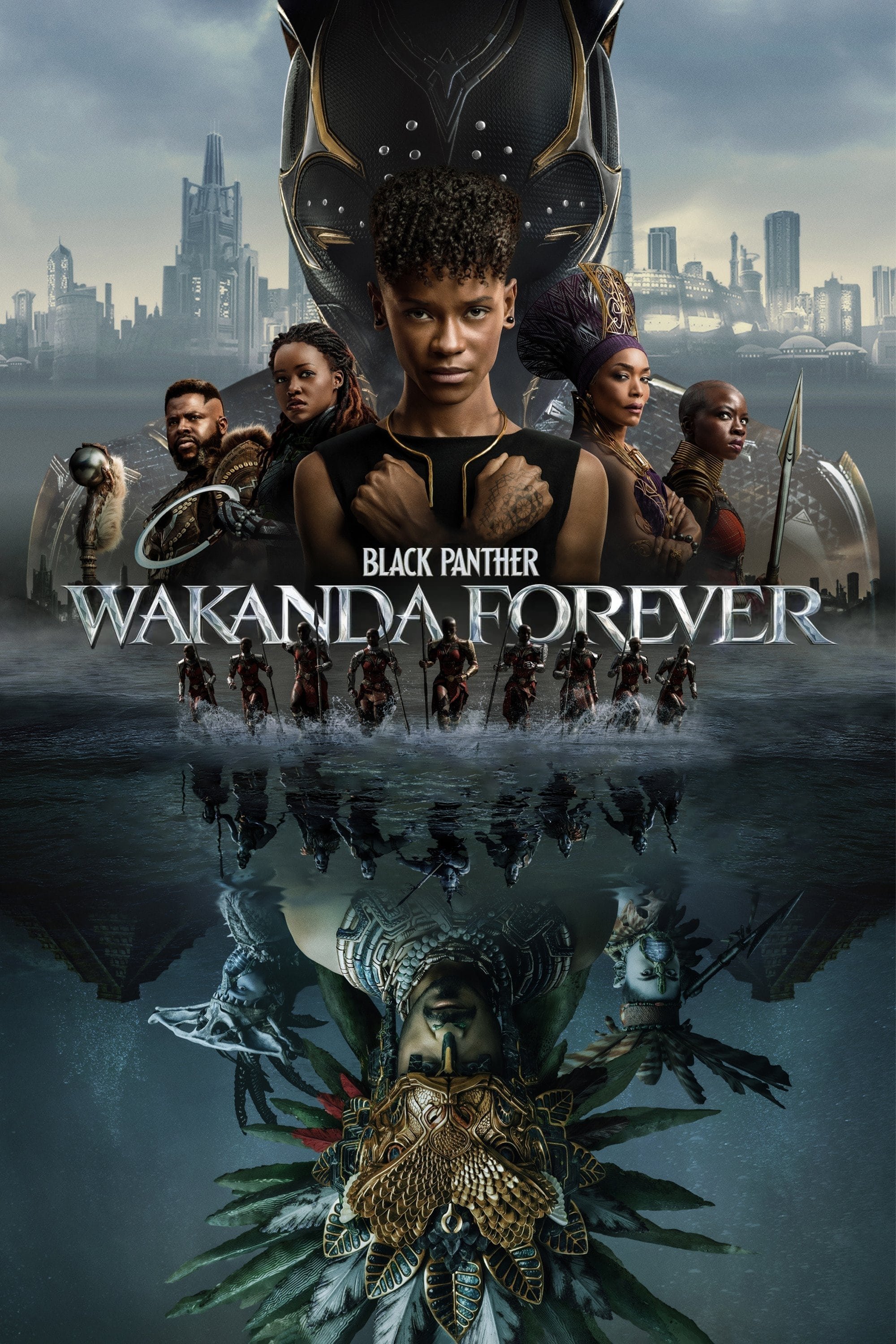
Added since this review first appeared: Black Panther went on to become the first superhero film nominated for the Best Picture Oscar, winning three awards including Ludwig Göransson’s score. Its sequel, Black Panther: Wakanda Forever (2022), had to be reshaped around the death of Chadwick Boseman in 2020, and stands now as much a tribute as a continuation. The film is widely available on disc and digital and streams on Disney+.
BBFC content advice
Rated 12A by the BBFC for moderate violence, injury detail, rude gesture. The notes below may contain spoilers.
Violence: There are battles with swords, spears, guns and fantastical weapons. The violence includes slashes, stabs and hand-to-hand combat. A character breaks another’s arm, and a warrior’s throat is cut, but without strong detail.
Threat and horror: There are scenes of threat, including a flashback to a character apparently being killed in an explosion.
Language: During a comic scene, a character gives a middle-finger gesture. There is also use of mild bad language (‘shit’), as well as milder terms such as ‘hell’.
Injury detail: A torso wound is shown during a healing process. Other injuries, sometimes bloody, are seen briefly and without strong detail.
Sex: There is some very mild comic innuendo.
Drugs: A fantastical mind-altering potion is drunk during a ceremonial ritual.
Source: British Board of Film Classification (bbfc.co.uk).