- UK release: May 2019
- Director: Chad Stahelski · Writers: Derek Kolstad, Shay Hatten, Chris Collins, Marc Abrams
- Studio / distributor: Lionsgate; Summit Entertainment; Thunder Road; 87Eleven
- Genre: Neo-noir action thriller · Runtime: 131 minutes (BBFC 15)
- Main cast: Keanu Reeves (The Matrix, Speed) as John Wick; Halle Berry (Monster’s Ball, X-Men) as Sofia; Ian McShane (Deadwood, Sexy Beast) as Winston; Laurence Fishburne (The Matrix, Apocalypse Now) as the Bowery King
- IMDb: 7.4 / 10 · Rotten Tomatoes: 90% critics / 86% audience · My rating: 8.5 / 10
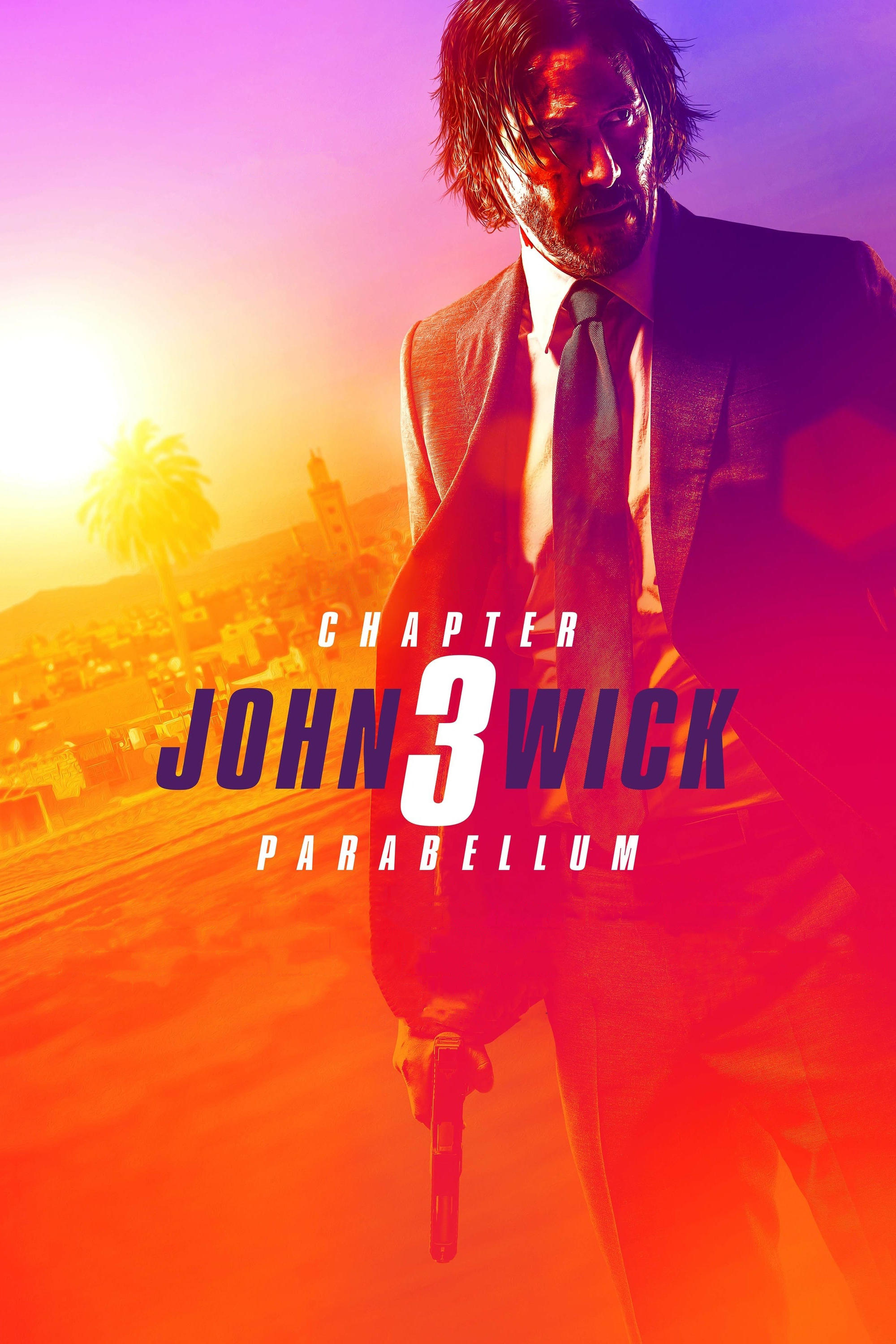
The first John Wick, back in 2014, was a small miracle of focus: a grieving hitman, a stolen car, a murdered puppy, and an action style so legible you could follow every round. Chapter 2 widened the frame and gave us the gold coins, the Continental, and the High Table, the secret bureaucracy that governs the assassins of this world. Parabellum opens with the clock from the last film still running. John has killed a man on Continental ground, his fourteen-million-dollar bounty goes live at six, and the rest of the film is him trying to outlast a city that wants him dead. Chad Stahelski, a stuntman before he was a director, has built his whole trilogy on the idea that you should be able to see what is happening. That principle is still here, and it is still rare.
The setup
Declared excommunicado for breaking the one rule that matters, John Wick has an hour’s grace before every contract killer in New York comes for the price on his head. He spends it calling in the last favours he has left: an old marker with a fixer named Sofia in Casablanca, a tentative truce with the bruised, vengeful Bowery King, and a journey that takes him out of the city and into the desert in search of the people who sit above even the High Table. Behind him comes the Adjudicator, an envoy sent to punish everyone who ever helped him, which means the institutions that gave the first two films their texture are now in the firing line too.
The plot is thin by design, a string on which to hang set pieces, and it is best not to ask too many questions about the rules. The film knows this, and keeps moving fast enough that you do not.
The cast
Reeves remains the engine. At fifty-four he is doing the bulk of this himself, and the commitment reads in every frame: the breathlessness, the stumbles, the way he checks a magazine like a man who has done it ten thousand times. He has perhaps a hundred words of dialogue and does not need more. Halle Berry’s Sofia is the standout addition, a former colleague with two attack dogs and a grudge, and her Casablanca sequence, woman and animals fighting as one unit, is the most thrilling new thing the series has tried. Ian McShane gives Winston his usual silken menace, a hotelier who clearly enjoys the theatre of his own power, and Laurence Fishburne chews the scenery happily as the Bowery King. Newcomer Mark Dacascos, as a sushi-chef assassin who is also a fan, brings an unexpected streak of comedy, and Asia Kate Dillon plays the Adjudicator with a cold administrative calm that suits the film’s idea of evil as paperwork.
The craft
Dan Laustsen shoots New York as a neon aquarium, all wet reflections and glass, and the violence is choreographed and lit so you never lose the geography of a fight. That is the achievement these films keep quietly making while louder action cinema chops everything into confetti. The standout sequences, a knife fight in an antiques showroom where the weapons are the stock, a motorcycle pursuit on a causeway, a glass-walled climax, are staged in long, readable takes that let you admire the work. Tyler Bates and Joel J. Richard’s pulsing score keeps the pulse up. If there is a cost, it is stamina: at over two hours the relentlessness can tip from exhilarating into wearying, and the film is so committed to forward motion that it never quite pauses to breathe.
How it stacks up
The obvious lineage is The Raid, Gareth Evans’s Indonesian masterclass in clean, brutal, sustained combat, and the Wick films share its faith in physical clarity over editing trickery. There is samurai cinema in the code of honour and the formality of the duels, and a strong debt to gun-fu and to Hong Kong action of the John Woo school. Against its own predecessors, Parabellum is the biggest and the busiest, lacking the lean shock of the first film but expanding the world with real confidence. Set beside the Mission: Impossible series, the other current home of practical, visible stunt work, it is less interested in plot and more interested in pure motion.
Critics versus the rest of us
Critics are enthusiastic, sitting around 90%, praising the choreography and the world-building while raising a recurring eyebrow at the ever-thickening mythology. Audiences are a touch cooler at 86%, and I suspect the gap is fatigue: some viewers want a story to go with the spectacle, and this series increasingly offers ceremony instead. My own reaction lands close to the critics. The lore has become elaborate to the point of silliness, but the silliness is part of the pleasure, and nobody is matching the craft of the action.
Verdict
I value rewatchability and world-building, and this delivers both: a self-contained universe with its own currency, etiquette and architecture, and fight scenes you will happily run back to watch again. It is half a point short of perfect for me only because the runtime outstays the story, and because the franchise is starting to mistake mythology for momentum. But on the thing it sets out to do, build the most legible, most beautiful action cinema going, it is close to untouchable. 8.5⁄10.
Availability: On general release in UK cinemas now. Best seen on a big screen with a crowd, where the set pieces land hardest.
Update
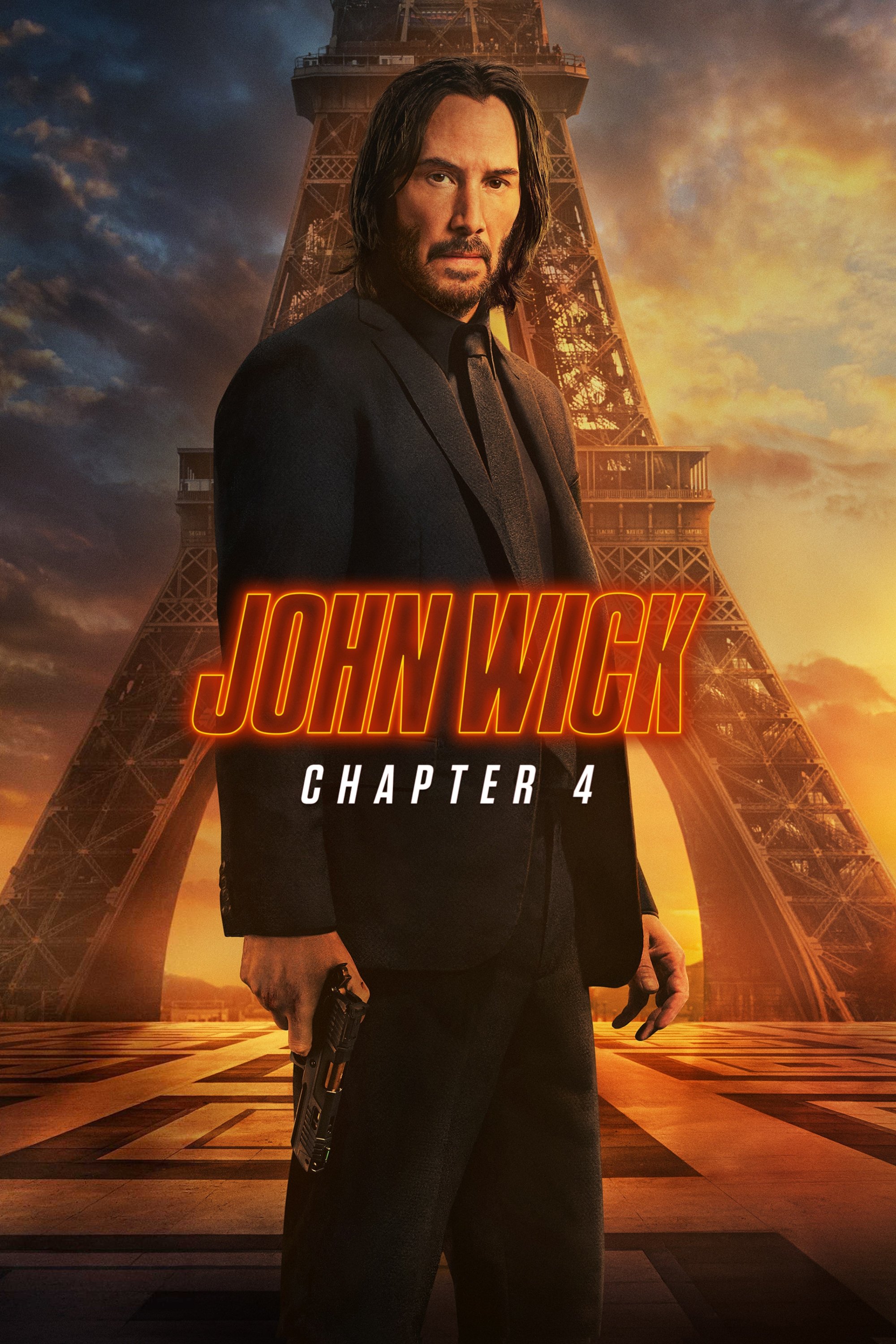
Added since this review first appeared: the series continued with John Wick: Chapter 4 (2023), which pushed the scale and the runtime even further, with a Paris stairway sequence that became its calling card, and spun off into the prequel series The Continental and the film Ballerina. Chapter 3’s mid-tier standing in the franchise has held: admired for the dog fight and the glass-house finale, occasionally faulted for the lore creep this review flagged. It is now on 4K, Blu-ray and digital, and streams across various platforms depending on region.
BBFC content advice
Rated 15 by the BBFC for strong bloody violence, language. The notes below may contain spoilers.
Violence: Frequent scenes of violence include men being shot and stabbed with resultant sight of blood spray on impact. One scene shows a man’s neck being snapped over a heavy book. In another scene a man uses a blade to cut another man’s eye out, including sight of bloody detail.
Language: There is strong language (‘motherf**ker’, ‘f**k’), as well as uses of ‘pissed’, ‘shit’, and a middle finger gesture.
Source: British Board of Film Classification (bbfc.co.uk).