- UK release: March 2010
- Director: Martin Scorsese · Writer: Laeta Kalogridis (from the novel by Dennis Lehane)
- Studio / distributor: Paramount Pictures; Phoenix Pictures; Sikelia Productions
- Genre: Psychological thriller / Gothic mystery · Runtime: 138 minutes (BBFC 15)
- Main cast: Leonardo DiCaprio (Titanic, The Departed) as Teddy Daniels; Mark Ruffalo (Zodiac) as Chuck Aule; Ben Kingsley (Gandhi, Sexy Beast) as Dr John Cawley; Michelle Williams (Brokeback Mountain) as Dolores Chanal; Max von Sydow (The Seventh Seal, The Exorcist) as Dr Jeremiah Naehring
- Rotten Tomatoes: 68% critics / 76% audience · My rating: 8 / 10
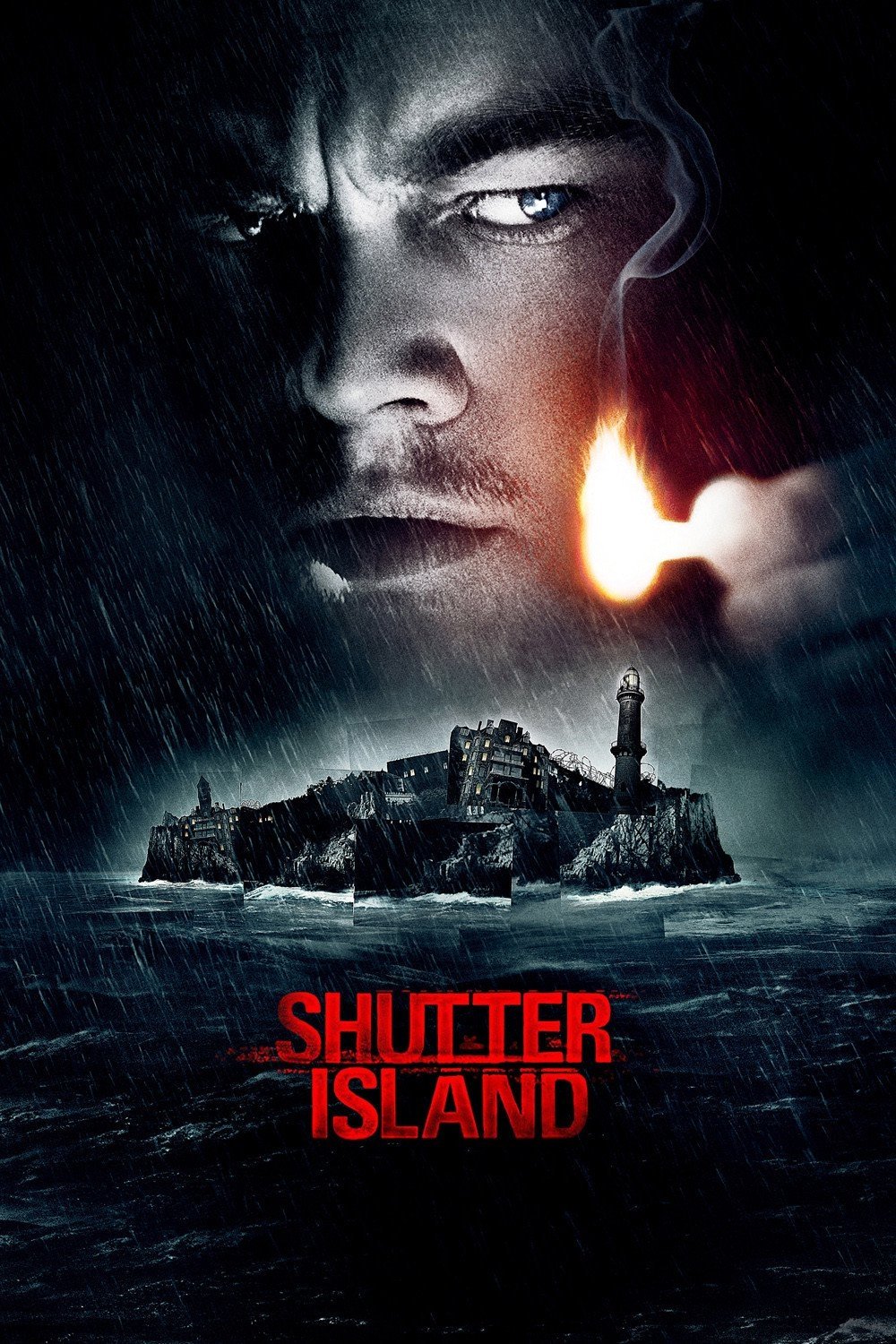
Martin Scorsese has spent so long defining a particular kind of American film, the wise guys and the cab drivers and the rise-and-fall, that it is easy to forget how much he loves the old genre stuff: the Powell and Pressburger melodramas, the German expressionists, the lurid Val Lewton horrors he champions when nobody is asking him to. Shutter Island is the film where he gets to play with all of it at once. Three years after he and Leonardo DiCaprio finally won the establishment over with The Departed, the two of them have made something far stranger and more disreputable: a fog-bound Gothic puzzle box, dressed up as a detective story, that is really a study of a man coming apart.
The setup
It is 1954, and U.S. Marshal Teddy Daniels (DiCaprio) takes a ferry out to Ashecliffe, a hospital for the criminally insane perched on a rock off the Boston coast. A patient has vanished from a locked cell, and Teddy and his new partner Chuck (Mark Ruffalo) are there to find her. Then a hurricane closes in, the boats stop running, and the staff start giving answers that do not quite fit. Teddy has his own reasons for wanting onto this island, and as the storm cuts the place off from the world his migraines, his memories of liberating Dachau, and his dead wife begin bleeding into the investigation. The less you know going in, the better, so I will leave the rest of the machinery where the film keeps it: behind a locked door.
The cast
DiCaprio is doing the heavy lifting and he knows it. This is a sweatier, more haunted performance than the cool operator of The Departed, all clenched jaw and barely-managed grief, a man trying to hold an investigation together while something inside him keeps slipping. Ruffalo is quietly excellent as the partner, watchful and a little too patient, playing a long game the audience cannot yet read. Ben Kingsley gives Dr Cawley exactly the right unreadable courtesy, a man who could be a humane reformer or something much worse, and you spend the film unable to decide which. Max von Sydow brings a whisper of old-world menace as his colleague Naehring, and Michelle Williams haunts the edges of Teddy’s memory with real sorrow rather than the usual ghost-wife shorthand. It is a deep bench, and Scorsese trusts every name on it.
The craft
This is where the film earns its keep. Robert Richardson shoots Ashecliffe like a fever, all sickly greens and storm-light and shadows that fall in the wrong direction, and Scorsese leans openly into artifice: continuity that wobbles, weather that obeys the mood rather than the meteorology, a back-projected drive that looks deliberately false. The score, assembled by Robbie Robertson from existing modern classical pieces, lands like a slab of dread before a single line is spoken, all groaning brass and strings that seem to push the boat back from the dock. Thelma Schoonmaker’s editing keeps the ground shifting under you. None of it is subtle, and it is not meant to be. The whole picture is built as a nightmare you are slowly realising you cannot wake from.
How it stacks up
The reference points are worn proudly on the sleeve. There is Vertigo in the obsessive man chasing a woman who may not be what she seems, The Cabinet of Dr Caligari in the tilted asylum and the question of who is really mad, and a good deal of Scorsese’s own Cape Fear in the operatic, unembarrassed dread. As a Dennis Lehane adaptation it is closer in spirit to the grief and guilt of Mystic River than to the procedural grind of Gone Baby Gone, though it trades their grounded realism for something far more heightened. Against Scorsese’s own back catalogue it is a minor-key oddity, but a gorgeous one, the work of a director enjoying a holiday in a genre he has loved his whole life.
Critics versus the rest of us
Critics are running a touch cool, around 68%, with audiences warmer at 76%, and the split is easy to understand. The complaint is that the film is more atmosphere than mystery, that it is a sumptuous machine in service of a twist you may well see coming, and that Scorsese the stylist has rather smothered Scorsese the storyteller. There is something to that. If you crack the puzzle early, the back half can feel like watching a man take the long way round to a destination you reached an hour ago. But that reading undersells how much pleasure there is in the texture of the thing, and how cleverly the film rewards a second watch once you know where the floor gives way.
Verdict
I came for the atmosphere and the rewatch value, and on both counts Shutter Island delivers handsomely. Yes, it is a thriller that depends heavily on its reveal, and yes, a sharp viewer will be ahead of Teddy more than the film would like. It is still one of the most beautifully sustained moods in any mainstream release this year, a Gothic puzzle that holds together better on the rewind than it does on the first pass, anchored by a DiCaprio performance that gives the whole feverish exercise a human centre. Not top-tier Scorsese, but a long way from a footnote, and the kind of film I will happily put on again to watch the seams. 8⁄10.
Availability: In UK cinemas now. One to see on a big screen while the storm is still rolling, with the Blu-ray and DVD to follow later in the year.
Update
Added since this review first appeared: the film has aged into one of the more rewatched entries in the Scorsese and DiCaprio partnership, its final exchange endlessly chewed over by viewers arguing about what Teddy does and does not understand by the end. It sits well alongside their next collaboration, The Wolf of Wall Street (2013), as proof that the pairing had range well beyond The Departed. It is widely available on disc and digital and rotates through the major streaming platforms depending on region.
BBFC content advice
Rated 15 by the BBFC for strong language, bloody injury and disturbing images. The notes below may contain spoilers.
Violence: There are occasional scenes of moderate violence, including shootings and characters fighting using their fists.
Language: There is occasional use of strong language (‘f***k’), as well as more moderate bad language including ‘bitch’ and ‘prick’.
Sex: There are some moderate verbal references, including to oral sex.
Discrimination: There is infrequent use of discriminatory language (‘n***r’, ‘retard’) by an asylum inmate.
Suicide and self-harm: A man attempts to take his own life. While the act is not shown, there is aftermath sight of a bloody wound after he has shot himself.
Injury detail: During a character’s flashbacks there is sight of a man with a gory bullet wound in his cheek.
Nudity: There is non-sexual nudity in a prison/asylum context, as well as sight of nudity in artworks.
Disturbing images: Flashback images include scenes set in the Dachau death camp, with sight of dead, emaciated women and children lying in great piles, some frozen in the snow. Other disturbing images include a woman with a fiery hole in her torso dissolving into ash, and a woman with three dead children covered in blood.
Source: British Board of Film Classification (bbfc.co.uk).