- UK release: November 2022
- Director: Rian Johnson · Writer: Rian Johnson
- Studio / distributor: T-Street; Netflix
- Genre: Mystery comedy / whodunnit satire · Runtime: 139 minutes (BBFC 12A)
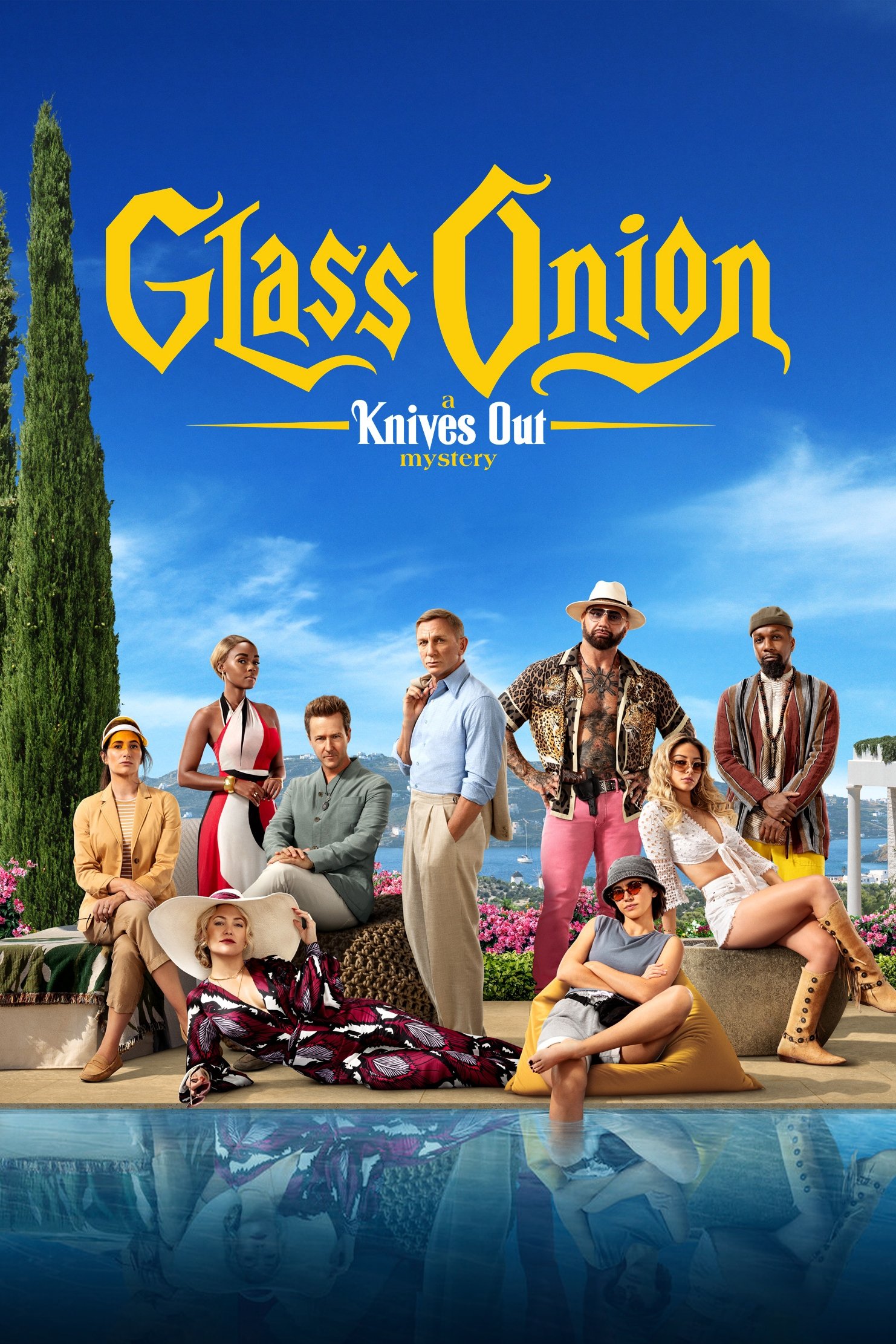
- Main cast: Daniel Craig (Knives Out, Casino Royale) as Benoit Blanc; Janelle Monáe (Moonlight, Hidden Figures) as Andi and Helen Brand; Edward Norton (Fight Club, Birdman) as Miles Bron; Kate Hudson (Almost Famous) as Birdie Jay; Dave Bautista (Guardians of the Galaxy, Dune) as Duke Cody
- Rotten Tomatoes: 92% critics / 92% audience · My rating: 8 / 10
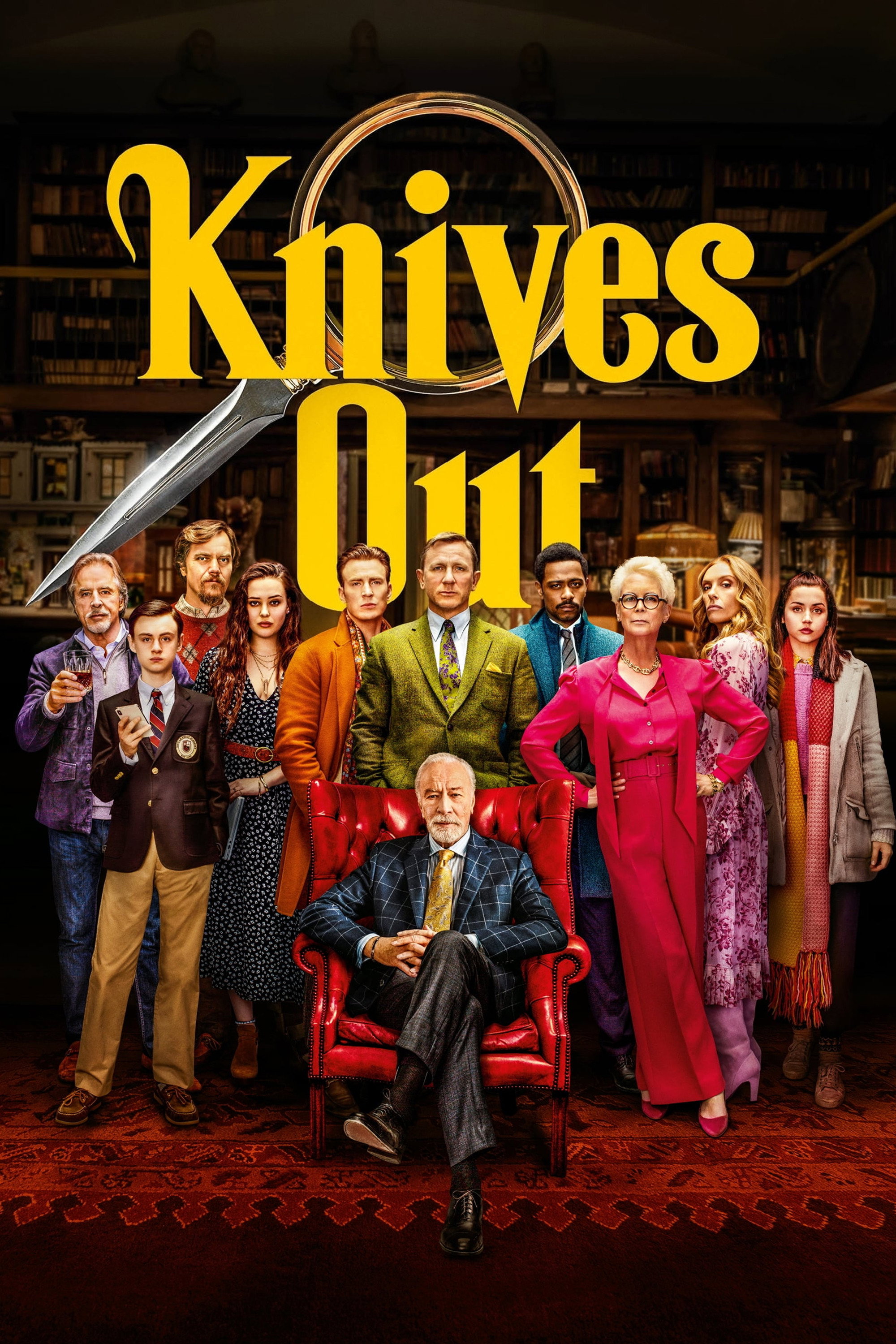
Three years ago Knives Out did something the genre had half forgotten was possible: it made the drawing-room murder mystery feel current again, sold tickets on the strength of an Agatha Christie structure, and turned Daniel Craig’s syrupy Southern sleuth into a small franchise. Rian Johnson has now signed an enormous Netflix deal off the back of it, and the follow-up arrives with a different problem from most sequels. The original was a closed, chilly New England house full of family resentments. This one throws the doors open, ships everyone to a Greek island, and trades the cosy claustrophobia for sunshine, money and a target list. It is a riskier shape, and for the most part Johnson gets away with it.
The setup
A clutch of rich, self-satisfied friends, the kind of people who call themselves disruptors without irony, receive an elaborate puzzle box inviting them to the private island of tech billionaire Miles Bron (Edward Norton). The weekend is meant to be a staged murder-mystery game for Bron’s amusement. Detective Benoit Blanc (Daniel Craig) turns up uninvited, the game curdles into a real death, and Blanc finds himself unpicking a circle of hangers-on who all owe their fortunes, careers and reputations to the man at the centre. Everyone has a motive, nobody is quite as clever as they think, and the cleverest thing in the room may be the question of who actually wanted to come. To say much more is to spoil a film that runs on its reversals, so I will leave the box closed.
The cast
Craig is plainly enjoying himself, and the loosened setting gives Blanc more room to be ridiculous without tipping into pure cartoon. The performance that anchors the film, though, is Janelle Monáe’s, in a dual role that asks for two distinct registers and gets them; she holds the emotional centre while everyone around her plays for laughs. Norton is well cast as Bron, a man who has mistaken wealth for genius and surrounds himself with people paid to agree, and he resists the easy temptation to make him merely a fool. Kate Hudson is very funny as a fading celebrity with no filter and a talent for saying the unsayable, and Dave Bautista, who has quietly become one of the more reliable comic presences in big films, lends his influencer gun-bro exactly the right blend of menace and stupidity. The ensemble is the engine here, and Johnson keeps it firing.
The craft
Steve Yedlin’s photography makes the island glossy and bright, a deliberate inversion of the original’s wood-panelled gloom, and Nathan Johnson’s score keeps the whole thing skipping along. The screenplay is the real craft on show. Johnson plants his clues in plain sight, lets the audience feel clever for half a beat, then shows you how much you missed, and the structural trick at the film’s midpoint reframes everything that came before it. It is the sort of construction that rewards a second viewing, when the early scenes read completely differently. If there is a weakness it is that the satire occasionally swings at targets so broad they barely move, and the topical jokes about influencers and pandemic-era excess may date faster than the mechanics of the mystery. But the plotting is precise, the pacing rarely sags across its 139 minutes, and the film knows exactly how silly it is allowed to be.
How it stacks up
The obvious comparison is Knives Out, and on pure construction the first film is the tighter machine: a single house, a single family, a clockwork plot with no slack in it. Glass Onion is baggier and more pleased with itself, but it buys something with that looseness, a bigger, brasher comedy of manners that the smaller film could not have held. The deeper lineage runs back to The Last of Sheila, the 1973 puzzle film about a rich man inviting friends to a holiday game that turns lethal, which Johnson has clearly studied and which shares the same delight in performance and misdirection. Set against the recent run of eat-the-rich satires, this is warmer and more playful than most; it wants to skewer its billionaire rather than merely despise him, and it lets the joke land without forgetting to keep the mystery honest.
Critics versus the rest of us
The reception has been strong and unusually aligned, with critics and audiences sitting together around the low nineties. The praise lands on the wit, the ensemble and the timeliness of the satire; the main reservation, where there is one, is that the open holiday setting lacks the elegant confinement of the original, and that the targets are sometimes too easy. I think that is fair without being damning. The first film is the better-engineered object. This one is the more purely entertaining night out, and it is the one whose central twist I most want to watch a second time to catch what I missed.
Verdict
This sits comfortably for me because it does the two things I most want from this kind of film: it plays fair with its puzzle and it is genuinely funny while doing it. The satire is broad and will age unevenly, the island never quite generates the dread of the old dark house, and Blanc is in danger of becoming a turn rather than a character. None of that stops it being a smart, generous, rewatchable mystery with an ensemble clearly having the time of their lives. It is the rare sequel that justifies going bigger. 8⁄10.
Availability: In selected UK cinemas now for a one-week run, then streaming on Netflix from 23 December.
Update
Added since this review first appeared: Johnson’s deal with Netflix has since produced a third Blanc mystery, confirming this as an ongoing series rather than a one-off follow-up. The brief, contested cinema window here, the first time a Netflix film played all the major UK chains, became a recurring point of friction between the platform and exhibitors. The film now lives permanently on Netflix.
BBFC content advice
Rated 12A by the BBFC for infrequent strong language, moderate sex references, violence, drug misuse. The notes below may contain spoilers.
Violence: A character is shot in undetailed fashion, with subsequent sight of bloody images. A character chokes and collapses onto a glass table after consuming a toxic substance.
Language: There is infrequent strong language (‘f**k’), as well as milder terms such as ‘bitch’, ‘shit’, ‘ballsy’, ‘ass’, ‘asshole’, ‘tits’, ‘son of a bitch’, ‘freaking’, ‘God’, ‘damn’ and ‘hell’. There are also rude middle finger gestures.
Sex: Moderate sex references include comments about ‘boner pills’ and ‘consensual cuckolding’, as well as brief sight of a sex toy. A woman says, ‘My boobs are fun’. A woman in a bikini straddles a man whose hands reach out to her breasts, but do not touch them.
Drugs: There is infrequent sight of joint smoking, a stash of pre-rolled joints and a cannabis plant in a man’s room. There is a reference to an ayahuasca retreat. Drug misuse is not endorsed by the work as a whole.
Additional issues: There is mild threat. There are images of dead bodies, but without strong detail. There are references to a suicide. An unsympathetic character makes an antisemitic comment on social media, but their phone is confiscated as a consequence. The work does not endorse discrimination.
Source: British Board of Film Classification (bbfc.co.uk).