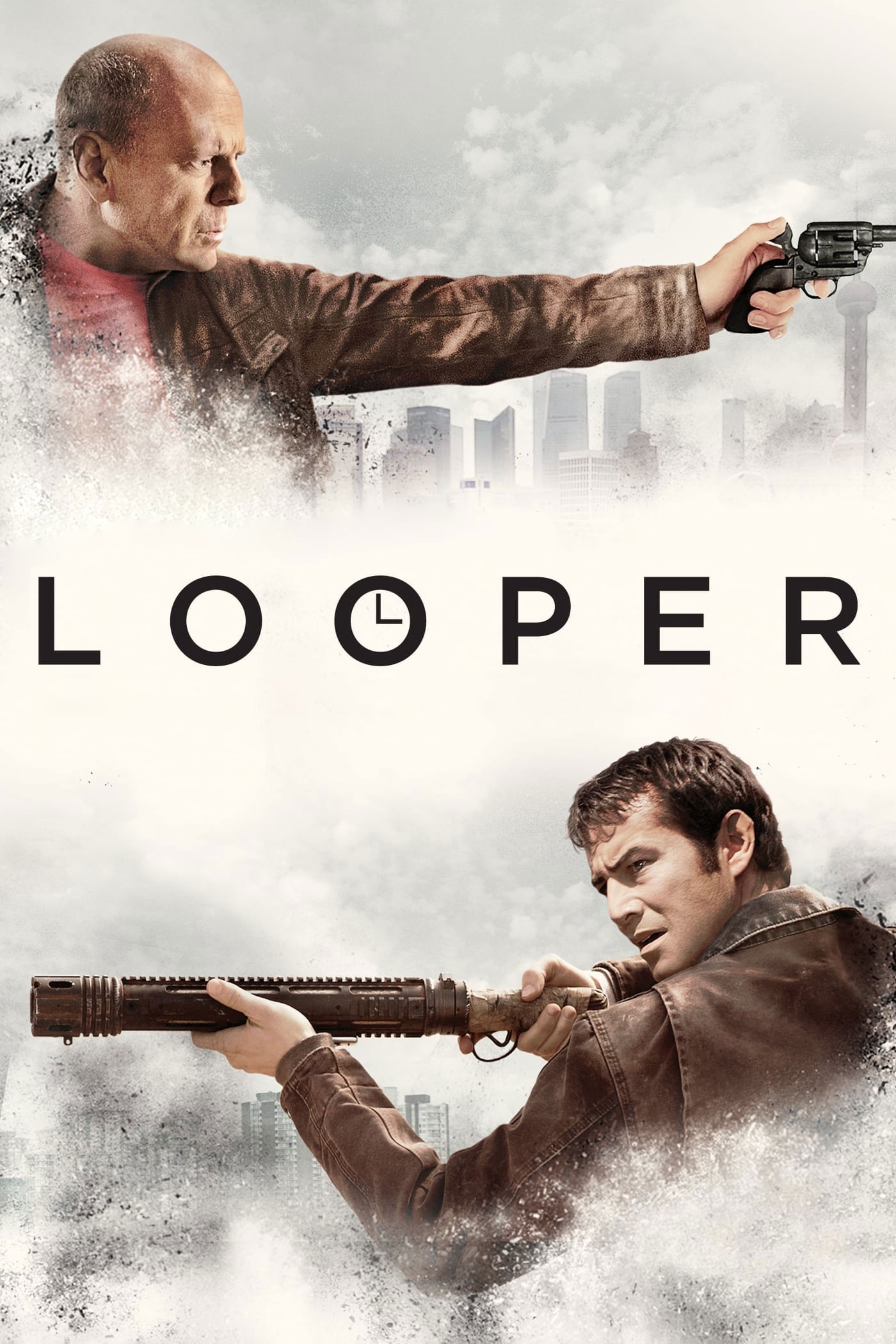

- UK release: September 2012
- Director: Rian Johnson · Writer: Rian Johnson
- Studio / distributor: Endgame Entertainment; FilmDistrict; DMG Entertainment
- Genre: Science-fiction crime thriller / time-travel drama · Runtime: 119 minutes (BBFC 15)
- Main cast: Joseph Gordon-Levitt (Inception, (500) Days of Summer) as Joe; Bruce Willis (Die Hard, The Sixth Sense) as Old Joe; Emily Blunt (The Devil Wears Prada) as Sara; Paul Dano (There Will Be Blood) as Seth; Jeff Daniels (Speed, Dumb and Dumber) as Abe
- Rotten Tomatoes: 93% critics / 82% audience · My rating: 7.5 / 10
Rian Johnson has made only two features before this, the high-school noir Brick and the con-artist caper The Brothers Bloom, and both announced a director more interested in playing with genre than serving it straight. Looper is his first real budget and his first move into science fiction, and the surprise is not that he handles the time-travel plumbing well, but that he is so plainly bored by it. The premise is a hook to hang something quieter on, and Johnson keeps tugging the film away from the chase it could easily have settled for.
The setup
In a near future where time travel exists but is illegal, the mob of a further future sends its inconvenient victims thirty years back to be shot on arrival by hired killers called loopers. The job pays well and the rules are simple: the assassin disposes of the body, no questions, no faces. The catch is the contract’s exit clause. Eventually the mob sends back your own older self for you to kill, closing the loop and buying your silence for the years in between. Joe (Joseph Gordon-Levitt) is a looper who has made his peace with this until the day the man kneeling in front of his shotgun turns out to be himself at sixty (Bruce Willis), and lives long enough to run. What starts as a hitman cleaning up his own mistake becomes a stranger, more troubling problem about how far a man will go to protect a future he wants.
The cast
Gordon-Levitt is doing the harder of the two jobs, playing a younger Bruce Willis under prosthetics that subtly reshape his nose, brow and mouth so the resemblance reads without tipping into impression. It could have been a stunt, all clipped Willis cadence and squint, but he finds the colder, hungrier version of a man who has not yet been worn down into regret. Willis brings the weary action-star gravity you would expect and then, in one extraordinary diner scene where the two Joes face each other across a table, something more bruised and desperate. Emily Blunt arrives late and changes the film’s centre of gravity, grounding the back half as a farmer guarding her own small patch of the future with a shotgun and a great deal of nerve. Paul Dano makes a single panicked sequence land hard, and Jeff Daniels, as the crime boss exiled to the past to run the operation, is all dry, paternal menace in a dressing gown.
The craft
Johnson and his cinematographer Steve Yedlin build a future that feels lived-in and slightly broken rather than chrome and clean: solar-panelled cars held together with tape, a sun-bleached Kansas farmhouse, a city full of vagrants and cheap neon. The world-building is economical and confident, sketched in the corners of the frame rather than explained, which I always prefer to a film that stops to lecture you on its own rules. Nathan Johnson’s score leans on found and prepared sounds, giving the thing a textured, anxious pulse. The violence, when it comes, is sudden and properly nasty, and there is one quietly horrible sequence about what happens to a looper who fails to close his loop that shows the mechanics of this world without a line of exposition. Best of all, Johnson knows when to slow down: the film keeps stopping to let people talk, and trusts that the talk is more interesting than the gunfire.
How it stacks up
The obvious ancestors are all here. There is the grimy paradox-logic of 12 Monkeys, the pre-emptive moral panic of Minority Report, and the original The Terminator’s idea of the future reaching back to murder its own past. Looper is cleverer than most of its siblings about refusing to over-explain, and Johnson even has Old Joe wave the whole question away in that diner, telling his younger self he does not want to sit here drawing diagrams about time travel all day. It is also recognisably the same director as Brick, transplanting that film’s hard-boiled rhythms and trick of taking young actors deadly seriously into a bigger sandbox. Where it parts company with the colder, puzzle-box end of the genre is the second half, which swaps the city chase for something closer to a rural siege and a question about whether a person can be saved before they become a monster.
Critics versus the rest of us
Critics are close to unanimous, sitting around 93%, praising the intelligence, the style and the emotional swerve into its quieter final act. Audiences are warmer than lukewarm but a touch behind, near 82%, and you can see the fault line: the people who wanted a taut time-travel thriller all the way through are slightly thrown when the film parks the chase to spend its third act on a farm. I am somewhere between the two camps. I admire almost everything Johnson does here, and I think the gear change is brave rather than a misstep. But for all its confidence I came out respecting the film more than I loved it, which is the honest gap between a 93 and my own number.
Verdict
This is a smart, stylish, properly grown-up piece of science fiction that uses its high concept as a way in rather than the whole show, and it is held together by two performances pretending to be one man. The world-building is lean, the craft is assured, and the willingness to become a slower, sadder film in its final stretch is the bravest thing in it. If it stops just short of the top tier for me, it is because the cleverness and the feeling never quite fuse into something I ached to watch again the moment it ended. I will happily revisit it, just not as often as the reviews would have you book it in for. 7.5⁄10.
Availability: On general release in UK cinemas now.
Update
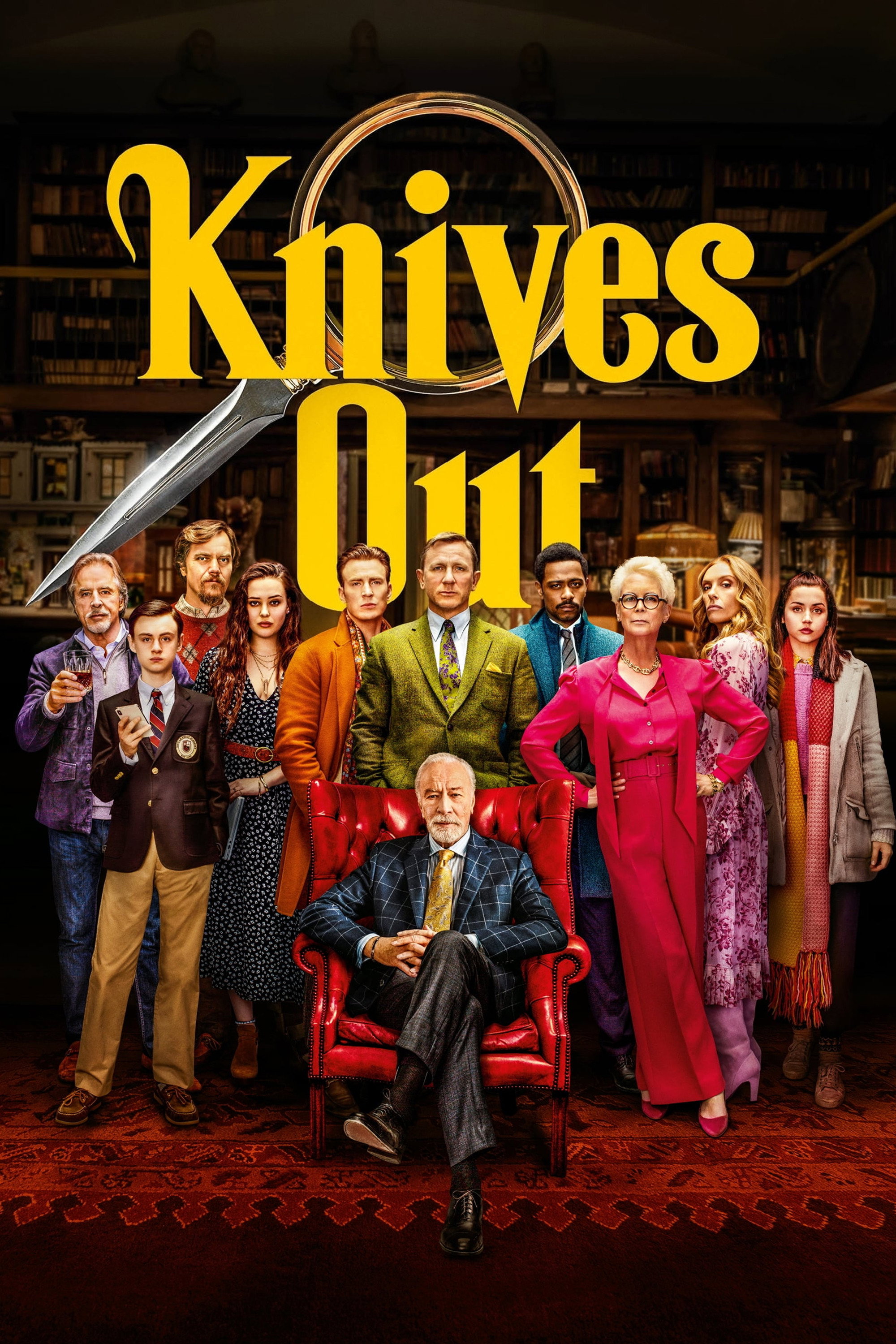
Added since this review first appeared: Rian Johnson went on to far bigger things, taking the Star Wars franchise into its most divisive entry with The Last Jedi (2017) and then reinventing himself as a whodunit author with Knives Out (2019) and its Netflix sequels. Seen against that run, Looper now reads as the hinge film where his appetite for bending a genre out of shape met a proper budget. It has settled into a reputation as one of the stronger original science-fiction films of its decade, and is widely available on disc, on digital, and streaming depending on your region.
BBFC content advice
Rated 15 by the BBFC for strong language, bloody violence. The notes below may contain spoilers.
Violence: There are several scenes of strong bloody violence, including occasional sight of blood splashes when victims are shot down. One scene shows a man being repeatedly shot in slow motion from many angles.
Language: There is use of strong language (‘f**k’).
Additional issues: There is implied use of an imaginary drug, which is applied in the form of eye drops, and two very brief images of a syringe suggesting that the man’s drug use has escalated.
Source: British Board of Film Classification (bbfc.co.uk).