
- UK release: August 2021
- Director: Dominic Cooke · Writer: Tom O’Connor
- Studio / distributor: Lionsgate; FilmNation Entertainment; 42; SunnyMarch
- Genre: Cold War espionage drama / true story · Runtime: 111 minutes (BBFC 15)
- Main cast: Benedict Cumberbatch (The Imitation Game, Sherlock) as Greville Wynne; Merab Ninidze (Bridge of Spies) as Oleg Penkovsky; Rachel Brosnahan (The Marvelous Mrs. Maisel) as Emily Donovan; Jessie Buckley (Beast, Wild Rose) as Sheila Wynne
- IMDb: 7.2 / 10 · Rotten Tomatoes: 85% critics / 95% audience · My rating: 8 / 10
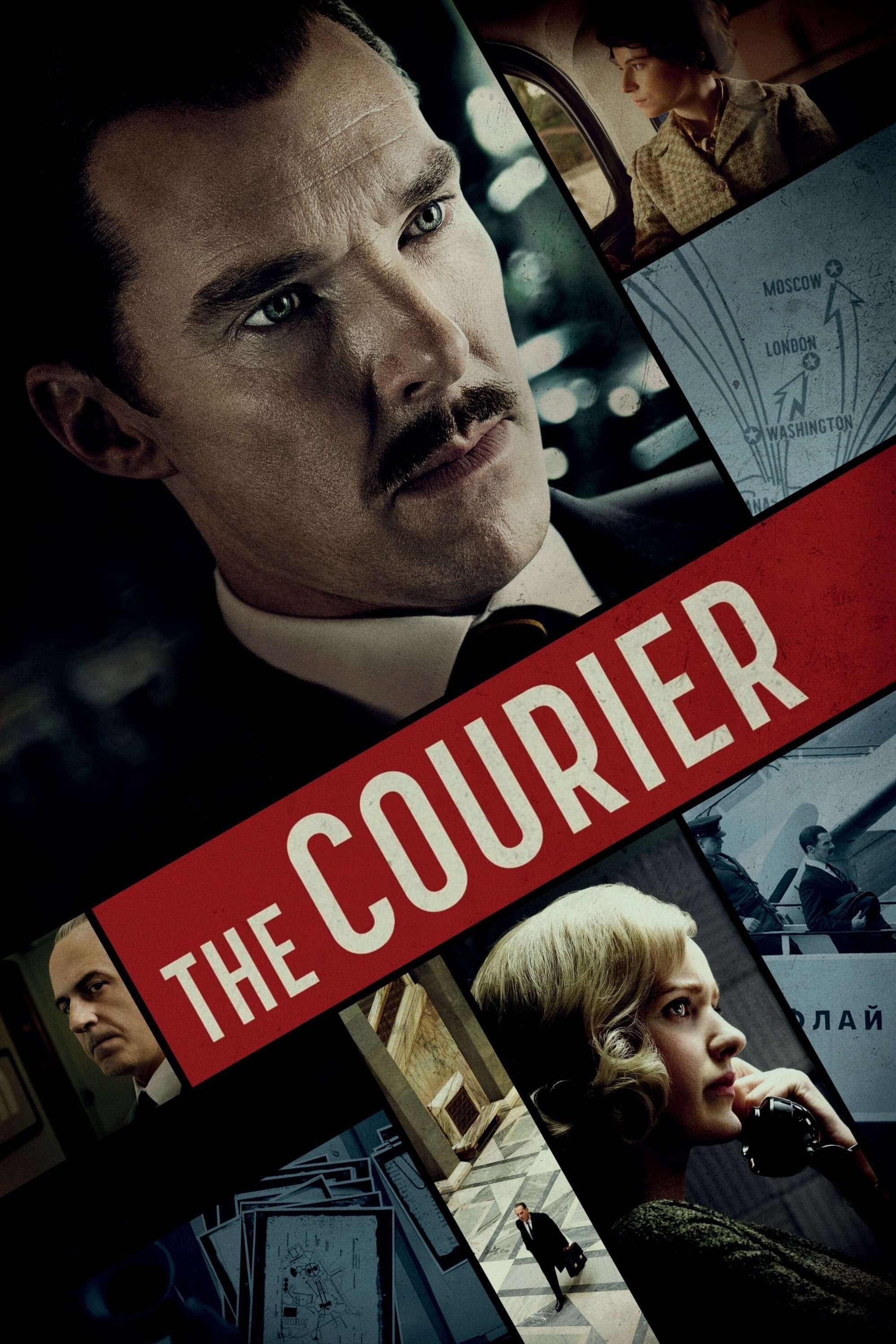
The British spy film has two settings. One is the gadget-and-rooftop mode that Bond made the export brand. The other is the quieter tradition that runs through John le Carré and Tinker Tailor Soldier Spy, where the work is mostly waiting, lying to the people you love, and trying not to be sick with fear in a hotel corridor. The Courier, held back from its planned 2020 release and arriving in UK cinemas now, sits firmly in the second camp, and it has the additional pull of being true. Greville Wynne was a real salesman who carried real secrets, and the film is most interesting when it remembers that an amateur, not a professional, is the man with the briefcase.
The setup
Wynne is an ordinary Birmingham-born businessman selling industrial machinery across Europe in the early 1960s, a man whose chief talents are a firm handshake and a good lunch. MI6 and the CIA, working together, choose him precisely because he is so unremarkable: nobody would suspect a travelling salesman of being a conduit. They steer him towards Oleg Penkovsky, a senior Soviet officer who has decided, at appalling personal risk, to pass Western intelligence what he knows. What begins as a single favour becomes a repeated trip to Moscow, then a friendship, and then, as the Cuban Missile Crisis tightens, a matter on which the avoidance of nuclear war may genuinely turn. The film is careful to keep the early stretch low-key, so that the stakes climb without ever feeling stage-managed.
The cast
This is Cumberbatch’s film, and he plays Wynne against type. There is none of the clipped genius of his Turing or his Holmes here. Wynne is vain, a little soft, fond of a drink, and entirely out of his depth, and Cumberbatch lets you watch an unremarkable man discover he is braver than he had any reason to expect. The final act asks a great deal of him physically, and he commits to it without vanity. Merab Ninidze is the film’s other engine. His Penkovsky carries the heavier burden, a man who has already decided to die for what he is doing, and the friendship between the two grows convincingly from wary handlers to something close to love. Jessie Buckley, as Wynne’s wife Sheila, does a lot with a part that could have been wallpaper, giving the home front its own quiet weather of suspicion and hurt. Rachel Brosnahan’s CIA officer is the most conventional figure, the briskness of the intelligence machine made human.
The craft
Dominic Cooke comes from the theatre and his previous film, On Chesil Beach, was an intimate two-hander, so the restraint here is no surprise. Sean Bobbitt’s photography gives early-sixties Moscow a grey, watchful chill against the warmer browns of London clubland, and the contrast does a lot of the storytelling. Abel Korzeniowski’s score is patient rather than insistent, holding back so that the tense scenes, a handover that goes slightly wrong, a border crossing, land harder for the silence around them. The film looks more expensive than it probably was, and the period detail never tips into nostalgia for its own sake. Where it could be sharper is in pace: the middle stretch settles into a rhythm of trips and reports that risks the procedural feeling routine, before the last half hour changes register entirely and earns back every minute.
How it stacks up
The obvious neighbour is Bridge of Spies, another decent man caught between superpowers, and The Courier shares its faith that an ordinary conscience under pressure is dramatic enough without invention. It is less ornate than Tinker Tailor Soldier Spy and less interested in institutional rot; this is a story about two individuals, not a service. It also rhymes with The Imitation Game in its shape, a clever true story built around a single charismatic lead, though it is the warmer and more humane of the two. What lifts it above the run of respectable historical dramas is the back half, which is willing to follow the consequences of the story to a genuinely bleak place rather than waving the heroes off with a caption.
Critics versus the rest of us
The critical line is generous but slightly cool, sitting around 85%, with the recurring note that the film is well made and conventionally told, a sturdy old-fashioned spy drama that does not reinvent anything. Audiences are markedly warmer at 95%, and I think they are reading it more fairly. The conventional structure is the price of fidelity to what actually happened; the film is not trying to surprise you with plot mechanics. The disagreement is really about whether craft and a great central performance are enough on their own. For this kind of true story, told this honestly, I think they very nearly are.
Verdict
The Courier will not change anyone’s idea of what a spy film can do, and for an hour you might mistake it for a tasteful Sunday-night drama. Then it tightens, and the last act is genuinely hard to shake. Cumberbatch gives one of his most physically and emotionally exposed performances, the friendship at the centre feels earned, and the film has the nerve to let a true story hurt. It rewards a second viewing more than the gentle first hour suggests, mostly because you watch the early scenes differently once you know where they lead. A well-built, quietly moving piece of grown-up cinema that values character over spectacle. 8⁄10.
Availability: In UK cinemas now, after a pandemic delay from its original 2020 slot. A home release on disc and digital should follow in the usual window.
Update
Added since this review first appeared: The Courier found most of its audience at home rather than in the delayed cinema run, and has settled into a reputation as one of the better recent additions to the British true-spy genre, often grouped with Bridge of Spies as a companion piece. It is now available on disc and digital, and streams on the major subscription platforms in the UK depending on the month, having passed through several streaming homes since release.
BBFC content advice
Rated 15 by the BBFC for moderate violence, threat, infrequent strong language. The notes below may contain spoilers.
Violence: There is moderate violence, including a scene in which a man is shot in the head, with minimal blood and wound detail. Other instances of violence involve a man being beaten by prison guards with truncheons, with impacts occurring off screen.
Threat and horror: There are scenes in which a man is subjected to cruel treatment while in prison, including a sequence in which he is stripped naked, his head shaved, and it is implied that he is penetrated anally by the guards, as they search for potential contraband items. Other scenes involve methods of torture used on the prisoner, amounting to a bombardment of bright lights and loud noise, as well as keeping him in squalid, cold conditions.
Language: There is infrequent use of strong language (‘f**k’), as well as milder terms, including ‘assholes’, ‘bullshit’, ‘bloody’, ‘hell’ and ‘God’.
Additional issues: There are several scenes of adults smoking, but this is reflective of the time period as opposed to particularly glamourised. There is natural male buttock nudity as a prisoner takes a shower. A husband and wife lie in bed together after it is implied that they have sex. There are also mild sex references to a married man committing adultery, as well as a scene containing billboards advertising “erotic” strip shows.
Source: British Board of Film Classification (bbfc.co.uk).