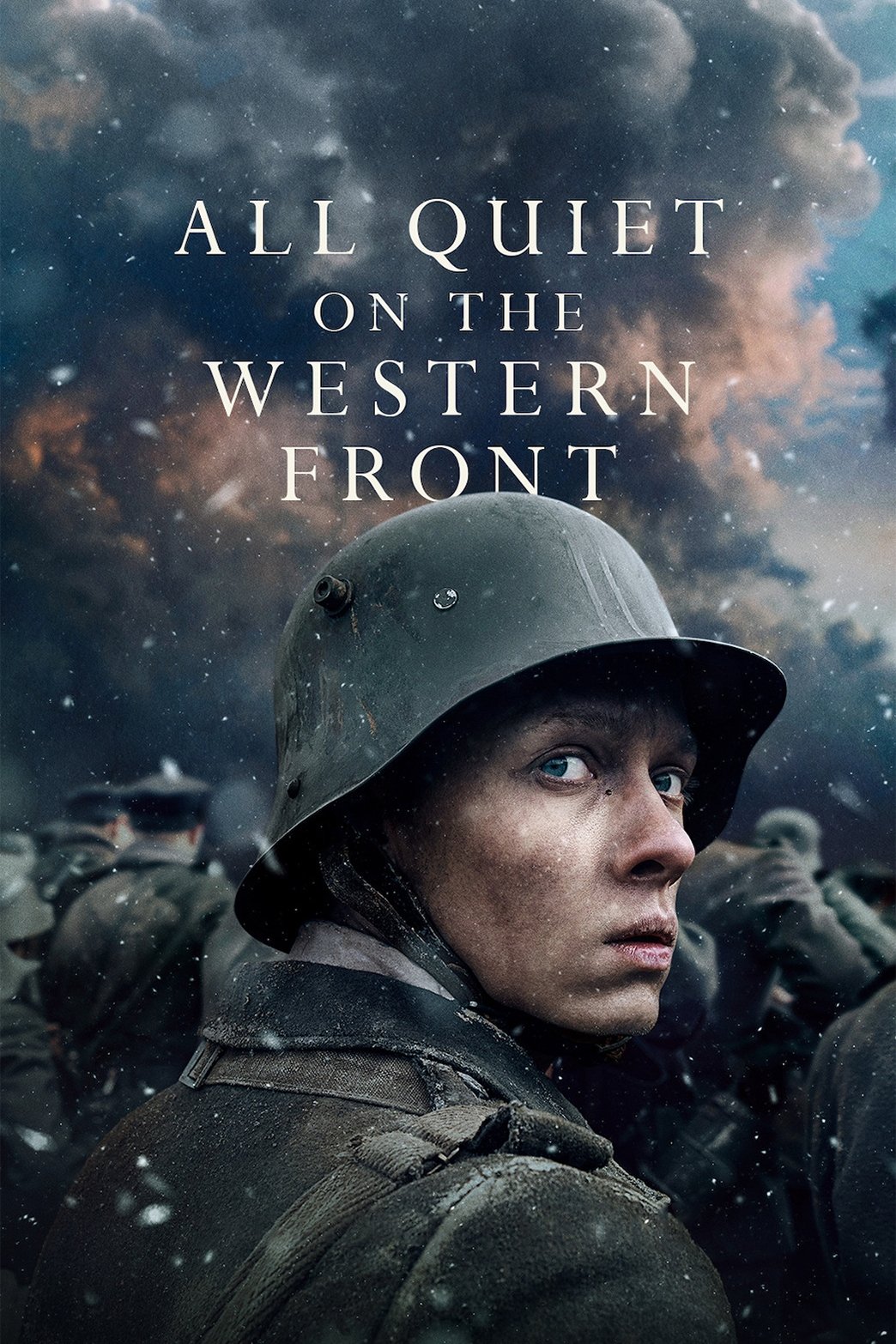

- UK release: October 2022
- Director: Edward Berger · Writers: Edward Berger, Lesley Paterson, Ian Stokell
- Studio / distributor: Amusement Park Film; Netflix
- Genre: Anti-war drama / First World War film · Runtime: 147 minutes (BBFC 15)
- Main cast: Felix Kammerer as Paul Bäumer; Albrecht Schuch (System Crasher) as Stanislaus Katczinsky; Daniel Brühl (Goodbye Lenin!, Rush) as Matthias Erzberger; Devid Striesow (The Counterfeiters) as General Friedrichs
- IMDb: 7.8 / 10 · Rotten Tomatoes: 90% critics / 90% audience · My rating: 7.5 / 10
Erich Maria Remarque’s novel has been filmed before, most famously by Lewis Milestone in 1930, and that earlier version has spent ninety years as the definitive screen statement of the book. What it had never been, until now, is a German film. Edward Berger, a director best known for television, takes the obvious and surprisingly unused angle: the story of German boys marched into the meat grinder, told in German, for an audience that knows exactly how the war ends and what comes after it. Netflix has put serious money behind it, and the result is the kind of awards-season prestige picture the platform has been chasing for years.
The setup
Paul Bäumer (Felix Kammerer) is seventeen, full of schoolyard patriotism, and signs up with his friends in 1917 to the sound of a teacher’s speech about glory and the Fatherland. The uniform he is handed has been stripped from a dead soldier and the name tag quietly unpicked, which tells you most of what the film thinks about the romance of enlistment. Within days the friends are on the Western Front, in mud and wire and shellfire, and the illusions begin coming apart faster than any of them can replace them. Running alongside Paul’s war is a second thread, set in the warm railway carriages where Matthias Erzberger (Daniel Brühl) negotiates the armistice while men keep dying for nothing in the field.
The cast
Kammerer, in his first screen role, carries the film on a face that starts open and eager and slowly empties out. He is good at the small reactions, the moment a boy realises that nobody is coming to help and that the noise is not going to stop. Albrecht Schuch is the standout as Kat, the older soldier who has learned the trench economy of food, sleep and survival, and who gives Paul something like a father in a place designed to take fathers away. Brühl brings a weary decency to Erzberger, a man trying to end a slaughter by signing a document, and Devid Striesow’s General Friedrichs is the film’s portrait of vanity at a safe distance, a man eating off china while he sends teenagers across open ground. The relationships are sketched economically; this is not a film with much room for talk.
The craft
The craft is where the film earns its reputation. James Friend’s cinematography moves between grey, frozen wide shots of the churned ground and close, choking work in the trenches, and Volker Bertelmann’s score announces itself with a three-note industrial throb that sounds less like music than like machinery warming up to kill. It is a striking choice and not a subtle one. The battle sequences are staged with real weight: tanks looming out of fog, flamethrowers, a final assault timed against a ticking clock that turns the last act into something close to unbearable. Berger never lets the violence look heroic. It is loud, ugly and quick, and the camera tends to stay a beat longer than is comfortable. The film is handsome in a way that occasionally fights its own subject, but the discomfort it is reaching for mostly lands.
How it stacks up
The obvious recent comparison is 1917, and the two films make an instructive pair. Sam Mendes built a thriller out of forward momentum and a single unbroken-looking shot; Berger is doing something more static and more despairing, less interested in a mission than in attrition. Against Paths of Glory, Kubrick’s cold study of generals spending men like coins, this film shares the contempt for command but trades the courtroom argument for sheer physical immersion. And against Saving Private Ryan, whose opening twenty minutes reset the bar for battle, it holds up on spectacle while refusing Spielberg’s redemptive frame. There is no mission worth the cost here, and no comfort offered at the end.
Critics versus the rest of us
Critics are strongly on side, sitting around 90%, with audiences matching them, and most of the praise lands on the sound, the images and the anti-war force. The main argument among reviewers is about faithfulness: Berger and his co-writers have added the armistice subplot and changed the shape of Remarque’s ending, and purists of the novel have noticed. That debate matters less to me than a different one. I admire this film a great deal and I am not sure how often I will return to it. Relentless, well-made bleakness is a register I respect more than I enjoy, and my reservations about the prestige war picture, the same ones that keep The Hurt Locker at arm’s length for me, apply here too.
Verdict
So this is a film I can recommend without quite loving. The making of it is close to flawless: the photography, the sound design, the staging of chaos, the refusal to let a single death feel meaningful. Kammerer and Schuch give it a human centre, and the armistice thread, whatever the novel’s defenders think, sharpens the central cruelty of men dying after the outcome is decided. What it does not have, for me, is rewatchability, which is the axis I weight most heavily, and there is a faint sense of a film admiring its own gravity. Powerful, beautifully made, and not one I will reach for twice. 7.5⁄10.
Availability: Streaming on Netflix from 28 October 2022, after a limited UK cinema run earlier in the month. Worth the biggest screen and best sound you can manage.
Update
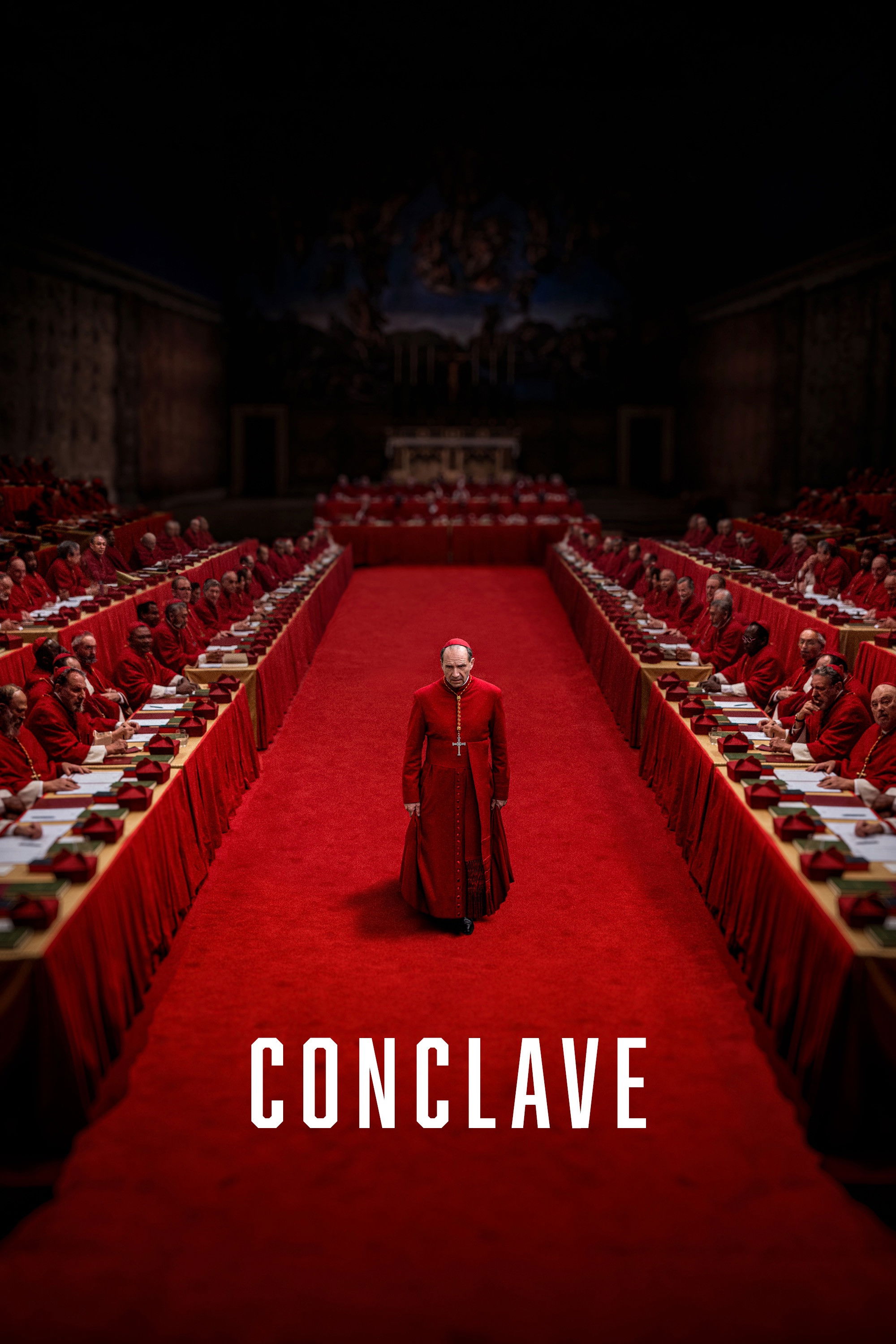
Added since this review first appeared: the film went on to a remarkable awards run, leading the BAFTA field and winning Best Film and Best Director there, and taking four Academy Awards including Best International Feature, Cinematography and Score. Its reputation has settled as the definitive modern screen version of Remarque, and as the film that confirmed Edward Berger as a major director, work he followed with the very different Conclave. It remains on Netflix.
BBFC content advice
Rated 15 by the BBFC for strong threat, violence, injury detail, disturbing scenes. The notes below may contain spoilers.
Violence: Strong war violence includes shootings and stabbings, resulting in spurts of blood and bloody aftermath detail. A body is crushed under a tank, creating a brief burst of blood. Screaming men are engulfed in fire by flamethrowers, without clear sight of injury detail. A seriously injured soldier takes his own life by repeatedly stabbing himself in the neck, resulting in strong bloody detail. One man attempts to drown another in muddy water, and another man is bludgeoned to death.
Threat and horror: There are sustained scenes of strong and disturbing battle threat in which terrified young soldiers panic amid heavy gunfire and shelling. A frightened man attempts to surrender to enemy soldiers, who set him on fire. There is an upsetting scene in which one soldier repeatedly stabs another but is then filled with dismay as the man suffers a protracted death.
Injury detail: We see dead and dying soldiers with gory injuries, including shredded limbs and bloody bullet wounds. Other scenes show an infirmary floor covered in blood.
Additional issues: There is infrequent use of strong language (‘f**k’); milder terms include ‘putain’, ‘shit’, ‘bloody hell’ and ‘arse’, in addition to the outdated term ‘cripple’. There are also occasional mild verbal sex references and innuendo.
Source: British Board of Film Classification (bbfc.co.uk).