- UK release: August 2009
- Director: Kathryn Bigelow · Writer: Mark Boal
- Studio / distributor: Voltage Pictures; Grosvenor Park Media; First Light; Kingsgate Films
- Genre: War thriller / psychological drama · Runtime: 131 minutes (BBFC 15)
- Main cast: Jeremy Renner (28 Weeks Later, S.W.A.T.) as Staff Sergeant William James; Anthony Mackie (8 Mile, Half Nelson) as Sergeant J. T. Sanborn; Brian Geraghty (Jarhead) as Specialist Owen Eldridge; Guy Pearce (Memento, L.A. Confidential) as Staff Sergeant Matt Thompson
- IMDb: 7.6 / 10 · Rotten Tomatoes: 97% critics / 84% audience · My rating: 5 / 10
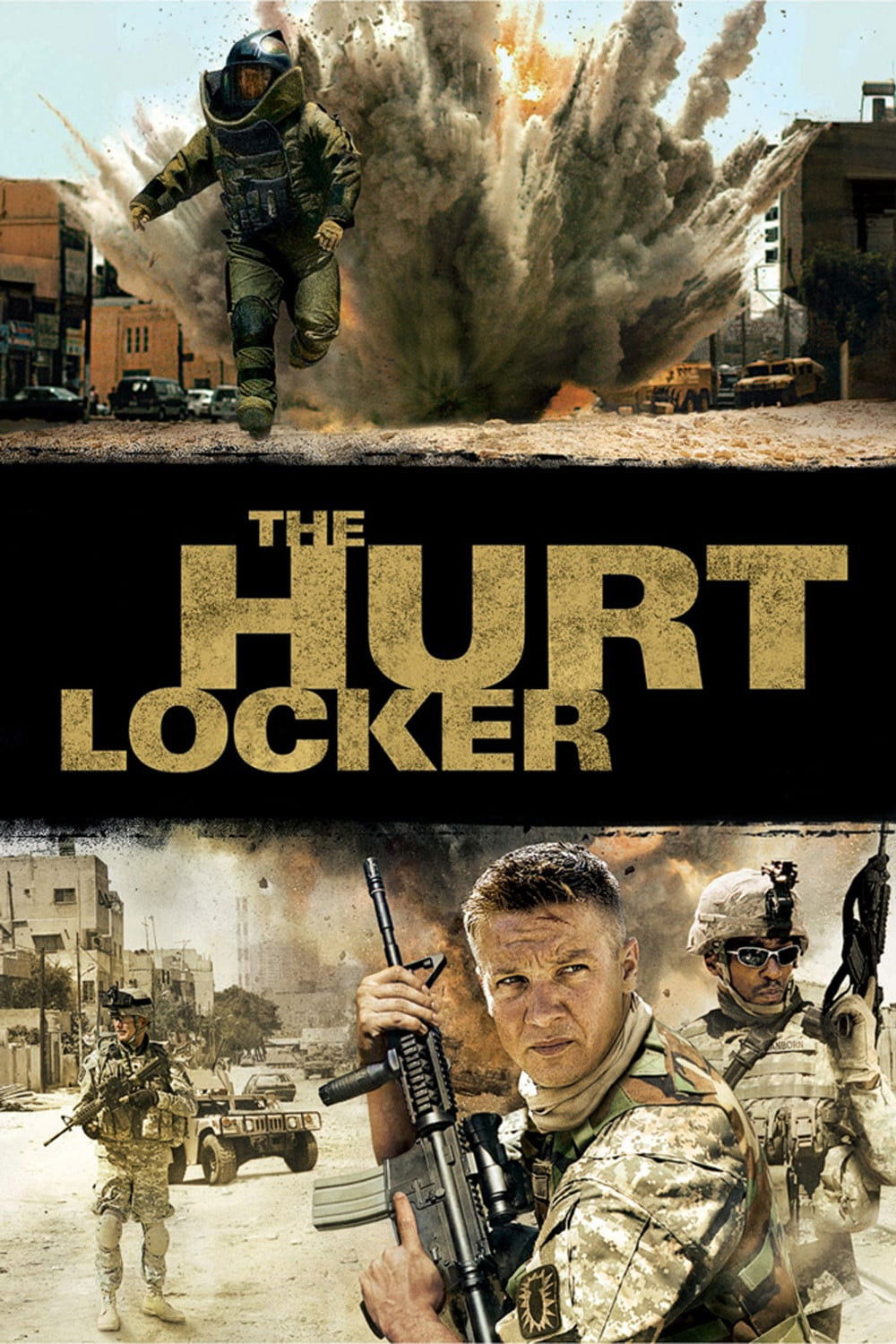
Kathryn Bigelow has spent a career making films that move: Point Break, Strange Days, the kinetic action cinema that critics tended to file under guilty pleasure. The Hurt Locker is the film that flips the consensus. Mark Boal, who embedded with a bomb-disposal unit in Iraq, hands her a screenplay built not on plot but on dread, and the reviews coming back from the festival circuit are the kind that retire arguments. Best Iraq film yet. The war picture that finally finds its register. I went in expecting to be gripped. I came out admiring the work and feeling nothing I wanted to feel again, which is an awkward thing to report about the most praised film of the year.
The setup
A US Army explosive ordnance disposal team works Baghdad in the dying weeks of a rotation, defusing roadside bombs while a watching crowd may or may not hold the man with the trigger. When their leader is killed, in comes Staff Sergeant William James (Jeremy Renner), a technician of obvious genius and no visible fear, who treats each device less as a problem to survive than as a fix to chase. His recklessness rattles Sergeant Sanborn (Anthony Mackie), who would like to go home alive, and frightens Specialist Eldridge (Brian Geraghty), who is quietly coming apart. The film is structured as a run of set pieces, a countdown of days left in country, each one a fresh way to be killed.
The cast
Renner is the reason the film holds together, and he is genuinely good: watchful, unshowy, carrying a man who is only fully alive at the moment of maximum danger. It is a performance built on stillness rather than speeches, and it makes James legible without ever quite making him likeable. Mackie gives Sanborn the film’s moral ballast, the professional who keeps doing the sums while his sergeant ignores them, and Geraghty’s Eldridge is the rawest nerve on screen. Bigelow salts the margins with bigger faces to unsettling effect, Guy Pearce establishing the stakes early and Ralph Fiennes turning up in the desert as a private contractor, both used to remind you that recognition guarantees nobody a second scene.
The craft
Nobody should doubt the craftsmanship. Barry Ackroyd shoots on multiple cameras in restless, grainy long lenses, so that every defusal becomes a study in sightlines, who is watching, what is in the windows, where the wire runs. Bigelow stretches these sequences past comfort and knows exactly when to cut, and the bomb-suit walk down a wired street is as tense as anything in cinemas this year. The sound design puts you inside the helmet. Marco Beltrami and Buck Sanders keep the score to a low industrial hum that barely registers as music. On pure technique it is close to flawless, and that is not in dispute here.
How it stacks up
The obvious shelf-mates are Jarhead, which found boredom where this finds adrenaline, and Black Hawk Down, all kinetic chaos with the politics filed off. The Hurt Locker is the more disciplined film than either, narrower and more controlled, less interested in the war than in one man’s relationship to fear. It plays closest to the procedural tension of something like United 93, the same documentary immediacy, the same refusal of comfort. Where it loses me is exactly where those comparisons help it with everyone else: the procedural mode that critics call rigorous I find airless, a string of brilliantly mounted threats strung on a thesis about addiction that the famous opening title card states outright and the film then spends two hours illustrating.
Critics versus the rest of us
This is where I have to be honest about standing nearly alone. Critics are at 97%, the kind of number that does not happen by accident, and the broadsheets are calling it one of the year’s best with real conviction. Audiences are warmer than me too, sitting around 84%. I do not think they are wrong about the filmmaking. I think the film and I simply want different things from two hours in the dark. I value a film I will return to, characters who deepen, a world I want to stay inside. The Hurt Locker offers none of that by design. It is built to grind you down, and it succeeded, and I disliked the experience of being ground down even while I could see how well the machine was made.
Verdict
So this is the hardest sort of review to write, the one where the craft is beyond reproach and the personal verdict still comes in low. Renner is excellent, Bigelow’s control of suspense is the real thing, and I would not argue with anyone who calls it the best-made war film of the year. But a film has to do more for me than earn my respect, and on enjoyment and on any wish to see it again it failed completely. It is tense without being pleasurable, accomplished without being moving, and I have no intention of putting myself back through it. I can admire the work and still not want it in my life. 5⁄10.
Availability: On limited release in UK cinemas now, expanding through the autumn, with a DVD and Blu-ray release to follow.
Update
Added since this review first appeared: The Hurt Locker went on to win six Academy Awards in March 2010, including Best Picture and a Best Director Oscar for Kathryn Bigelow, the first won by a woman, beating Avatar in a contest that became the story of the ceremony. Bigelow and Mark Boal reunited for Zero Dark Thirty (2012), a bigger and, to my eye, more gripping film on related ground. My own low score has not moved with the trophies; I respect the achievement and still have no wish to rewatch it. It now streams across the usual platforms depending on region and is widely available on disc, including a 4K restoration.
BBFC content advice
Rated 15 by the BBFC for strong language, gory images. The notes below may contain spoilers.
Violence: There is brief sight of blood spurts during shootings.
Threat and horror: Some scenes are tense as the soldiers deal with defusing bombs and the surrounding combat.
Language: There is frequent use of strong language (‘fk’, ‘motherfker’), as well as milder terms.
Sex: There are some moderate verbal sex references, including a reference to porn DVDs and to a man visiting a brothel.
Discrimination: There is use of discriminatory language, including the ‘n’ word.
Injury detail: In one scene, a member of the bomb disposal team re-opens the torso of a dead boy and removes the explosives that turned his corpse into a weapon. There is also sight of injured people following explosions, as well as severed body parts.
Alcohol and smoking: Adults smoke and drink.
Source: British Board of Film Classification (bbfc.co.uk).