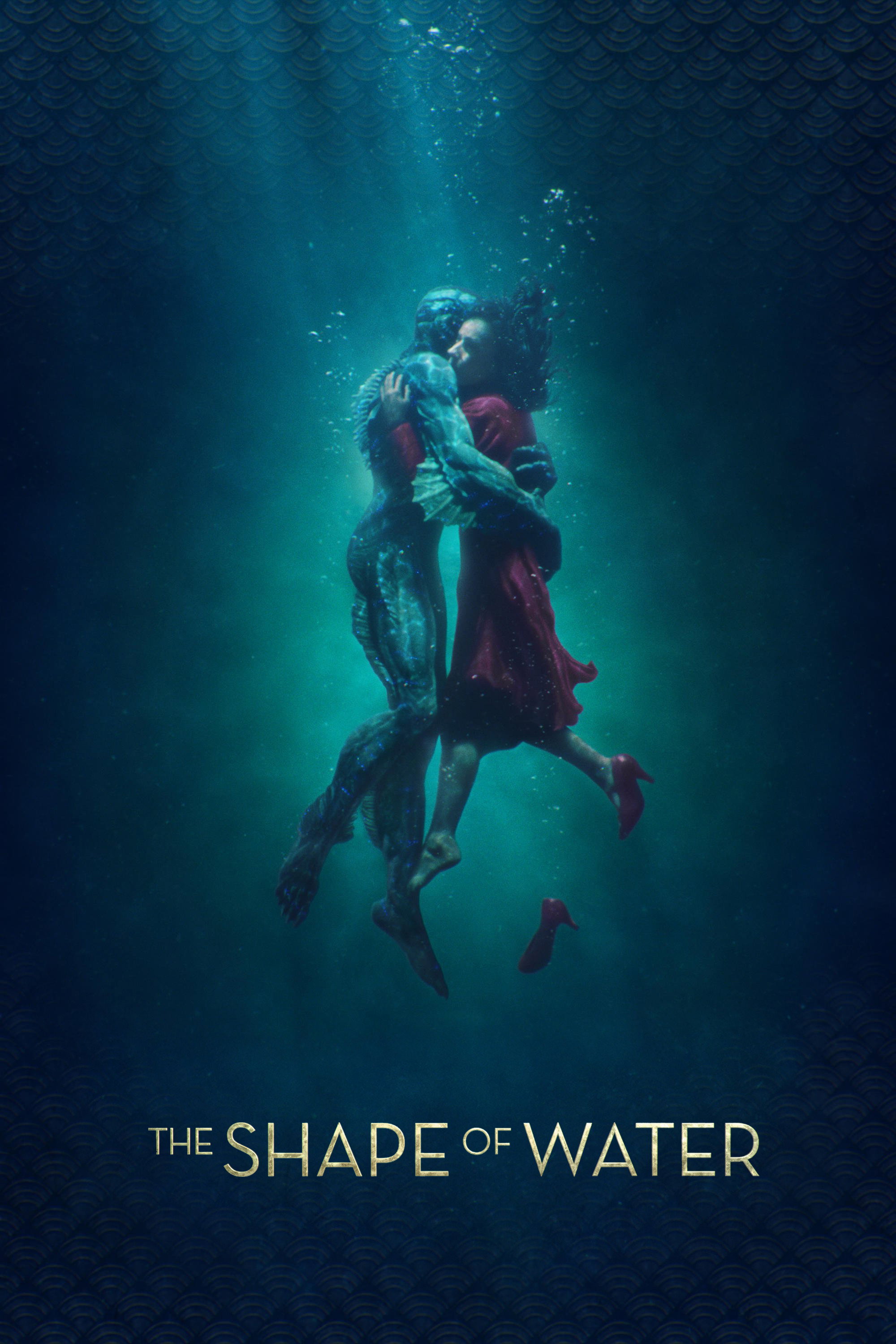

- UK release: February 2018
- Director: Guillermo del Toro · Writers: Guillermo del Toro, Vanessa Taylor
- Studio / distributor: Fox Searchlight Pictures; TSG Entertainment
- Genre: Fantasy romance / Cold War fairy tale · Runtime: 123 minutes (BBFC 15)
- Main cast: Sally Hawkins (Happy-Go-Lucky, Blue Jasmine) as Elisa Esposito; Doug Jones (Pan’s Labyrinth, Hellboy) as the Amphibian Man; Michael Shannon (Take Shelter, Man of Steel) as Richard Strickland; Octavia Spencer (The Help) as Zelda Fuller
- Rotten Tomatoes: 92% critics / 72% audience · My rating: 8 / 10
Guillermo del Toro has spent his whole career insisting that the monster is the one worth rooting for, and The Shape of Water is the clearest statement he has made of it. After the studio-scaled noise of Pacific Rim and the haunted house of Crimson Peak, this is del Toro back on the ground he owns, the territory of Pan’s Labyrinth, where fairy tale and history sit on top of one another and the cruelty is human while the magic is not. He has called it a fairy tale for troubled times, and the surprising thing is that he means the love story literally. This is a film in which a woman falls for a fish god, and it asks you to take that entirely seriously.
The setup
Baltimore, 1962, at the frozen height of the Cold War. Elisa (Sally Hawkins) is a mute cleaner working the night shift at a secret government laboratory, a woman the world has long since decided to overlook. Into the facility comes an asset: an amphibious humanoid creature, captured in South America and held in a tank, prized by the Americans as a Cold War advantage and despised by the man assigned to break it. Elisa, alone among the staff, sees something other than a specimen. What begins as shared eggs and smuggled records becomes a bond, and then a plan to get him out before the men in charge cut him open. Her allies are an ageing closeted illustrator next door and a sharp-tongued co-worker on the cleaning crew, neither of them people the era was built to listen to either.
The cast
Hawkins carries the film without a word of dialogue, and the performance is extraordinary for how completely it works through hand, posture and face. Elisa is not a passive victim waiting to be rescued; she is curious, stubborn and frankly desiring, and Hawkins lets all of that read in silence. Doug Jones, del Toro’s creature performer of choice since Pan’s Labyrinth, gives the Amphibian Man a real interior life under the prosthetics, graceful and wary by turns, so that the romance never tips into something to laugh at. Michael Shannon is the human monster of the piece, a company man whose decency rotted out long ago, and he plays Strickland with a clenched, sweating menace that makes the cattle prod he carries feel like an extension of his temperament. Octavia Spencer brings warmth and a needed dryness as Zelda, and Richard Jenkins gives the lonely neighbour a quiet ache.
The craft
This is a sumptuous film to look at. Dan Laustsen’s cinematography drenches everything in green and teal, the colour of water and of the period, so that the whole world looks slightly submerged before anyone gets near the tank. Paul Austerberry’s production design builds a 1962 that feels both real and a half-step into dream, all rain-streaked apartments above a cinema and humming institutional corridors. Alexandre Desplat’s score is built on accordion and a lilting waltz that leans straight into the fairy-tale register, and del Toro is unembarrassed about it, even pausing for a black-and-white musical flourish that a more cautious director would have cut. The creature effects, a blend of suit and digital work, hold up where they most need to, in close-up, in the eyes. It is a film made by someone who loves old monster movies and refuses to treat that love as a guilty one.
How it stacks up
The clearest ancestor is Creature from the Black Lagoon, the 1954 picture del Toro has said he always wanted to end with the woman and the creature together. He has essentially rewritten it from the creature’s side. Set it beside Pan’s Labyrinth and you see the same architecture: an overlooked outsider, a fantastical escape, and a real-world villain in uniform who is the true horror. There is Amelie in its handmade, whimsical romanticism, and more than a little Beauty and the Beast in its bones, the oldest version of the story in which love is the thing that sees past the monstrous shape. What del Toro adds is adult weight: this is not a chaste fairy tale but a frankly sexual and sometimes violent one, and the 15 certificate is earned.
Critics versus the rest of us
Critics have taken to it with real enthusiasm, sitting up around 92%, praising the craft, the compassion and Hawkins above all. Audiences are warmer than lukewarm but more divided, around 72%, and the split is easy to understand. If you cannot get past the central premise, that a woman and an amphibian fall genuinely in love, the film has nowhere to take you, and a sincere fairy tale can read as twee or strange to a viewer who wanted irony. I land with the critics here, though for me the reservation is less the premise than the villainy: Strickland is so thoroughly monstrous that the moral scales never wobble, and the film is at its richest when it lets its outsiders simply be people rather than symbols of who 1962 left behind.
Verdict
I came in braced for whimsy and came out won over by conviction. The thing that makes it work is that del Toro never winks. He commits to the romance, the period and the storybook logic completely, and the craft is good enough to carry all three. It is beautifully shot, scored and performed, and Hawkins gives one of the silent-cinema-grade performances of the year. My hesitation is on rewatchability: I admire it more than I ache to return to it, and the plot mechanics in the back half are the most conventional part of an otherwise singular film. But this is a confident, tender, gorgeously made piece of work from a director doing exactly what he was put here to do. 8⁄10.
Availability: On general release in UK cinemas from February 2018, after a strong festival run. Worth a big screen for Laustsen’s photography and Desplat’s score.
Update
Added since this review first appeared: The Shape of Water went on to win the Academy Award for Best Picture, with del Toro taking Best Director and Desplat Best Original Score, the rare creature-feature romance to take the industry’s top prize. Its reputation has settled as one of del Toro’s signature works, of a piece with Pan’s Labyrinth rather than his bigger-budget detours. It is now widely available on disc and digital, and streams on Disney+ in the UK depending on region.
BBFC content advice
Rated 15 by the BBFC for strong violence, language, sex, nudity. The notes below may contain spoilers.
Violence: Scenes include gunfights and the implied severing of a man’s fingers, with resultant bloody detail. In one sequence, a man probes a victim’s gunshot wounds to interrogate him.
Language: There is occasional use of strong language (‘fk’, ‘motherfker’).
Sex: Sequences include thrusting during intercourse and implied masturbation. There are occasional moderate sex references.
Nudity: There are occasional scenes of full frontal female nudity, including in a sexual context.
Additional issues: There are occasional scenes of moderate threat. Infrequent scenes of homophobic and racist behaviour also occur, but the work does not condone or endorse such attitudes. There is a scene in which it is implied a cat has been killed and is then seen being eaten by the creature. However, there is no sight of animal cruelty on screen and no evidence any animal was harmed.
Source: British Board of Film Classification (bbfc.co.uk).