
- UK release: July 2013
- Director: Guillermo del Toro · Writers: Travis Beacham, Guillermo del Toro
- Studio / distributor: Legendary Pictures; Warner Bros.
- Genre: Science-fiction monster action / mecha adventure · Runtime: 131 minutes (BBFC 12A)
- Main cast: Charlie Hunnam (Sons of Anarchy) as Raleigh Becket; Rinko Kikuchi (Babel) as Mako Mori; Idris Elba (The Wire, Luther) as Stacker Pentecost; Charlie Day (It’s Always Sunny in Philadelphia) as Dr Newton Geiszler
- Rotten Tomatoes: 72% critics / 77% audience · My rating: 8 / 10
Guillermo del Toro has spent his career making the monsters the most sympathetic thing on screen, from the faun of Pan’s Labyrinth to the red devil of his two Hellboy films, so the surprise of Pacific Rim is not that he has made a giant-monster picture but that he has made one with so little irony in it. This is a director who clearly grew up on Japanese kaiju matinees and the Evangelion school of giant piloted machines, and rather than wink at all that, he has built it a two-hundred-million-dollar cathedral and meant every brick. In a summer thick with sequels and shared universes, a big original idea delivered with a straight face counts for something.
The setup
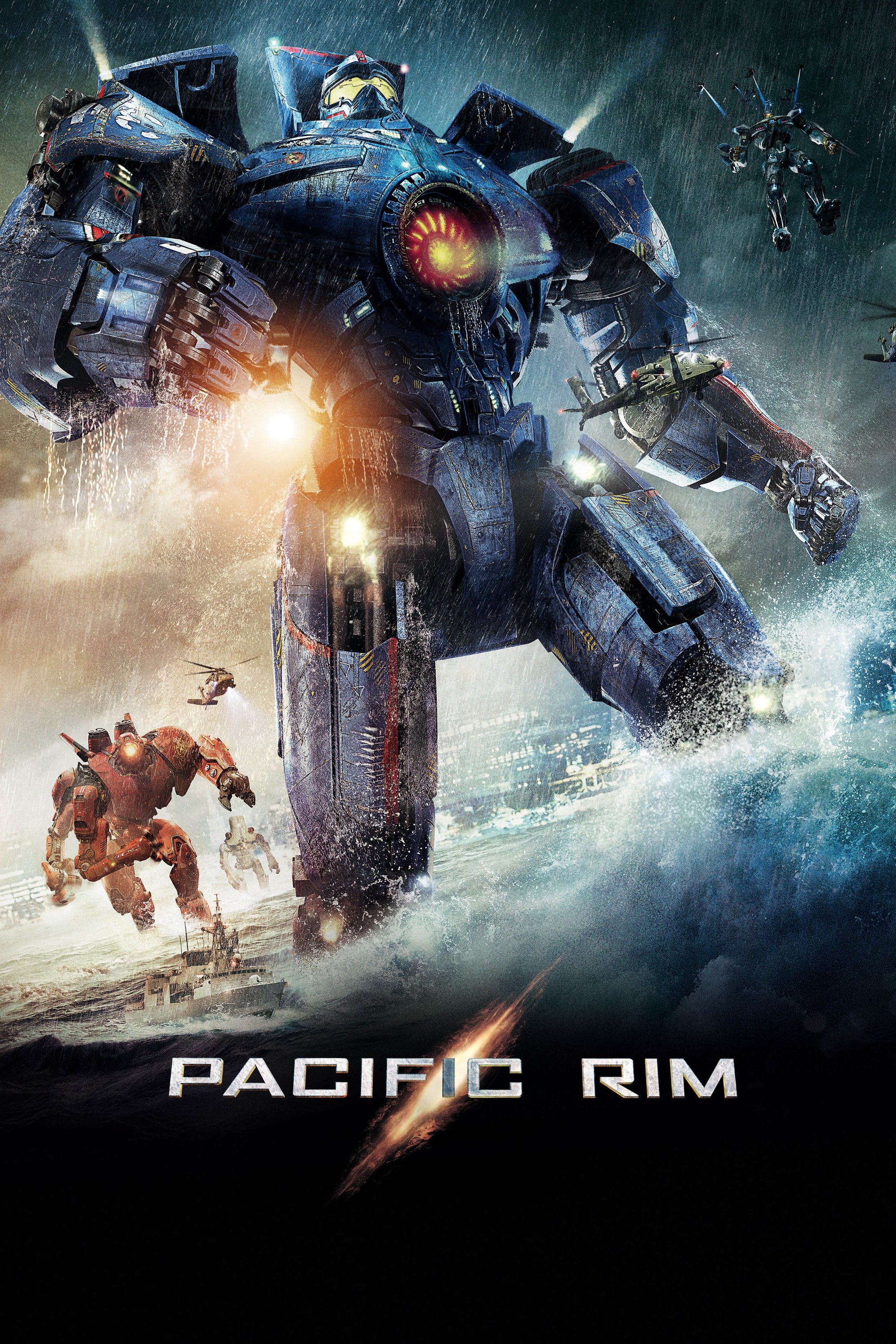
The premise is delivered in a brisk prologue and then mostly got out of the way, which is the right call. Enormous creatures called Kaiju have started climbing out of a rift on the floor of the Pacific, levelling coastal cities, and humanity’s answer is the Jaeger programme: skyscraper-sized robots piloted by two people whose minds are bridged so they can share the neural load of driving the thing. Years into the war the Jaegers are losing, the programme is being wound down, and a washed-out pilot called Raleigh Becket (Charlie Hunnam) is pulled back in for one last stand alongside a rookie, Mako Mori (Rinko Kikuchi), under a commander who has run out of other options. If you have seen a war film about a grounded ace talked back into the cockpit, you know the beats. The film is not pretending otherwise.
The cast
The human story is the weakest material here, and the cast mostly survives it on presence. Hunnam is solid and likeable without ever being especially memorable, a leading man built more for jaw than for nuance. Kikuchi, who was Oscar-nominated for Babel, gives Mako the closest thing the film has to an inner life, and the partnership between the two of them is more about trust than romance, which is a relief. Idris Elba is the reason much of it lands: as the iron-jawed commander Stacker Pentecost he delivers a rally-the-troops speech that should be ridiculous and instead becomes the film’s signature beat, sold on sheer gravity. Charlie Day and Burn Gorman provide a double act of bickering scientists that is broader than it needs to be, though Ron Perlman, slumming gloriously as a black-market Kaiju-organ dealer, is exactly the kind of grubby texture del Toro does so well.
The craft
This is where the money is, and del Toro and his cinematographer Guillermo Navarro know it. The fights are staged at night and in the rain, lit in neon and lightning, and the film does the one thing the Transformers pictures never managed: it keeps the geography legible. You always know which way the robot is facing, where the monster’s weight is, what is at stake in a swung fist. The sense of scale is enormous and constant, conveyed through water displacement, toppling cranes and the slow physics of something the size of a tower block turning to face you. Ramin Djawadi’s score is all guitar and brass and pounding momentum, the rare blockbuster theme you come out humming. It is loud, wet, heavy cinema, and it is beautiful in a way this kind of film rarely bothers to be.
How it stacks up
The obvious points of comparison are the films and shows del Toro is openly saluting: the Godzilla lineage, Evangelion and its anguished teenage mecha pilots, and the city-flattening spectacle of Independence Day. Against the closest Hollywood relative, the Transformers series, Pacific Rim wins easily on clarity, sincerity and design, even if Michael Bay’s films have a sharper line in comedy. What it lacks is the human ballast that del Toro’s smaller films carry so well; strip out the kaiju and there is not much story holding the frame up. It is closer in spirit to a very expensive monster-movie matinee than to Pan’s Labyrinth, and it is happiest when it stops apologising for that.
Critics versus the rest of us
Critics are warm but qualified, sitting around 72%, with the recurring note that the spectacle is glorious and the people in front of it are thin. Audiences are a touch higher at 77%, and the split makes sense: the things this film does best are the things that play to a crowd rather than to a notebook. I am closer to the audience here. The screenplay is functional and the dialogue often clunks, but the picture earns enormous goodwill by being exactly what it promises and committing to it without embarrassment, which is rarer at this budget than it should be.
Verdict
I came for giant robots hitting giant monsters in the rain, and on that contract the film over-delivers. It is generous, gorgeously designed and genuinely thrilling, and del Toro’s affection for the genre keeps it from curdling into noise the way so much summer spectacle does. The flat human characters and the join-the-dots plot keep it off the very top shelf, and a second viewing leans on the set pieces rather than the story. But those set pieces hold up, the world is a real place, and I would happily sit through it again on the biggest screen going. 8⁄10.
Availability: On general release in UK cinemas now. Worth seeking out in IMAX, where the scale does most of the talking; a Blu-ray and DVD release will follow later in the year.
Update
Added since this review first appeared: del Toro stepped back to a producing role for the sequel, Pacific Rim Uprising (2018), a lighter and more disposable film that confirmed how much the original owed to his eye. The first film has since settled into a fond cult standing, especially among viewers who grew up on the kaiju and mecha traditions it salutes, and Mako Mori became a small touchstone in conversations about how action films write their women. It is now widely available on disc and digital, and turns up on the major streaming platforms depending on region.
BBFC content advice
Rated 12A by the BBFC for frequent moderate violence and one use of strong language. The notes below may contain spoilers.
Violence: There are a number of battles between aliens and robots which primarily take place at sea. Heavy blows are landed by the robots, with the aliens fighting back using spikes and teeth which pierce the armour and, on occasion, tear off robotic limbs and metal body plates. Humans controlling the robots sustain occasional injuries and we see some blood. It is also implied that some pilots are killed. But neither the injuries nor deaths are shown with any detail. The aliens are also seen rampaging through cities, demolishing buildings, as people flee in terror. In one sequence a woman remembers a childhood experience where she is threatened by an alien and upset as she cowers from it. In another scene two characters fight, with punches and throws, but again no detail of injury.
Language: A single use of strong language (‘f***k’) is used during the course of one of the battles. Other bad language includes ‘bloody’, ‘shit’, ‘ass’, ‘bastard’ and ‘crap’.
Source: British Board of Film Classification (bbfc.co.uk).