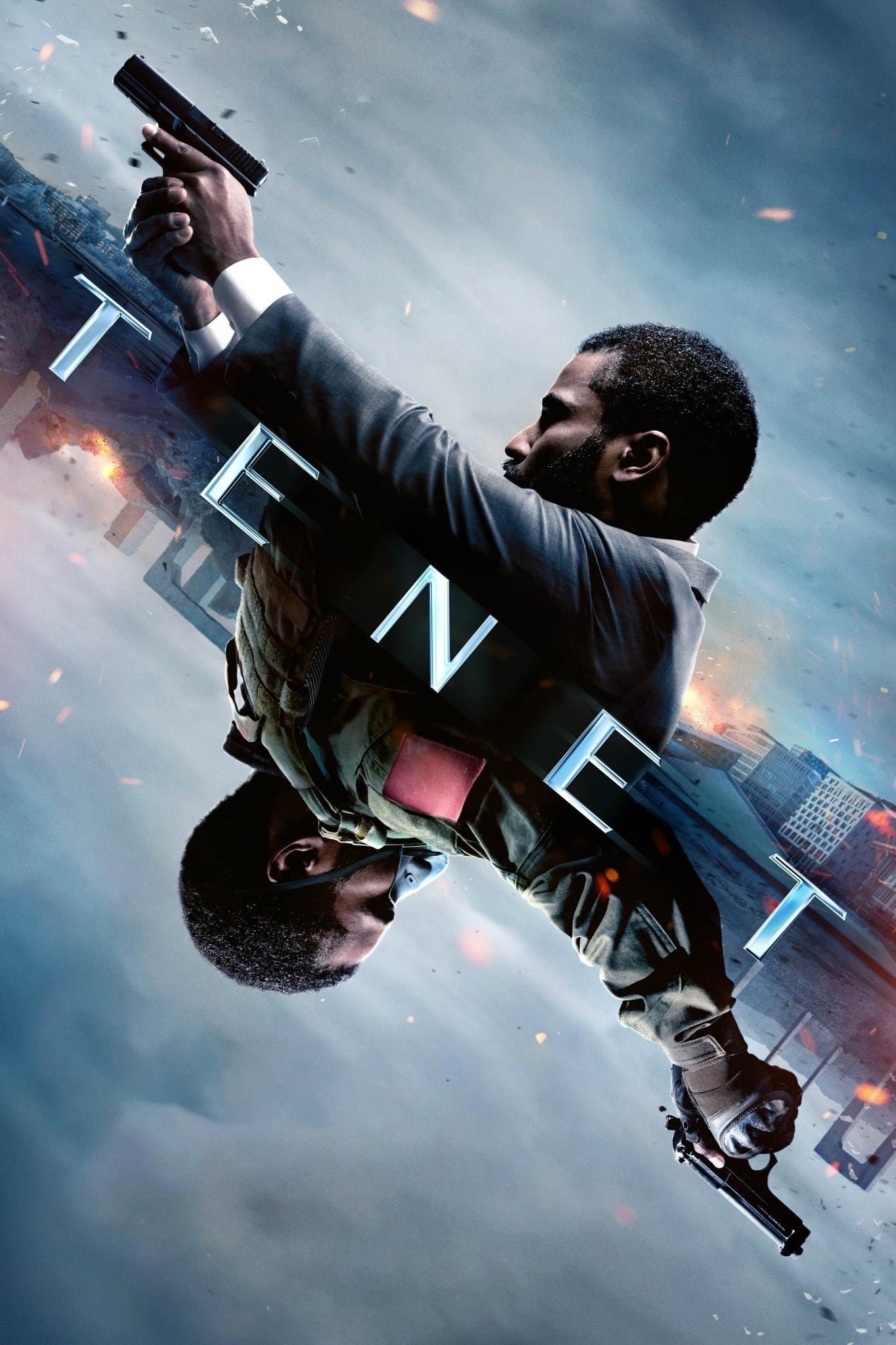

- UK release: August 2020
- Director: Christopher Nolan · Writer: Christopher Nolan
- Studio / distributor: Warner Bros.; Syncopy
- Genre: Science-fiction espionage thriller · Runtime: 150 minutes (BBFC 12A)
- Main cast: John David Washington (BlacKkKlansman) as the Protagonist; Robert Pattinson (Good Time, The Lighthouse) as Neil; Elizabeth Debicki (The Night Manager, Widows) as Kat; Kenneth Branagh (Henry V, Dunkirk) as Andrei Sator
- IMDb: 7.8 / 10 · Rotten Tomatoes: 69% critics / 76% audience · My rating: 8.5 / 10
This is the film the industry has been waiting on. Tenet is the picture Warner Bros. is gambling the reopening of cinemas on, the one a director who shoots on film and detests streaming has insisted belongs on the largest screen you can find. Christopher Nolan has spent a career turning structural tricks into box-office hits, from the back-to-front murder mystery of Memento to the nested dreams of Inception, and he arrives here with the most baffling premise he has yet attempted and a budget large enough to make every frame of it real. The question is not whether Tenet is clever. With Nolan it always is. The question is whether the cleverness leaves room for anything to hold on to.
The setup
A CIA operative, named only as the Protagonist, survives an ordeal that turns out to be a recruitment test and is handed a single word, Tenet, and a fragment of an idea: that certain objects, and eventually people, can have their flow through time inverted, so that they move backwards while the world moves forwards. Bullets retreat into guns. Wrecked cars unwreck themselves. Somewhere in the future, someone is using this technology as a weapon, and the threat it poses is not to a city or a country but to the existence of the present itself.
The trail leads, by way of a Mumbai arms dealer and a forged Goya, to Andrei Sator, a Russian oligarch with a dying man’s appetite for destruction and a wife he keeps in a gilded cage. The Protagonist gathers an enigmatic partner, Neil, and sets out to understand the rules of inversion before he has to fight a war fought in two directions at once. I will leave the mechanics there, because half the pleasure is watching the film teach them to you, and the other half is realising it has no intention of slowing down while it does.
The cast
John David Washington carries the film with a coiled physical authority that suits a man given almost no backstory and not even a name. He is all forward motion and dry competence, and he sells the action even when the plot has stopped explaining itself. The standout is Robert Pattinson as Neil, all rumpled charm and private amusement, clearly several steps ahead of everyone including the audience, and the warmth he brings is the closest the film comes to a beating heart. Elizabeth Debicki gives Kat a wounded dignity that the script badly needs, towering over her scenes literally and emotionally, the only character whose stakes are recognisably human. Kenneth Branagh plays Sator as a cold slab of menace, a man who would rather end the world than leave it to anyone else, and if the accent is broad the threat underneath it is not.
The craft
This is where Tenet leaves almost everything else this year standing. Hoyte van Hoytema shoots it in vast, cold IMAX, all blue steel and brutalist concrete, and Nolan stages action that genuinely runs in both directions inside the same shot: a fistfight against a man moving backwards, a car chase where half the traffic is reversing through time, a climactic assault split into a forward team and an inverted one counting down to the same instant. Crucially, almost none of it is computer-generated. Nolan really did flip the cars and really did crash a real aeroplane into a real hangar, and you feel the weight of it. Ludwig Göransson’s score, all reversed synths and pounding low end, drives the thing forward where the dialogue cannot. The one genuine flaw is the sound mix: Nolan buries chunks of crucial exposition under music and through masks, and there are moments where you simply cannot make out the rules being explained to you.
How it stacks up
The obvious comparison is Inception, and Tenet is the harder, colder sibling: another heist built on a high-concept rule set, but stripped of the emotional anchor that Cobb’s grief gave the earlier film. It shares DNA with Memento too, the same delight in making time itself the antagonist. Set against the spy films it borrows from, the globe-trotting and the tuxedos and the catamaran chases, it is plainly Nolan’s run at Bond, and it has the set pieces to compete. For the science-fiction faithful, the closest cousin is the micro-budget Primer, another film that trusts you to keep up with its time mechanics and refuses to hold your hand. Tenet simply does it with a quarter of a billion dollars.
Critics versus the rest of us
Critics are divided, and audiences a touch warmer. The praise lands on the ambition, the practical spectacle and Pattinson; the complaints land, fairly, on the emotional distance, the wall of exposition and that muddy sound mix. There is a real argument here, and I am on the generous side of it. Yes, the film holds you at arm’s length, and yes, you will miss lines. But the demand it makes of you, that you lean in and assemble the thing as it runs, is the demand I most enjoy a film making. It rewards the second viewing more than almost anything else on release.
Verdict
Tenet is not the film to convert anyone who finds Nolan chilly or self-regarding, and the people complaining that they could not follow it or hear it have a point. But I value intelligent science fiction, espionage, world-building and a film that respects my attention enough to overload it, and on every one of those Tenet delivers at full volume. It is colder than Inception and more demanding than anything else in cinemas, and it is built to be watched again, which is exactly how I intend to watch it. 8.5⁄10.
Availability: In UK cinemas now, in IMAX and 70mm where you can find it. This is one to see on the biggest screen within reach, and to see before anyone spoils the mechanics.
Update
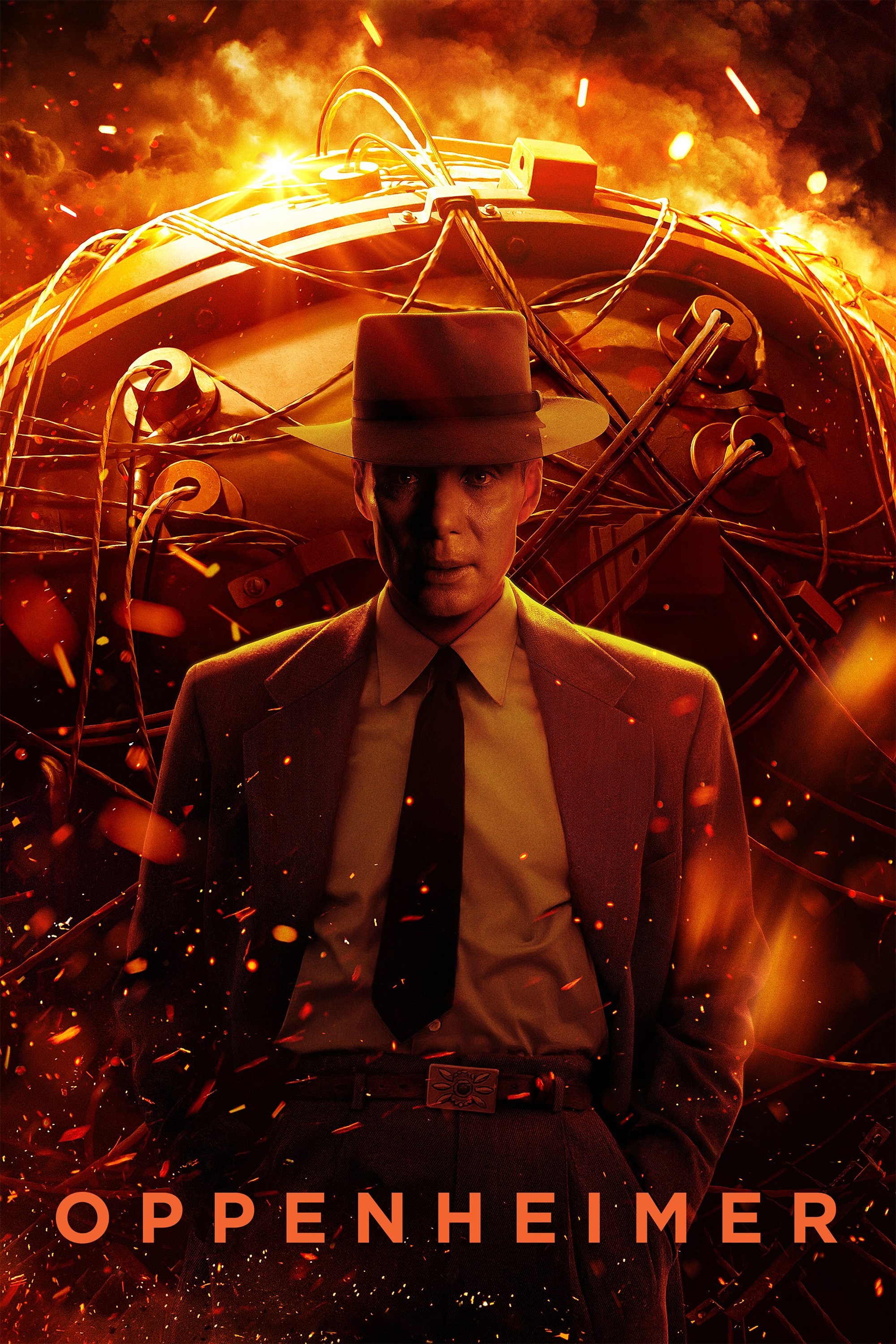
Added since this review first appeared: Tenet turned out to be the strange centrepiece of cinema’s pandemic reopening, the film studios watched to see whether audiences would return, and its complicated release shaped how the industry thought about windows for a year afterwards. Nolan’s frustration with Warner Bros. over its later same-day streaming strategy led him to move Oppenheimer (2023) to Universal. Tenet has settled into its reputation as a divisive, rewarding puzzle that plays better at home with subtitles on, where the buried dialogue stops being a barrier. It is now widely available on 4K disc and digital, and streams on the major platforms depending on region.
BBFC content advice
Rated 12A by the BBFC for moderate violence, threat, domestic abuse, infrequent strong language. The notes below may contain spoilers.
Violence: Scenes include gunfights, fistfights, stabbings, use of improvised weapons, and explosions. In an interrogation scene it is implied a man’s teeth are pulled out, but bloody detail is minimal. Another man is beaten to death, but the scene does not feature strong detail. A man verbally threatens another man with castration. A husband is abusive towards his wife, threatening her and later shooting her. In one scene she aims a gun at him, but he disarms and punches her.
Threat and horror: There are frequent tense sequences in which people are in dangerous situations, come under fire, or attempt to evade bombs. In one scene terrorists take over an auditorium and there is brief distress among the audience. There is also a scene in which an abusive husband holds his wife at gunpoint, and threatens to beat her with his belt.
Language: There is infrequent strong language (‘f***k’), as well as milder terms including ‘bitch’, ‘bullshit’, ‘bloody’ and ‘piss’.
Additional issues: Discreet references are made to suicide and discriminatory behaviour. There are also mild sex references.
Source: British Board of Film Classification (bbfc.co.uk).