- UK release: January 2011
- Director: Danny Boyle · Writers: Danny Boyle, Simon Beaufoy
- Studio / distributor: Pathé; Film4; Fox Searchlight Pictures
- Genre: Survival drama / biographical adventure · Runtime: 94 minutes (BBFC 15)
- Main cast: James Franco (Spider-Man, Milk) as Aron Ralston; Kate Mara (Brokeback Mountain) as Kristi; Amber Tamblyn (The Sisterhood of the Traveling Pants) as Megan; Clémence Poésy (In Bruges, Harry Potter and the Goblet of Fire) as Rana
- Rotten Tomatoes: 93% critics / 85% audience · My rating: 8.5 / 10
Danny Boyle arrives at 127 Hours fresh from the clean sweep of Slumdog Millionaire, and he has chosen for his follow-up the single least promising idea a director could pick: a man stuck under a rock for five days. There is no second location to cut to, no cast to spread the weight across, barely room for the camera to move. A lesser film-maker would have shot it as a sombre chamber piece and dared you to stay awake. Boyle, being the most kinetic director working, does the opposite. He has made a survival story that moves like a thriller, and the surprise is how completely it works.
The setup
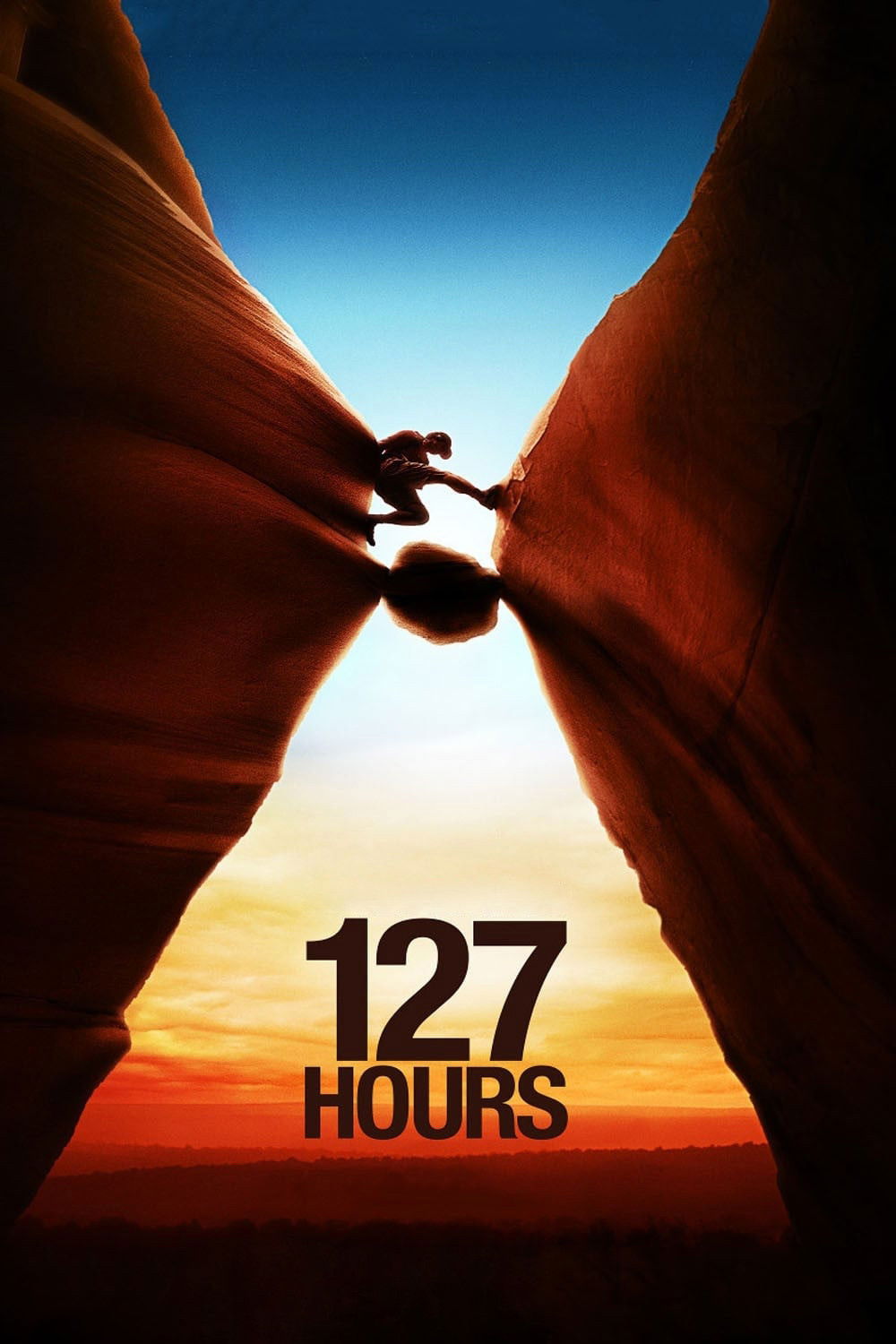
Aron Ralston (James Franco) is a confident, slightly cocky outdoorsman who heads into the Utah canyonlands one weekend without telling anyone where he is going. He has done it a hundred times. Then a boulder shifts as he climbs down a slot canyon and traps his right arm against the wall, and the hundred-and-first time becomes the one that counts. Alone, rationing a few mouthfuls of water, with no signal and no one expecting him, he begins to work the problem in every direction it can be worked, and to reckon with how he came to be a man whom nobody would think to look for.
The film keeps its nerve about what is coming. Anyone who followed the real story knows roughly how Ralston gets out, and Boyle neither hides from it nor wallows in the wait. The pressure builds from the situation, not from a withheld secret.
The cast
This is very nearly a one-man film, and it lives or dies on James Franco. He is terrific. The early scenes establish a charming show-off, the sort who films himself and grins at his own daring, and Franco lets you enjoy the swagger before the canyon takes it apart. What follows is a long, unsparing study of a man cycling through ingenuity, bravado, despair, hallucination and finally a kind of clarity, played almost entirely from the chest up in a space the width of a coffin. He carries it without ever tipping into self-pity. Kate Mara and Amber Tamblyn, as two hikers Aron charms early on, and Clémence Poésy, glimpsed in memory, give him people to play against and a sense of the life waiting outside the rock. They are brief by design, but they stop the film from becoming a monologue.
The craft
Boyle refuses to let the frame sit still. He and his cinematographers, Anthony Dod Mantle and Enrique Chediak, shoot the trap from every conceivable angle, drop the camera inside a water bottle, race it out of the canyon and across the desert, and splinter Aron’s mind into split-screens and flash-cuts as dehydration sets in. It could be exhausting; instead the restlessness mirrors a man who cannot afford to stop thinking. A. R. Rahman’s score, threaded with the right songs at the right moments, keeps the blood moving. And then there is the scene everyone will warn you about. Boyle does not flinch from it, but he earns it: by the time it comes you understand it as release rather than horror, the only door left open. It is hard to watch and impossible to look away from.
How it stacks up
The obvious companion is Touching the Void, the other great account of a climber doing the unthinkable to survive, though that film leaned on reconstruction and interview where this one stays inside the ordeal. Cast Away is the closer structural cousin, another star carrying a survival story largely alone, but Robert Zemeckis had an island and years to play with where Boyle has a crevice and five days. Into the Wild shares the theme of the self-reliant young man who goes into the wilderness without telling anyone, and reaches a bleaker conclusion. 127 Hours belongs in that company and brings something the others lack: pure forward momentum, a survival film with the editing rhythm of a heist.
Critics versus the rest of us
Critics have taken to it almost without reservation, sitting up at 93%, praising Franco and marvelling that Boyle wrings a thriller out of a man who cannot move. Audiences are warm but a touch cooler at 85%, and the gap is easy to read: a meaningful number of viewers find the central sequence more than they bargained for, and a few faint or walk out. That is a fair reaction to have. This is not a comfortable night out. But the squeamish edge is the honest cost of a film that commits fully to its subject, and I would rather it commit than blink.
Verdict
Boyle has done the hardest thing in the genre, which is to take a premise with no moving parts and make ninety-four minutes feel urgent the whole way through. Franco is superb, the craft is dazzling without ever showing off for its own sake, and the film leaves you genuinely moved by an ending you already knew. The one mark against it, for me, is rewatchability: this is a film I am glad to have seen and in no hurry to sit through again, because the dread of that one scene does not fade with familiarity. Set against the best survival cinema it stands tall, a more propulsive watch than most and a more humane one than its reputation for grimness suggests. 8.5⁄10.
Availability: In UK cinemas now, on limited release through Fox Searchlight, with a wider rollout and a DVD and Blu-ray release to follow.
Update
Added since this review first appeared: 127 Hours went on to six Academy Award nominations, including Best Picture, Best Actor for James Franco and Best Adapted Screenplay, though it took home none of them on the night. It has settled into its standing as one of the strongest survival films of its era and the proof that Boyle’s win for Slumdog Millionaire was no flash in the pan. It is now widely available on disc and digital, and streams on the usual subscription platforms depending on region.
BBFC content advice
Rated 15 by the BBFC for one scene of strong gory injury and strong language. The notes below may contain spoilers.
Injury detail: In one scene a character is forced to cut their own arm off with a small knife, with resultant strong gory injury detail.
Language: There is occasional use of strong language (‘f**k’).
Additional issues: Scenes of threat develop through the desperate situation the protagonist finds himself in.
Source: British Board of Film Classification (bbfc.co.uk).