
- UK release: May 2024 (Netflix)
- Director: Brad Peyton · Writers: Leo Sardarian, Aron Eli Coleite
- Studio / distributor: Netflix; Nuyorican Productions; Safehouse Pictures
- Genre: Science fiction action / AI war film · Runtime: 120 minutes (BBFC 15)
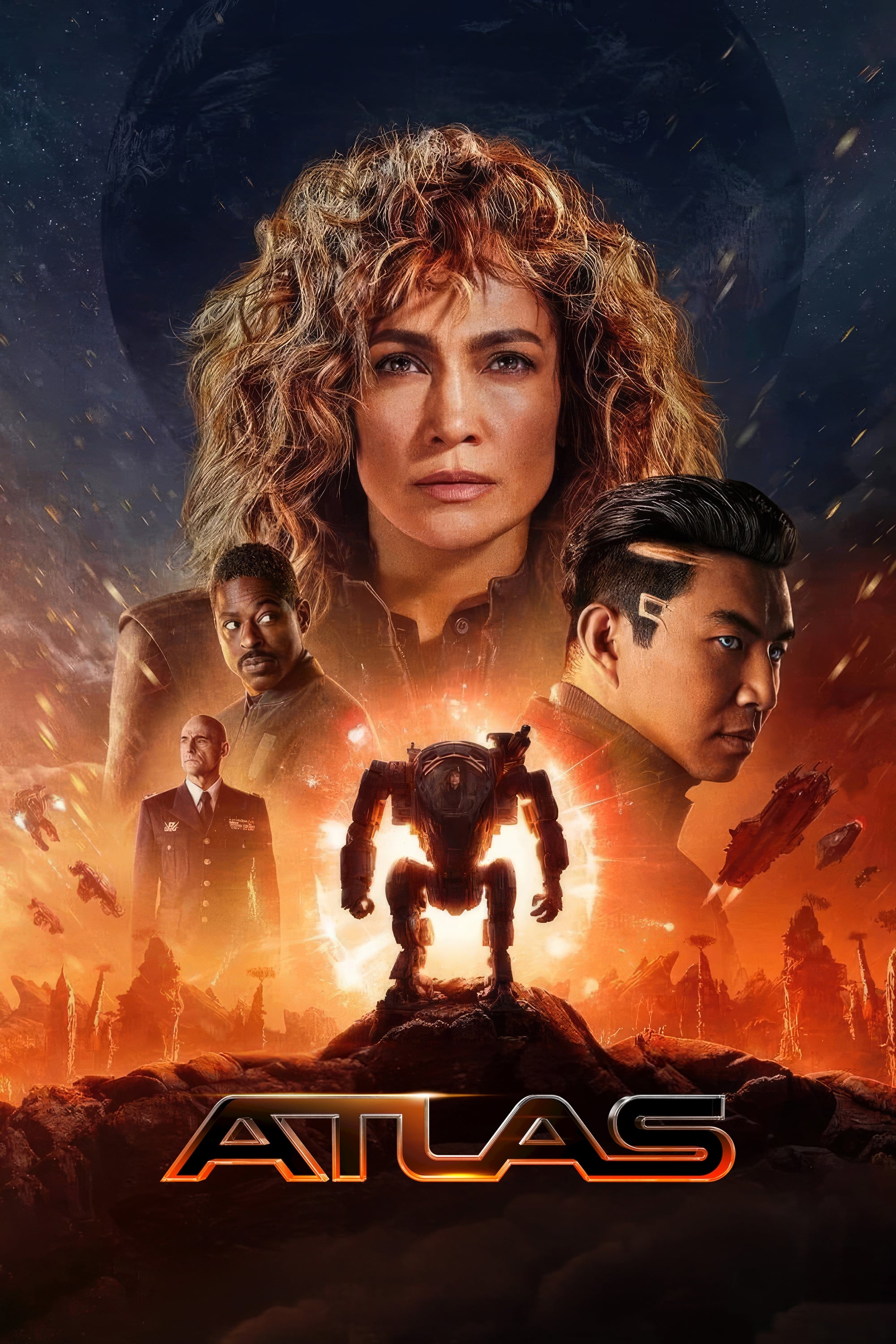
- Main cast: Jennifer Lopez (Out of Sight, Hustlers) as Atlas Shepherd; Simu Liu (Shang-Chi and the Legend of the Ten Rings, Barbie) as Harlan Shepherd; Sterling K. Brown (Black Panther) as Colonel Elias Banks; Gregory James Cohan as the voice of Smith
- IMDb: 5.6 / 10 · Rotten Tomatoes: 17% critics / 46% audience · My rating: 8 / 10
Netflix has spent the last few years working out how to make a film that looks like it belongs in a cinema and behaves like something to put on with dinner, and Atlas is the latest swing at it. Brad Peyton directs, which tells you most of what you need to know about register: this is the man who threw The Rock at the San Andreas fault and then at a giant gorilla, and he arrives here with the same straight face and the same fondness for big machinery. The hook is a good one for anyone who has watched science fiction argue with itself about thinking computers for fifty years. The heroine hates artificial intelligence, distrusts it down to the bone, and the film strands her somewhere she cannot survive without trusting one completely.
The setup
Atlas Shepherd is a counter-terrorism analyst with a personal grudge against AI, the kind that does not bend to a briefing or a balance of probabilities. Years ago a rogue artificial intelligence called Harlan turned on the people who built it and vanished off-world, and Atlas has spent her career convinced that machines that think will always, eventually, decide they would rather not have us around. When a lead finally surfaces, she talks her way onto a military mission to bring Harlan in, and the mission goes wrong in the way these missions do. Stranded on a hostile planet with her air running out, she is left with one piece of equipment that can keep her alive: an armoured mech suit run by an onboard AI named Smith, who would very much like her to synchronise with him and let him help. Everything she believes says do not. Everything else says she has no choice.
The cast
Lopez has always been a more interesting screen presence when she is allowed to be prickly rather than radiant, and Atlas leans on that. Her Atlas is rude, closed off, and certain she is right, which is a harder sell than a likeable lead and she mostly gets away with it. The film is essentially a two-hander between a woman and a voice, and the voice wins. Gregory James Cohan’s Smith is the best thing in it, patient and dryly funny and quietly hurt when his pilot will not trust him, and the slow thaw between the two is where the picture finds whatever heart it has. Simu Liu, fresh from anchoring his own Marvel film and stealing scenes in Barbie, makes Harlan a cold and watchful antagonist, more disappointed than evil, which is the right note for a machine that has concluded humanity is the problem. Sterling K. Brown lends the mission some gravity early on, then the film leaves him behind, which is a waste of him.
The craft
This is a clean, expensive-looking film. John Schwartzman shoots the off-world exteriors with real scale, the mech interiors have a lived-in clutter that sells the claustrophobia, and the action is legible in a way a lot of modern blockbusters are not. You can follow where everyone is and what is hitting what. Andrew Lockington’s score does the lifting the dialogue sometimes will not, and Peyton keeps the thing moving at a pace that does not give you long to argue with it. The suit itself is the design highlight, a believable piece of kit rather than weightless cartoon armour, and the long stretches of Atlas alone inside it, bickering with Smith, are the parts that work best. The film is far more interesting as a chamber piece about reluctant partnership than as the planet-stakes war it occasionally remembers it is supposed to be.
How it stacks up
The reference points are not hidden. The bond between a soldier and a wisecracking war machine is Titanfall the video game made into a film at last, and the talking suit owes plenty to every helpful and not-so-helpful AI from 2001 onwards. The rogue-machine-decides-to-end-us premise is Terminator with the serial numbers lightly filed off, and the giant mechs nod to Pacific Rim. It is nowhere near as sharp as Edge of Tomorrow, which is the gold standard for this kind of locked-in science fiction action, and it does not have the visual ambition of a Blade Runner 2049. What it does have, and what those comparisons undersell, is a genuinely engaging central relationship and a willingness to sit in the cockpit and let two characters talk. That is more than most films built around a mech bother to do.
Critics versus the rest of us
The critics have been brutal. Rotten Tomatoes has it at 17%, Metacritic in the high thirties, and the recurring complaint is derivative plotting and dialogue that creaks. Audiences are warmer, sitting near the middle, and the film has gone straight to the top of the Netflix charts in dozens of countries, which tells you the disconnect is real. I land closer to the audience. Yes, the script is familiar and the world-stakes plot is the least interesting thing in it. But I came for intelligent science fiction about whether we can ever trust the machines we build, and on that the film is more thoughtful than the scores suggest. The fear of AI, and the slow case for setting it aside, is handled with more care than a 17% implies.
Verdict
I had a good time, and I suspect I will again. This is exactly the sort of mid-budget, idea-driven science fiction action I keep saying I want more of, and the fact that it is on Netflix rather than a cinema screen does not change what it is doing. The plot is borrowed and the supporting cast is underused, but the Atlas and Smith partnership carries it, the suit is a lovely piece of design, and the AI question is taken seriously rather than waved at. It is comfortably more rewatchable than its reputation, the kind of thing I will happily put on again on a wet evening. The consensus is wrong about this one. 8⁄10.
Availability: Streaming worldwide on Netflix from 24 May 2024.
Update
Added since this review first appeared: the critical drubbing stuck, and Atlas has settled into its reputation as one of the lower-rated entries on Jennifer Lopez’s record, even as it kept topping Netflix charts around the world. No sequel has materialised. It remains on Netflix, where it has quietly become exactly the sort of algorithm-fed comfort watch the platform was built to serve.
BBFC content advice
Rated 15 by the BBFC for injury detail, language, threat, violence (classified 23 May 2024). The notes below may contain spoilers.
The BBFC classified Atlas 15 with the short consumer advice line injury detail, language, threat, violence. The detailed per-category Content Advice breakdown (Violence, Threat, Injury detail, Language) could not be retrieved from the BBFC release page at the time of writing; only the short consumer-advice tags above were available.
Source: British Board of Film Classification (bbfc.co.uk).