
- UK release: March 2017
- Director: Rupert Sanders · Writers: Jamie Moss, William Wheeler, Ehren Kruger
- Studio / distributor: Paramount Pictures; DreamWorks Pictures; Reliance Entertainment
- Genre: Cyberpunk science-fiction thriller · Runtime: 107 minutes (BBFC 12A)
- Main cast: Scarlett Johansson (Lost in Translation, Under the Skin) as Major; Pilou Asbæk (A War) as Batou; Takeshi Kitano (Battle Royale, Zatoichi) as Chief Aramaki; Juliette Binoche (The English Patient, Three Colours: Blue) as Dr Ouelet
- IMDb: 6.3 / 10 · Rotten Tomatoes: 43% critics / 51% audience · My rating: 7.5 / 10
Mamoru Oshii’s 1995 anime is one of those films the genre keeps circling back to: rain-slicked, philosophical, and so visually influential that The Matrix lifted whole shots from it four years later. Adapting it in live action was always going to be a fight, partly because the cartoon already looks like nothing else, and partly because its real subject, what is left of a person once the body has been swapped out for hardware, is the kind of thing that plays better in voice-over and stillness than in a 107-minute studio thriller. Rupert Sanders, whose only previous feature is Snow White and the Huntsman, has made a film that gets the look almost perfectly right and the soul about half right, and that ratio is roughly where I land on it.
The setup
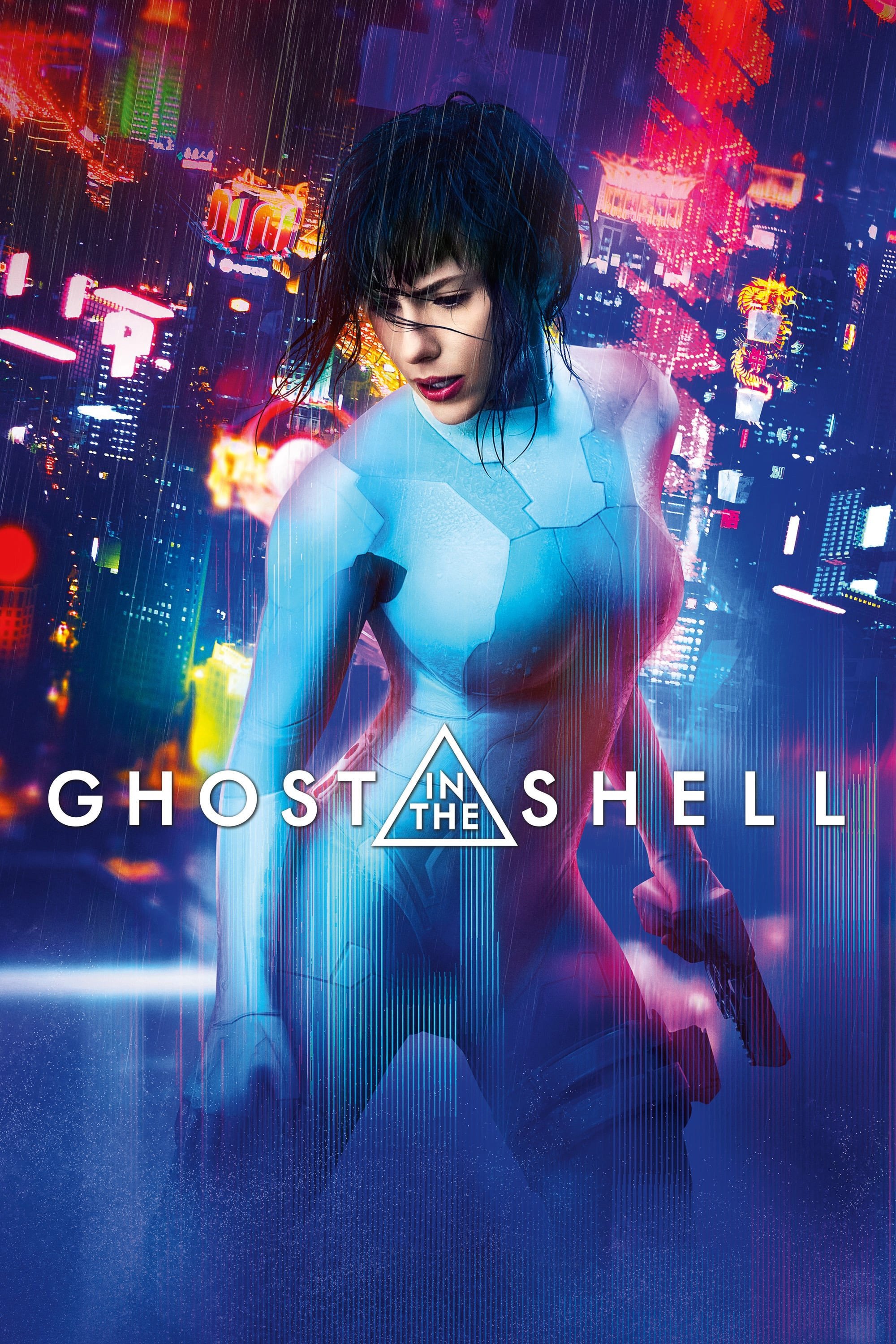
The Major (Scarlett Johansson) is the prototype: a human brain, or what is left of one, housed in a fully synthetic body built by the Hanka Corporation and put to work for Section 9, the counter-terrorism unit run by Chief Aramaki (Takeshi Kitano). When a hacker calling himself Kuze starts dismantling Hanka’s people from the inside, reaching into their cybernetic minds and rewriting what they remember, the Major is sent after him. What she finds, as the hunt closes in, is that the glitches surfacing in her own memory are not malfunctions, and that the company that made her has been a good deal less honest about where she came from than her handlers let on.
The film keeps its central mystery spoiler-friendly for a long stretch, building the identity question into the investigation rather than holding it back for a twist, which is the right call for a story that is really about a person trying to work out whether she is one.
The cast
Johansson is well cast in a way the off-screen controversy tended to drown out. She has spent the last few years playing variations on the not-quite-human, the synthetic voice in Her and the predatory blank in Under the Skin, and she brings that same watchful flatness here, a body that moves with total certainty and a face that keeps coming up short of a feeling. It is a controlled, slightly eerie performance, and it carries the film.
Around her the support is stronger than the material deserves. Pilou Asbæk gives Batou a gruff, loyal warmth that grounds the partnership, and he survives the role’s signature moment, the cybernetic eyes, without tipping into cosplay. Takeshi Kitano, allowed to play Aramaki entirely in Japanese while everyone answers him in English, is quietly the most authoritative presence on screen, a stillness the film badly needs. Juliette Binoche brings real ambiguity to Dr Ouelet, the scientist who built the Major and cannot decide whether she is a creator or a mother. The thin part is the villain: Kuze has a strong idea behind him and not quite enough screen time to land it.
The craft
This is where the money shows. Jess Hall’s cinematography and the production design conjure a future city of vast holographic figures wading between the towers, neon bleeding into permanent rain, geisha-bots with faces that split open like flowers. Several frames are direct, loving restagings of the anime, and they are gorgeous on a big screen. Clint Mansell and Lorne Balfe’s score does a lot of the atmospheric lifting, all low synth pulse and dread, very much in the lineage Vangelis set down for Blade Runner.
The trouble is pace and weight. Oshii let his city breathe; there is a famous wordless montage in the original that just watches the rain and lets you think. Sanders, working to a studio runtime, keeps cutting back to plot, and the action beats, competent as they are, are the least interesting thing on offer. The film is at its best when it slows down and lets you look. It is at its weakest when it remembers it is supposed to be a thriller.
How it stacks up
The obvious yardstick is the 1995 film, and by that measure this is the lesser work: prettier in places, far shallower in its handling of consciousness, identity and what a soul might be once it is running on someone else’s servers. Set against the wider field it does better. It sits comfortably alongside Blade Runner and Minority Report as future-city world-building, and is smarter and more atmospheric than most cyberpunk that reaches multiplexes. Where the Robocop remake of a few years back stripped its source of everything interesting, this keeps the questions in view, even if it answers them too quickly. It is a beautiful film with a borrowed brain, and unlike a lot of remakes it seems to know it.
Critics versus the rest of us
The reviews are rough. Critics are sitting around 43%, with the recurring complaints being the flattened philosophy and the casting row over a white lead in a Japanese property, and audiences are only a little warmer at 51%. Both objections have weight. The film genuinely does take one of science fiction’s richest ideas and sand it down to a clean studio arc, and the casting question is a fair one the film handles clumsily rather than ducking entirely.
My own number sits above both, and the reason is taste. I value world-building, atmosphere, intelligent science fiction and the kind of film you put back on for the look of it, and on those axes this delivers more than its scores suggest. It is not the equal of what it is remaking. It is a better night at the cinema than a 43% implies.
Verdict
Judged as the adaptation of a masterpiece, it falls short, and honest reviewing has to say so. Judged as a glossy, atmospheric, genuinely good-looking piece of cyberpunk, it works. The Major is well played, the city is a place I want to spend time in, the score lingers, and the central question stays alive even when the script is in too much of a hurry to sit with it. It is the rare blockbuster remake that is worth rewatching for craft alone, and rewatchability counts for a lot with me. A more patient cut, with twenty more minutes of rain and silence, might have been something special. As it stands it is a handsome near-miss I will happily put on again. 7.5⁄10.
Availability: On general release in UK cinemas now, in 2D and 3D, and worth the larger screen for the city alone.
Update
Added since this review first appeared: the film underperformed badly enough at the box office to end any talk of a franchise, and its reputation has settled roughly where the contemporary reviews left it, admired for its look, faulted for its caution, and overshadowed by both the 1995 anime and the Ghost in the Shell: SAC_2045 series that followed on streaming. The casting debate has, if anything, hardened against it. It is now widely available on disc and digital, and turns up on the major rental platforms; check your region for a streaming home, as it has moved around.
BBFC content advice
Rated 12A by the BBFC for moderate violence, threat. The notes below may contain spoilers.
The full per-category Content Advice could not be retrieved from the BBFC release page at the time of writing; the page for the 2017 live-action film was not reachable, and the publicly indexed BBFC entry under this title is the 1995 animated version. The age rating above (12A) is confirmed from the UK theatrical certificate. The detailed Violence / Threat / Language breakdown will be filled in verbatim once the correct BBFC release page is available.
Source: British Board of Film Classification (bbfc.co.uk).