
- UK release: March 2025
- Director: Bong Joon Ho · Writer: Bong Joon Ho
- Studio / distributor: Warner Bros.; Plan B Entertainment; Offscreen
- Genre: Science-fiction satire / black comedy · Runtime: 137 minutes (BBFC 15)
- Main cast: Robert Pattinson (The Batman, Good Time) as Mickey Barnes; Naomi Ackie (Star Wars: The Rise of Skywalker) as Nasha Barridge; Steven Yeun (The Walking Dead) as Timo; Mark Ruffalo (Spotlight) as Kenneth Marshall; Toni Collette (The Sixth Sense, Hereditary) as Ylfa Marshall
- IMDb: 6.7 / 10 · Rotten Tomatoes: 78% critics / 73% audience · My rating: 8 / 10
Bong Joon Ho has earned the right to do whatever he likes. Parasite swept the Oscars and made him the most quietly subversive director working at studio scale, so the question hanging over Mickey 17, his first film since, is what he does with a Warner Bros. budget and Robert Pattinson on a spaceship. The answer is not the clean, tightening machine of Parasite. It is something baggier and stranger, closer to the bilingual genre-hopping of Snowpiercer and Okja, where the satire is broad, the tone lurches on purpose, and the whole thing threatens to spill over the sides. That it mostly holds together is down to a director who has never been afraid of a mess and a lead actor having the time of his life.
The setup
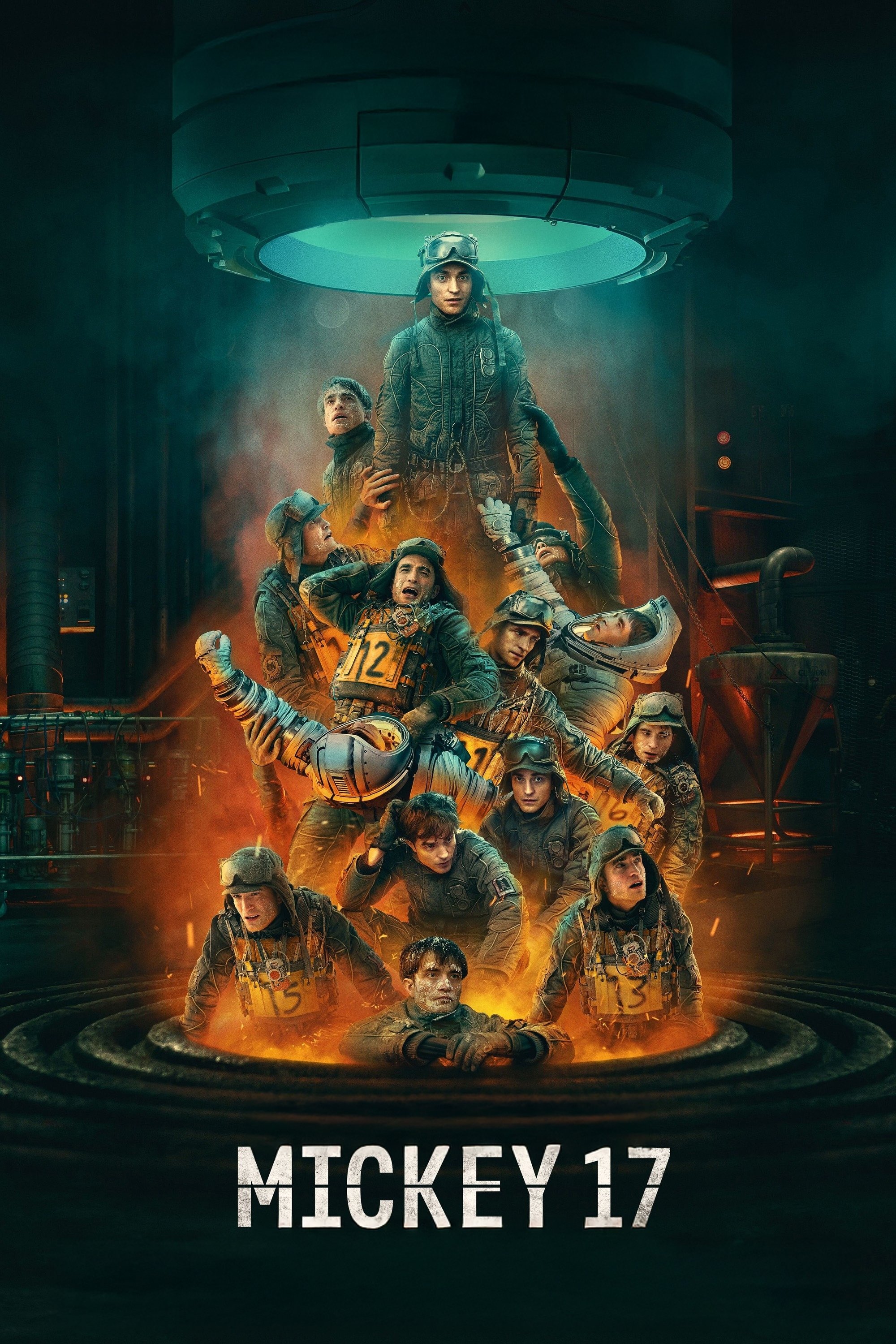
Mickey Barnes (Robert Pattinson) signs up as an Expendable on a colony ship bound for the ice planet Niflheim, fleeing a debt that would otherwise get him killed slowly on Earth. The job is exactly what it sounds like. When a mission needs someone to test a vaccine, walk into a radiation leak, or die so the scientists can take notes, Mickey does it, and the ship prints a fresh Mickey overnight with his memories restored. He has died sixteen times when the film catches up with him. The trouble starts on the seventeenth, when Mickey is presumed dead on the ice, crawls home anyway, and finds that Mickey 18 has already been printed in his place. Two of the same man, both alive, is the one thing the colony’s rules absolutely forbid, and the discovery sets Mickey against the ship’s preening leader, Kenneth Marshall, just as the planet’s native creatures start taking an interest in their visitors.
The cast
Pattinson is the reason the film works as well as it does. As Mickey 17 he plays a put-upon innocent with a reedy, adenoidal voice and the air of a man who has stopped expecting much from anyone, and when Mickey 18 turns up he gives him a different posture, a different temper, a meaner streak, so that two performances are genuinely sharing scenes. It is the kind of committed, slightly daft character work that Good Time hinted he had in him, and it carries long stretches that would sink with a more cautious actor. Naomi Ackie gives Nasha real spine and warmth as the agent who loves both Mickeys without much fuss about it, grounding a film that is otherwise allergic to sincerity. Steven Yeun does sly, weaselly work as the friend who keeps selling Mickey out. The broadest swings are Mark Ruffalo and Toni Collette as the Marshalls, a vain failed-politician demagogue and his sauce-obsessed wife, played at full cartoon volume. Your tolerance for the film will track fairly closely with your tolerance for them.
The craft
Visually this is a handsome, grimy piece of science fiction. Darius Khondji shoots the ship’s corridors and the white waste of Niflheim with the same tactile gloom he brought to Bong’s earlier work, and the printing of a new Mickey, a body extruded steaming onto a grille, is the sort of grotesque practical image that sticks. Jung Jae-il’s score keeps shifting register under the comedy, which is part of how Bong gets away with whipsawing from slapstick to genuine cruelty inside a single scene. The world-building is generous: the indentured-labour economics, the corporate paperwork around death, the creepers that turn out to be far more than monsters. The cost is pacing. At a little over two and a quarter hours the middle act sags, there is a satirical target too many, and the voiceover does heavy lifting the images could have managed alone. Bong throws everything at the wall; not all of it lands.
How it stacks up
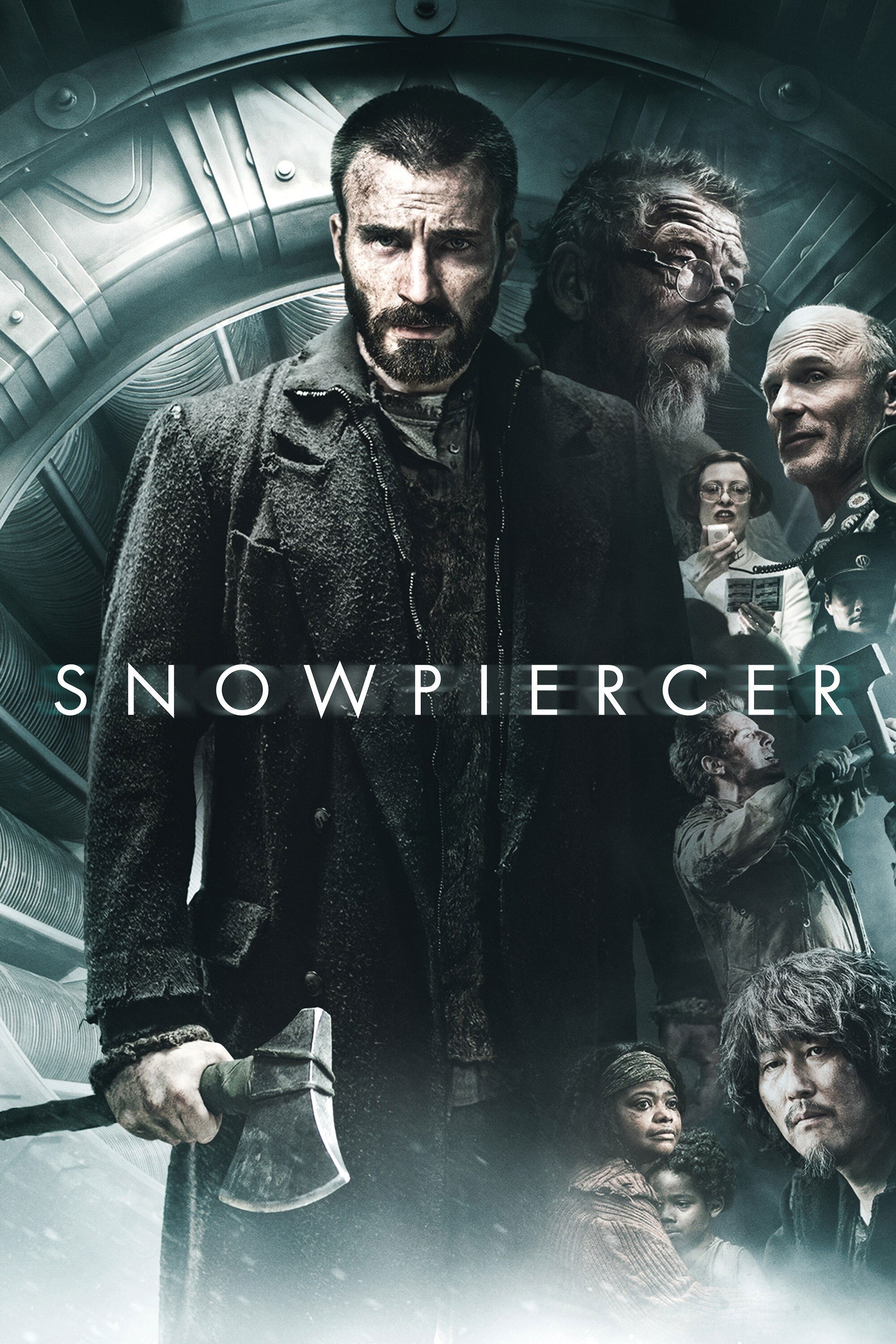
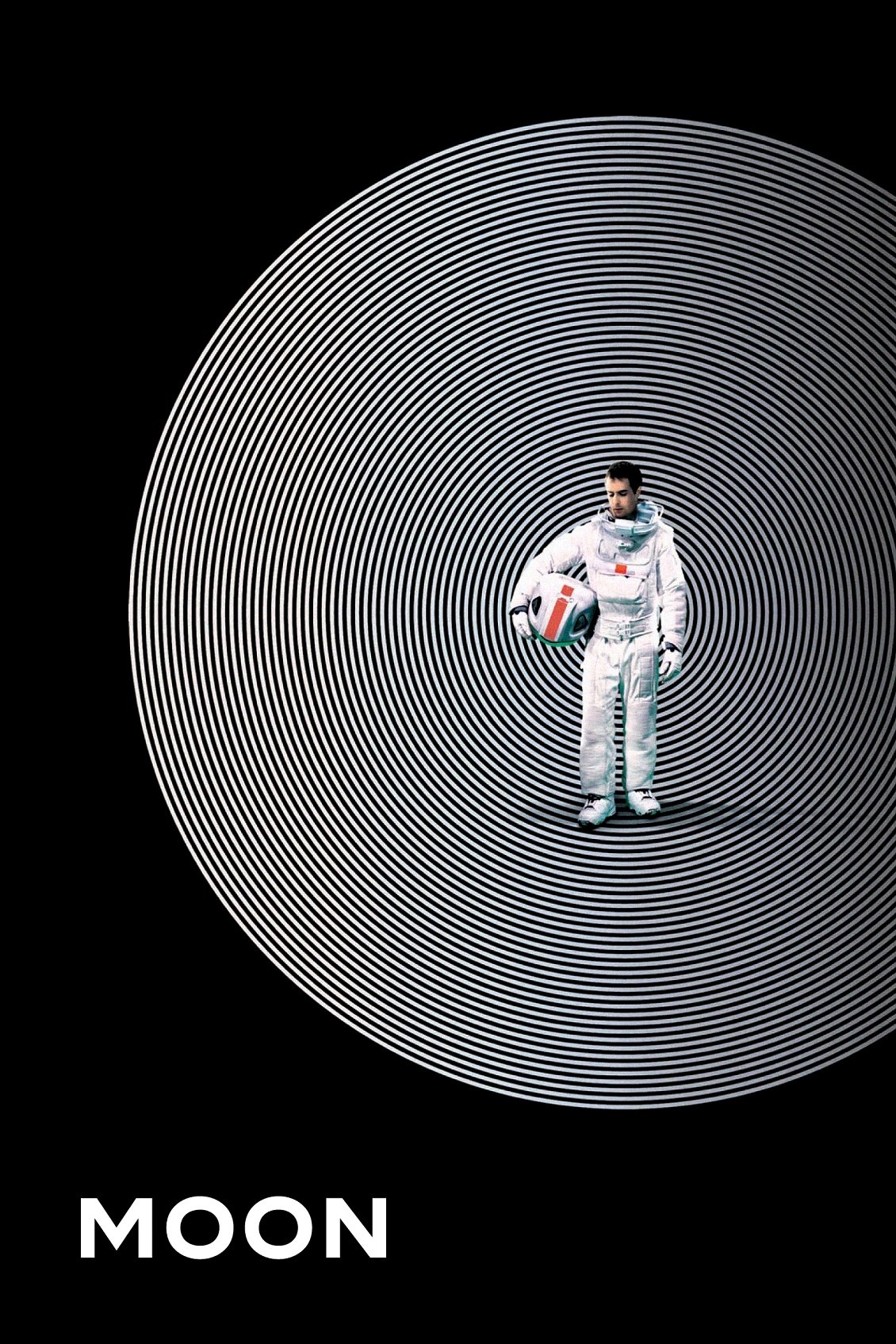
The obvious touchstone is Moon, Duncan Jones’s chamber piece about a worker and his duplicate, but Bong is after something louder and angrier than that film’s melancholy. The cloning-and-respawn mechanic also nods to Edge of Tomorrow and, further back, the comic doubling of Multiplicity, though Mickey 17 is more interested in what it means to be the disposable copy than in the gag of meeting yourself. Mostly it sits alongside Snowpiercer: another closed system carrying the poor in its guts while the powerful preen at the front, another blunt allegory delivered with relish. It does not have the diamond precision of Parasite, and it would be unfair to expect it to. This is Bong in his sprawling, swing-for-everything mode, and on those terms it is a good deal more alive than most studio science fiction.
Critics versus the rest of us
Critics are broadly onside, sitting around 78%, with the praise going to Pattinson and to Bong’s appetite for class satire, and the reservations landing on a film many find overstuffed and tonally uneven. Audiences are a touch cooler at 73%, which reads like people arriving for a brisk high-concept thriller and getting a shaggier, more political comedy instead. Both reactions are fair, and they point at the same film from opposite sides. I come down nearer the critics, because the things that frustrate people here are the things I tend to forgive: ambition that overreaches, a satire that would rather be untidy than toothless, a director plainly enjoying himself.
Verdict
This is exactly the sort of intelligent, anti-corporate science fiction I will always make time for, the kind that uses a cloning gimmick to ask who gets treated as disposable and means it. It is too long, the Marshalls are pitched a notch too broad, and the final act ties its threads off in a hurry. None of that outweighs Pattinson’s double act, the texture of the world, or the pleasure of watching a major director refuse to play it safe with a blockbuster budget. It is funny, strange, and built to reward a second look once you know where it is going. 8⁄10.
Availability: In UK cinemas now, including IMAX. Worth the big screen for Niflheim and the creepers.
Update
Added since this review first appeared: Mickey 17 has settled in as the divisive entry in Bong Joon Ho’s run, the post-Parasite film admirers defend and detractors call self-indulgent, with Pattinson’s twin performance the point most people agree on. After its cinema run it moved to digital purchase and rental and on to streaming via Max where available, with a physical 4K release for the people who want the ice planet at full resolution at home.
BBFC content advice
Rated 15 by the BBFC for strong language, violence, injury detail, sex, drug misuse. The notes below may contain spoilers.
Violence: Scenes include beatings and a fantastical creature being repeatedly shot. Audio is heard of a man being stabbed and another having his leg severed with a saw.
Threat and horror: A man is the subject of dangerous experiments, such as being exposed to radiation and being tested with new drugs. He repeatedly vomits and convulses after eating food deliberately spiked with a hormone. There are also moments of fantastical threat involving a colony of creeper creatures defending their territory after being invaded.
Language: Strong language (‘motherfker’, ‘fk’) is accompanied by milder terms such as ‘bitch’, ‘whore’, ‘prick’, ‘dickhead’, ‘shit’, ‘ass’, ‘crap’, ‘moron’, ‘God’ and ‘Jesus’. There is use of the middle finger gesture.
Sex: There are brief moments of strong sex. Comic visuals are seen of various sexual positions demonstrated by computer generated stick figures.
Discrimination: A villainous leader describes his plans to cultivate a ‘pure all-white’ colony of people. These ideals are clearly challenged and not endorsed by the film as a whole.
Drugs: A man snorts a form of oxycontin and there are visual and verbal references to drug misuse and dealing.
Suicide and self-harm: References are made to a person taking their own life. A woman tells a man he has to kill himself in order to prove his immortality.
Injury detail: Moments of violence result in blood spurts and bloody aftermath detail. A man spits out another’s bloodied ear that he has bitten off during a fight. After being repeatedly shot, parts of a fantastical creature’s body are seen scattered across the floor. A man repeatedly vomits blood.
Source: British Board of Film Classification (bbfc.co.uk).