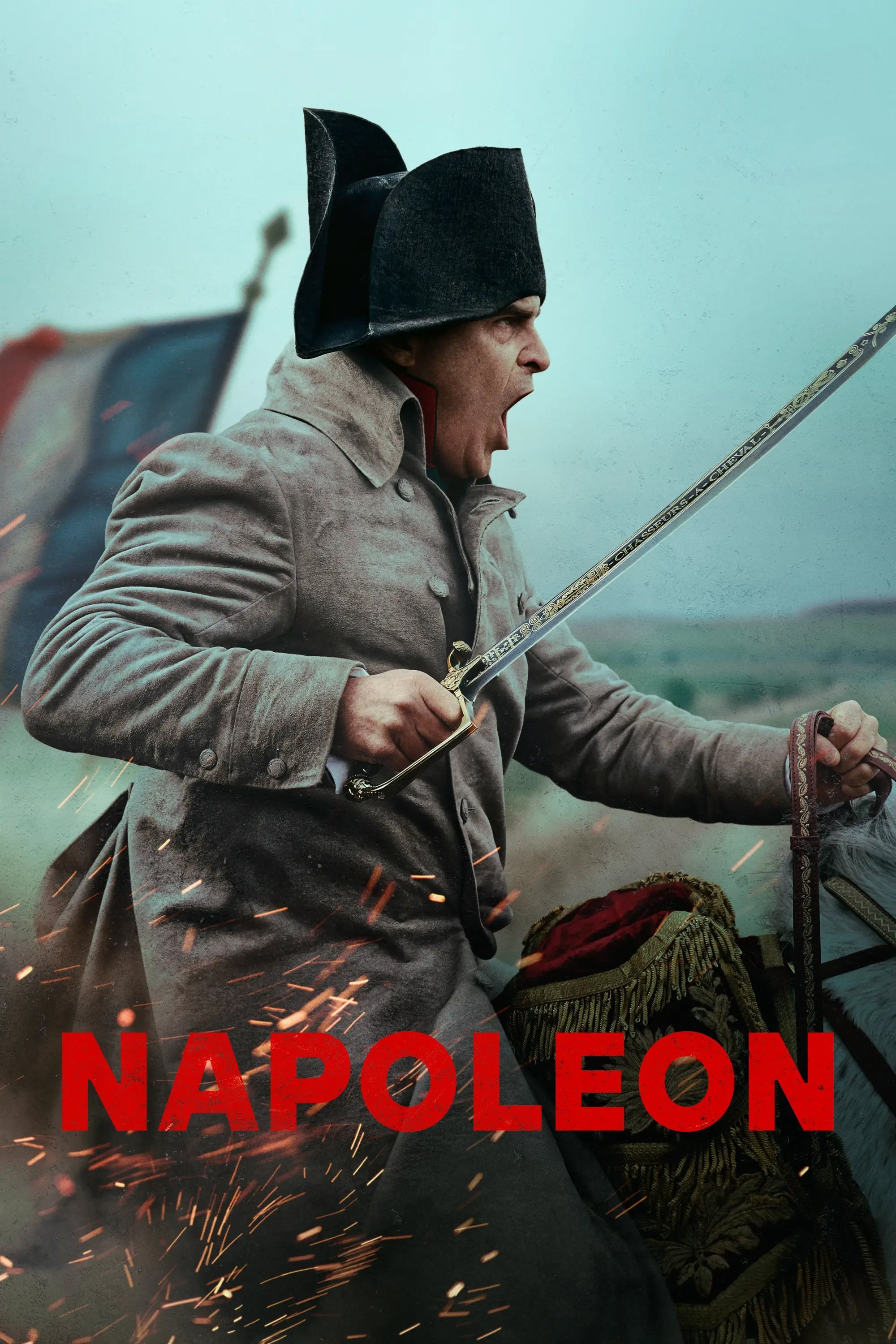
- UK release: November 2023
- Director: Ridley Scott · Writer: David Scarpa
- Studio / distributor: Apple Original Films; Scott Free Productions; Columbia Pictures
- Genre: Historical epic / biographical war drama · Runtime: 158 minutes (BBFC 15)
- Main cast: Joaquin Phoenix (Gladiator, The Master) as Napoleon Bonaparte; Vanessa Kirby (The Crown, Pieces of a Woman) as Joséphine; Tahar Rahim (A Prophet, The Mauritanian) as Paul Barras; Rupert Everett (My Best Friend’s Wedding, An Ideal Husband) as the Duke of Wellington
- IMDb: 6.3 / 10 · Rotten Tomatoes: 58% critics / 58% audience · My rating: 7.5 / 10
Ridley Scott is now eighty five, and he has decided to spend a chunk of Apple’s money on the one historical figure who has defeated more film-makers than he has won battles. Napoleon Bonaparte has been played by everyone from Rod Steiger to Marlon Brando, and Stanley Kubrick spent years failing to get his version made at all. Scott’s pitch is characteristically blunt: he is not interested in the textbook. He wants the cannon smoke, the cold ambition, and the marriage that the history books tend to treat as a footnote. The result is a film that is enormous on the screen and curiously withholding at the centre, and it has split audiences neatly down the middle.
The setup
We meet Bonaparte as a watchful young artillery officer in the chaos of the Revolution, present at the guillotining of Marie Antoinette and quietly appalled by the people running the country. The siege of Toulon makes his name, and from there the film follows the familiar arc, consul, emperor, the long run of campaigns, in a series of leaps across two decades. Threaded through all of it is Joséphine, the older widow he becomes obsessed with, and whose hold over him survives every political calculation he makes. Scott structures the whole thing as a tug between the battlefield and the bedroom, a man who can read a map of Europe but cannot read his own wife.
The cast
Phoenix plays Napoleon as a sulky, socially awkward operator, all sidelong glances and graceless appetite, a man who seizes a continent yet eats his dinner like a resentful child. It is a deliberately unheroic reading, closer to his work in The Master than to anything in the Gladiator mode, and it is the thing most likely to annoy people who want a great man. I found it the most interesting choice in the film. Vanessa Kirby is the stronger presence, giving Joséphine a knowing, unimpressed coolness that makes the obsession legible. The supporting ranks are thinner. Tahar Rahim’s Barras and Rupert Everett’s drawling Wellington are sharp in their handful of scenes, but the film moves too fast to give anyone outside the central pair much room.
The craft
This is where the money shows. Dariusz Wolski shoots the battles in cold, smoke-choked greys, and the set pieces are tremendous: Austerlitz, with the ice cracking under retreating soldiers and the water swallowing men and horses whole, is the most viscerally staged battle Scott has put on screen since the opening of Gladiator. The cavalry charges have real weight and real horror, bodies and animals torn apart with a bluntness that earns the certificate. Martin Phipps’s score keeps the tone funereal rather than triumphant. Where the craft strains is in the joins. Twenty years compressed into two and a half hours means the film lurches from one decisive moment to the next, and the connective tissue, the politics, the scheming, the slow accretion of power, is largely missing. You feel the longer cut hovering just out of frame.
How it stacks up
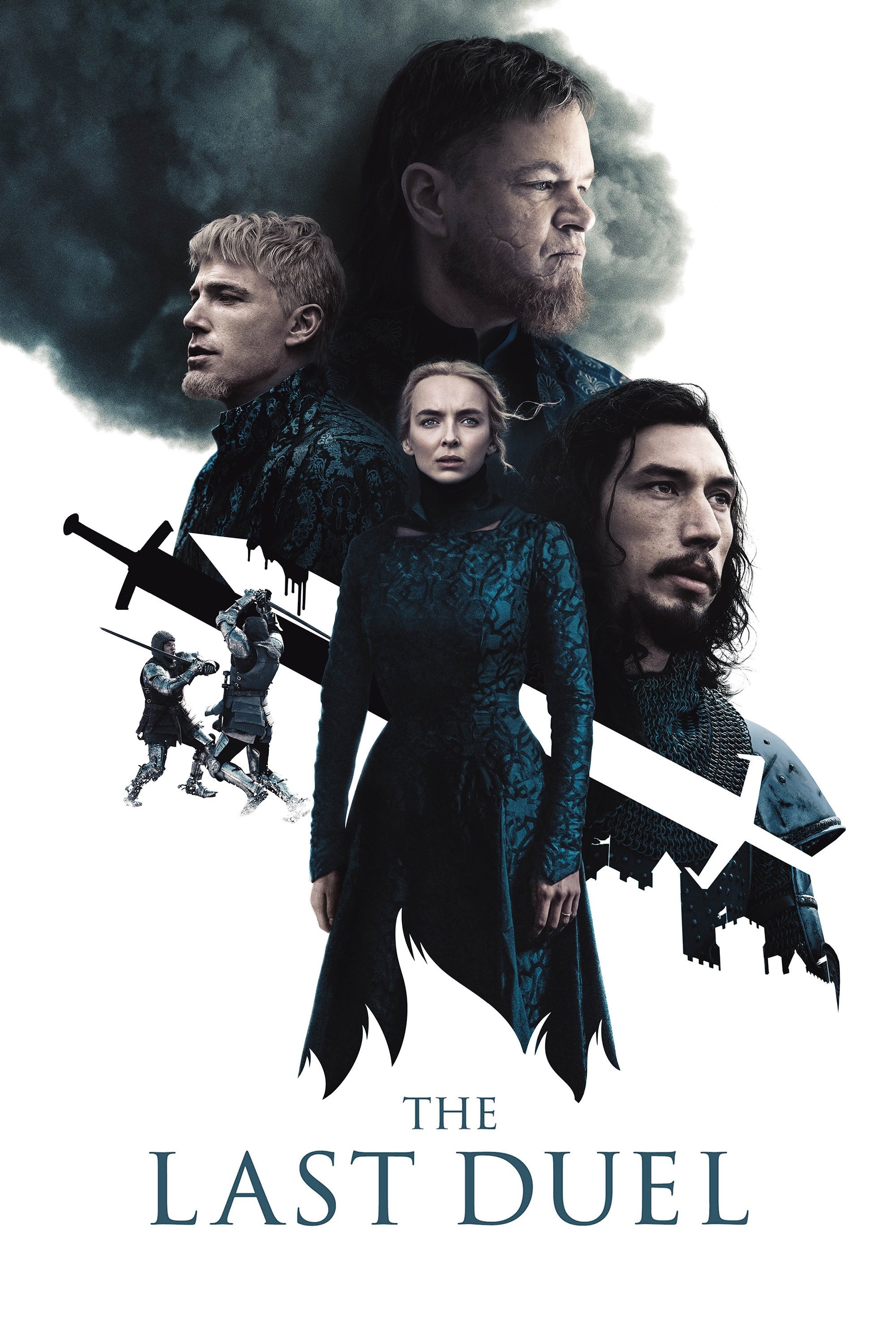
The obvious comparison is Gladiator, and Scott invites it, but the truer cousins are his more recent, chillier histories, Kingdom of Heaven and The Last Duel, films more interested in the rot inside power than in the heroics. Set it against Sergei Bondarchuk’s Waterloo and the difference is instructive: that 1970 epic had the patience to let a single battle breathe across a whole film, where Scott sprints through a life. As a study of an awkward, grasping man it is closer to a perverse character piece than to a conventional biopic, and that is the version of it I responded to most.
Critics versus the rest of us
Critics are split, hovering around the midpoint, and audiences are sitting in exactly the same place, which is rare. The recurring complaints are the historical liberties, Scott firing cannon at the pyramids that never happened, the speed, and Phoenix’s unglamorous Napoleon. Historians have been loudest of all, and Scott has been cheerfully rude back to them. My own reaction lands above the consensus but short of love. The film is too cold and too rushed to be a great one, and it never quite decides whether it admires its subject or pities him. But it is never boring, the battles are genuinely thrilling, and the strange central marriage gives it a spine that most historical epics lack.
Verdict
Napoleon is a flawed, fascinating, slightly frustrating film, the work of a director with nothing left to prove swinging at a giant subject and connecting about two thirds of the time. The compression hurts it, the supporting cast is underused, and the much-discussed director’s cut clearly exists for a reason. But the spectacle is real, Phoenix and Kirby give you something stranger and more human than the marketing promised, and Austerlitz alone is worth the ticket. I will happily watch it again, partly for the battles and partly to see whether the colder character study lands harder a second time. 7.5⁄10.
Availability: In UK cinemas now, on general release. An extended Apple TV+ cut has been promised to follow.
Update
Added since this review first appeared: the streaming home is Apple TV+, where the film landed after its cinema run. Scott’s promised director’s cut duly arrived, running around four hours and restoring much of the political and personal connective tissue the theatrical version skips; it is the version to seek out if the cinema cut felt like a highlights reel, and it fleshes out Joséphine considerably. The film’s standing has settled roughly where the split scores left it, admired for its battles and Phoenix’s odd, unheroic turn, argued over for its history.
BBFC content advice
Rated 15 by the BBFC for strong bloody violence, injury detail, sex. The notes below may contain spoilers.
Violence: There are scenes of strong bloody battle violence in which men are blown up by cannons, slashed at the throat, shot and stabbed resulting in large spurts of blood and bloody aftermath detail. A historical figure is shown being decapitated. A man brutally inserts his finger into a gunshot wound causing pain to the injured man. A man slaps his wife around the face.
Threat and horror: Scenes of moderate threat include gun threat.
Language: Use of infrequent strong language (‘f**k’) is accompanied by milder terms such as ‘slut’, ‘bastard’, ‘piss’, ‘Jesus’, ‘Christ’ and ‘God’.
Sex: There are strong sex scenes with brief buttock nudity. Sex references are moderate and include characters’ alluding to a woman’s promiscuity as well as mentions of adultery.
Suicide and self-harm: A man attempts suicide resulting in bloody detail to his face and neck.
Injury detail: Violent sequences include bloody detail and sight of injuries. After a decapitation, a woman’s severed head is held up by the hair. A horse is fatally injured by a cannon leading to its internal organs graphically being exposed. Decaying corpses are seen hanging from trees.
Source: British Board of Film Classification (bbfc.co.uk).