
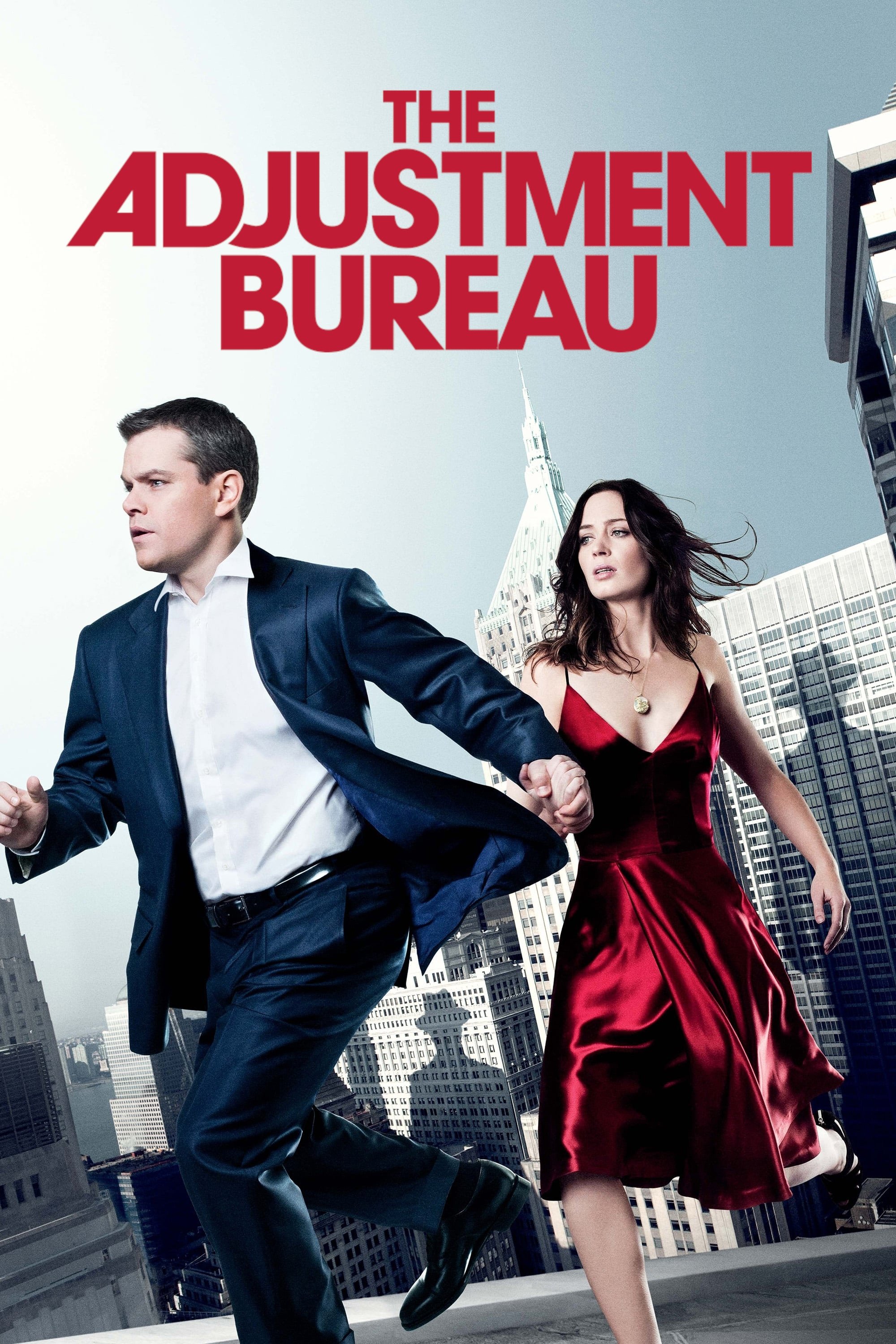

- UK release: March 2011
- Director: George Nolfi · Writer: George Nolfi
- Studio / distributor: Universal Pictures; Media Rights Capital
- Source: Philip K. Dick’s short story Adjustment Team
- Genre: Science fiction romantic thriller · Runtime: 106 minutes (BBFC 15)
- Main cast: Matt Damon (The Bourne Ultimatum, The Departed) as David Norris; Emily Blunt (The Devil Wears Prada, The Young Victoria) as Elise Sellas; Anthony Mackie (The Hurt Locker) as Harry Mitchell; John Slattery (Iron Man 2) as Richardson; Terence Stamp (Superman II, The Limey) as Thompson
- Rotten Tomatoes: 71% critics / 67% audience · My rating: 8.5 / 10
Hollywood has a long habit of mining Philip K. Dick and coming up with something harder, colder and more paranoid than what it went in to find. Blade Runner, Total Recall, Minority Report: the screen Dick is usually a man being hunted through a hostile system that knows more than he does. The Adjustment Bureau takes the same raw idea, a short story about unseen agents quietly correcting the world, and does something nobody quite expected with it. It turns it into a love story. First-time director George Nolfi, who wrote The Bourne Ultimatum, has made the most romantic film yet built on a Dick premise, and the surprise is how well the two halves sit together.
The setup
David Norris (Matt Damon) is a young New York congressman with a real shot at the Senate until an old indiscretion sinks his campaign. Hiding in a hotel bathroom to draft his concession speech, he meets Elise (Emily Blunt), a dancer with no patience for political polish, and walks out a different man. The trouble is that the meeting was never supposed to happen. A discreet, hat-wearing organisation exists to keep human lives running to a plan, and David and Elise are not in it together. When David sees the men of the Bureau at work, freezing a room full of people while they adjust a colleague’s mind, he learns the rules: stay quiet, stay on the path, and forget her. He is not built to do any of those things, and the film becomes a long, stubborn argument between one man’s wishes and a design he is not allowed to read.
The cast
Damon is doing something subtler here than the Bourne films let him. David has to be a plausible politician, the kind of man who can work a room and mean it, and also an ordinary romantic who will throw a career away for a woman he has met twice. Damon holds both without strain. Blunt is the reason the romance lands at all: quick, warm and faintly mocking, she gives Elise an independence that stops the chase feeling like a man pursuing a prize. Their scenes together have a real spark, and the film is wise enough to keep coming back to them. Around them, the Bureau is staffed by terrific character actors. Anthony Mackie’s Harry is the conscience of the operation, an agent who has seen too much to enjoy his work; John Slattery brings a clipped middle-management exasperation; and Terence Stamp arrives late as a senior fixer with the unhurried menace of a man who has settled far harder cases than this one.
The craft
Nolfi shoots New York as a city you could believe runs on hidden machinery. John Toll’s cinematography keeps things handsome but grounded, and the Bureau’s one piece of fantastical hardware, a set of doors that open onto the other side of the city if you walk through them wearing the right hat, is handled with a lovely lightness of touch. There are no great effects set-pieces; the chases are made of geography and timing, men appearing at the end of corridors, a sprint across a rain-soaked plaza. Thomas Newman’s score does a lot of the atmospheric lifting, restless and a little melancholy, and the whole film has the brisk, intelligent pace you would hope for from the man who wrote the best of the Bourne pictures. It runs a tidy hundred and six minutes and never sags.
How it stacks up
The obvious shelf-mate is Minority Report, another Dick adaptation about a man fleeing a system that claims to know the future, though Spielberg’s film is colder and more spectacular where this one is intimate. Dark City and The Truman Show are closer in spirit: stories about an ordinary man discovering the world has been arranged around him and refusing the arrangement. And in its bones this is a chase romance in the tradition of North by Northwest, two people running through a conspiracy and falling for each other on the way. What it does not share with the bleaker Dick films is their pessimism. The Bureau is not quite the malevolent machine you brace for, and the film is more interested in what free will costs than in punishing anyone for wanting it.
Critics versus the rest of us
The reviews are mixed-positive, the critics sitting around 71% and the audience a little cooler. The praise is mostly for Damon and Blunt and for the cleverness of the premise; the reservations are about the rules. The Bureau’s powers stretch and contract as the plot needs them to, and the ending softens in a way that a sterner science fiction film would not allow. Those are fair points. I just do not weigh them as heavily as some viewers will, because the film is not really selling its metaphysics as airtight. It is selling the pull between two people against everything arranged to keep them apart, and on that it delivers.
Verdict
This is one I expect to come back to. It is intelligent science fiction worn lightly, with two leads who genuinely belong together, a premise that rewards thinking about, and the kind of brisk, well-made craft that makes a rewatch a pleasure rather than a chore. The rules wobble and the resolution is gentler than the setup threatens, but I would rather a film of ideas that ends warm than a clever one that ends cold for the sake of it. Charming, romantic, quietly smart, and far more rewatchable than its reputation suggests. 8.5⁄10.
Availability: On general release in UK cinemas now, with a DVD and Blu-ray release to follow later in the year.
Update
Added since this review first appeared: the film has settled into its place as one of the warmer, more accessible Philip K. Dick adaptations, the one people reach for when they want the idea without the despair. George Nolfi went on to direct further features, and both leads only grew in stature, Emily Blunt in particular moving into franchise and awards roles. It is now widely available on disc and through the usual digital rental and streaming services, where it has aged into a reliable date-night recommendation.
BBFC content advice
Rated 15 by the BBFC for infrequent strong language, a discreet sex scene. The notes below may contain spoilers.
Language: The film contains two uses of strong language.
Sex: A discreet sex scene sees a couple intertwined on a bed but without any sexualised nudity or sexual detail.
Additional issues: The film also contains some milder language, including uses of ‘bastard’, ‘shit’ and ‘son of a bitch’.
Source: British Board of Film Classification (bbfc.co.uk).