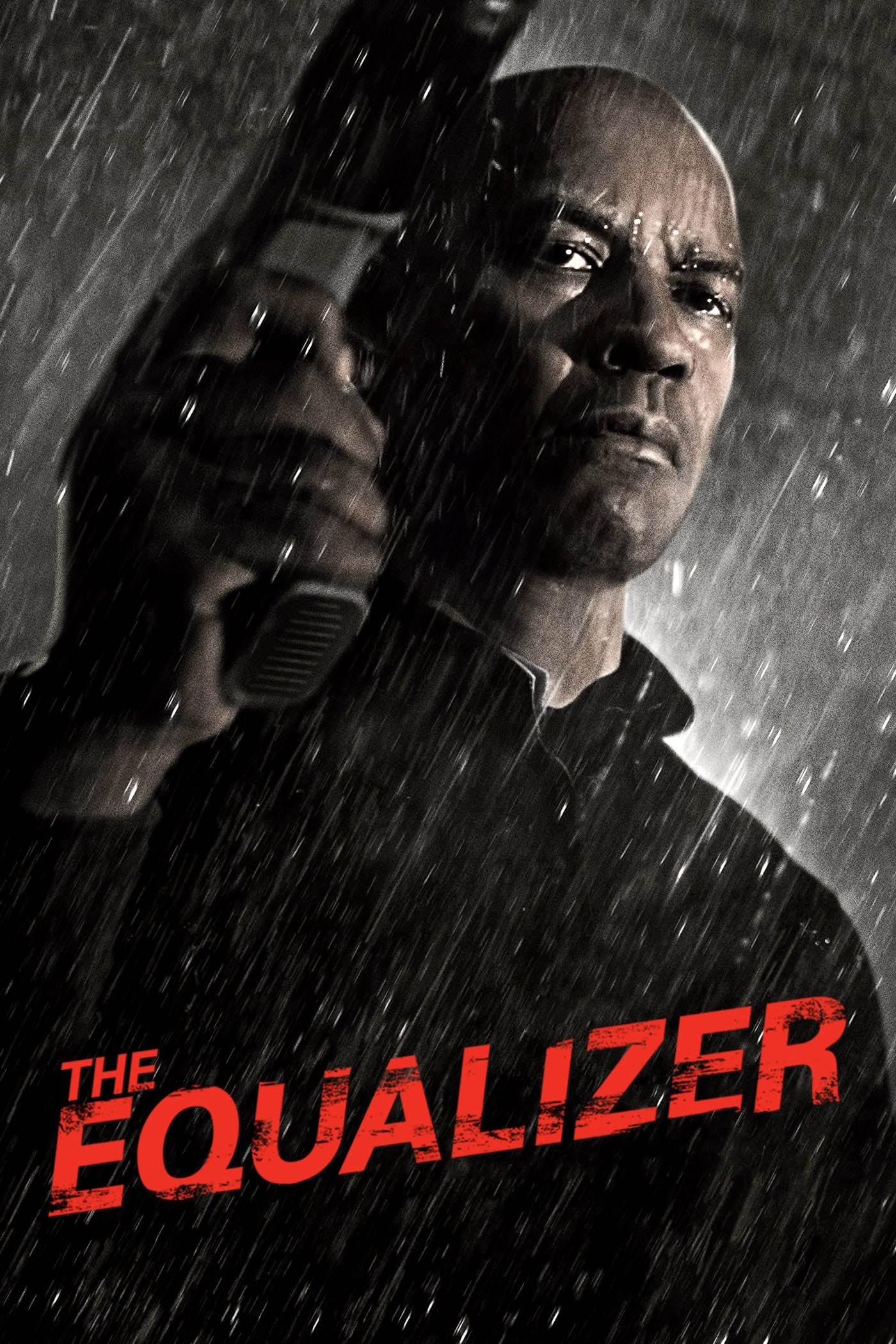

- UK release: September 2014
- Director: Antoine Fuqua · Writer: Richard Wenk
- Studio / distributor: Columbia Pictures; Sony Pictures Releasing
- Genre: Vigilante action thriller · Runtime: 132 minutes (BBFC 15)
- Main cast: Denzel Washington (Training Day, Man on Fire) as Robert McCall; Marton Csokas (The Lord of the Rings: The Fellowship of the Ring) as Teddy; Chloë Grace Moretz (Kick-Ass, Let Me In) as Teri; David Harbour as Masters
- IMDb: 7.2 / 10 · Rotten Tomatoes: 59% critics / 76% audience · My rating: 8 / 10
Thirteen years after Training Day, Antoine Fuqua and Denzel Washington are back working the same corner of the city, and the reunion is the first reason to buy a ticket. This time the badge is gone. McCall is a man who has very deliberately stepped out of a violent line of work, and the film is built around the moment he decides to step back into it. It is loosely descended from the 1980s television series, but you do not need to remember Edward Woodward to follow it. What you need is patience, because Fuqua takes his time, and the patience pays off.
The setup
Robert McCall (Denzel Washington) lives a small, ordered life. He works the floor at a Home Mart hardware warehouse, he cannot sleep, and he reads his way through a list of classic novels alone in a diner at night. He is the kind of man who folds his napkin and lines up his cutlery, and you sense early that the order is doing a job. At the diner he falls into a careful sort of friendship with Teri (Chloë Grace Moretz), a young woman being run by Russian gangsters. When they put her in hospital, McCall offers to buy her freedom, is refused, and quietly closes the door. What happens next he does without raising his voice. The problem is that the men he kills belong to something much larger, and the organisation sends Teddy (Marton Csokas) to find out who has been dismantling its people.
The cast
Washington is the whole engine here, and he runs the part on stillness rather than swagger. He plays McCall as a man who has decided not to be dangerous and is visibly disappointed in himself each time he has to be again. There is a clock that ticks in his head before every fight, an almost bored calculation of who in the room dies and in what order, and Washington sells it without a flicker of strain. It is a quieter cousin of his grieving bodyguard in Man on Fire, the rage banked down rather than burning. Marton Csokas makes Teddy a genuinely unpleasant piece of work, smiling and tattooed and entirely comfortable, a villain who enjoys his job. Chloë Grace Moretz has less to do than her billing suggests and is mostly off the board after the first act, but she gives McCall a reason to start, and she is good in the scenes she has. David Harbour turns up as a crooked detective and makes an impression in limited space.
The craft
Fuqua and his cinematographer Mauro Fiore shoot a wet, neon, after-hours city, all rain on glass and light pooling in puddles, and the look does a lot of the storytelling the script will not. The violence, when it arrives, is precise and unhurried. McCall improvises with whatever is to hand, a corkscrew, a shot glass, the contents of a hardware shop, and Fuqua frames it so you follow the method rather than just the carnage. The standout is a final act staged inside McCall’s own workplace, where the man who knows where every tool lives turns the aisles into a trap. Harry Gregson-Williams scores it low and patient, content to sit under the tension rather than push it. The one real complaint is length: at over two hours the film lingers where a leaner cut would have struck, and the plot is too slight to justify every minute.
How it stacks up
The obvious anchor is Man on Fire, the earlier Washington revenge picture, and The Equalizer is the cooler, more controlled relation, less operatic and more procedural. It also sits squarely beside the new wave of methodical-killer thrillers: John Wick, arriving the same season, shares the lone professional and the body count but plays faster and more stylised, while Jack Reacher shares the drifter who solves problems with his hands but lacks this film’s menace. Where The Equalizer wins is texture. It is in no hurry, it trusts its leading man to hold a scene doing almost nothing, and it cares about the geography of a fight. Where it loses is ambition: the story is a thin clothes-line for a series of confrontations, and the Russian mob is more a supply of bodies than a real antagonist.
Critics versus the rest of us
Critics have landed around the middle, near 59%, and the split is easy to read. The reviews praise Washington and Fuqua’s command of mood while complaining that the script is routine and the runtime indulgent. Audiences are warmer, around 76%, and I am with them. The critical line treats the slimness of the plot as a fatal flaw. I treat it as the price of admission for a thriller that is genuinely about watching a very capable man work, shot with care and anchored by one of the most reliable leads in the business.
Verdict
This is a film that knows exactly what it is and executes it with real control. The story will not surprise you, it runs long, and the supporting cast is thinner than the poster promises. None of that matters much when Washington is on screen, which is almost always, and when the craft around him is this assured. It is atmospheric, satisfying, and the kind of thing I will happily put on again on a wet evening without needing to follow a plot. A more disciplined edit would have pushed it higher. As it stands it is a strong, rewatchable genre piece carried by a great actor doing precise, economical work. 8⁄10.
Availability: On general release in UK cinemas now. Worth a big screen for Fiore’s rain-soaked city and the hardware-store finale.
Update
Added since this review first appeared: the partnership proved durable. Fuqua and Washington returned for The Equalizer 2 (2018), notable as Washington’s first sequel, and again for The Equalizer 3 (2023), which moved McCall to the Italian coast. The first film has settled into its reputation as a dependable, well-made vigilante thriller and the launchpad of a franchise built almost entirely on its leading man. It is widely available on disc and digital and streams across the usual platforms depending on region.
BBFC content advice
Rated 15 by the BBFC for strong bloody violence, sex references, strong language. The notes below may contain spoilers.
Violence: Strong bloody violence includes several action sequences in which the hero kills gangsters. He sometimes uses improvised weapons, for example stabbing a man under the chin with a corkscrew and slamming a shot glass into another man’s eye. These sequences are very rapid, with the focus on the hero’s skill and ability to think quickly. Other violence includes people being shot, stabbed and repeatedly punched, with brief but bloody images of the bodies afterwards.
Language: Frequent strong language, including ‘fk’ and ‘motherfker’.
Sex: Strong verbal sex references, and references to prostitution.
Source: British Board of Film Classification (bbfc.co.uk).