
- UK release: September 2016
- Director: Colm McCarthy · Writer: M. R. Carey (from his own novel)
- Studio / distributor: BFI; Film4; Altitude Film Entertainment; Poison Chef
- Genre: Post-apocalyptic science fiction / infection thriller · Runtime: 111 minutes (BBFC 15)
- Main cast: Sennia Nanua as Melanie; Gemma Arterton (Quantum of Solace) as Helen Justineau; Paddy Considine (Dead Man’s Shoes, Hot Fuzz) as Sergeant Parks; Glenn Close (Fatal Attraction, Dangerous Liaisons) as Dr Caroline Caldwell
- IMDb: 6.6 / 10 · Rotten Tomatoes: 86% critics / 67% audience · My rating: 8 / 10
The British zombie film has a short and crowded history, and almost all of it dates from one weekend in 2002 when Danny Boyle pointed a fast camera at an empty London and called the result 28 Days Later. Everything since has been measured against that, mostly to its disadvantage. The Girl with All the Gifts arrives with a television director making his feature debut, a budget you can see the edges of, and a premise lifted from a novel that sold on word of mouth. None of that promises much. What it delivers is the first British infection film in years that has an idea in its head as well as teeth in its mouth.
The setup
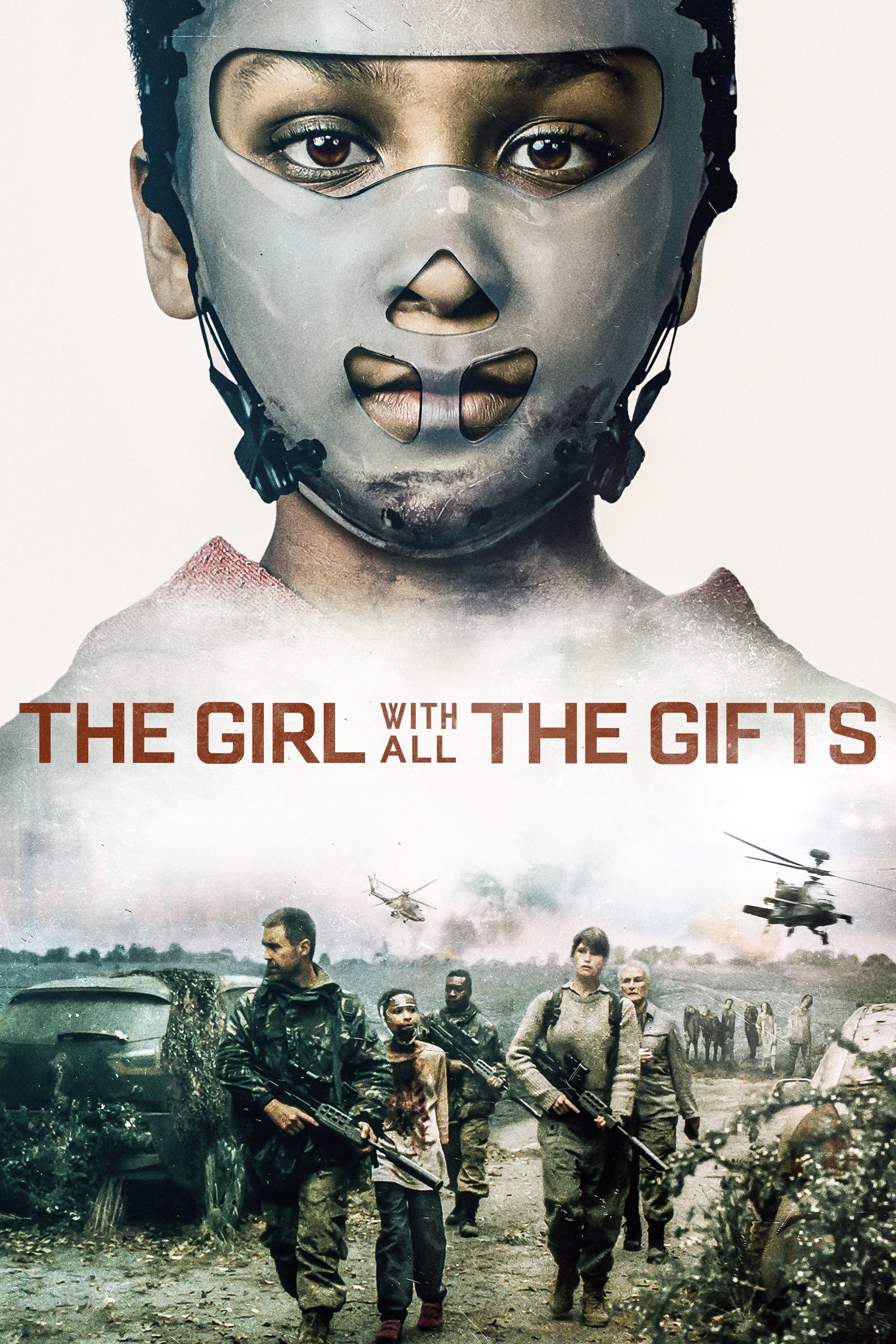
A fungal infection has hollowed out Britain. The afflicted, called hungries, are quick, mindless and ravenous, and the survivors who have not been overrun cling to a fortified base where the work of saving the species is supposed to be happening. The work centres on the children: a small group of infected boys and girls who, against all the rules of the genre, can think, talk and learn. They are strapped into wheelchairs and rolled into a classroom each morning under armed guard, and the brightest of them is Melanie, who loves her teacher, recites her lessons, and is also a thing the soldiers are terrified to stand next to without a muzzle. When the base falls, a teacher, a soldier, a scientist and the girl are forced out into the ruined country together, each wanting something different from her.
The cast
The film belongs to Sennia Nanua, a newcomer asked to carry a lead role that swings between heartbreaking and genuinely unnerving, sometimes inside the same scene, and she does it without a wobble. Melanie has to be a polite, eager child and a predator who has to be reminded not to eat the people she loves, and the performance holds both without ever tipping into a stunt. Around her, Gemma Arterton gives Helen Justineau the warmth the story needs, the one adult who treats Melanie as a pupil rather than a specimen. Paddy Considine, always good at men whose hardness is a kind of fear, makes Sergeant Parks more than the standard soldier who learns to care. Glenn Close, as the scientist hunting a cure, supplies the cold half of the argument: she sees a cure where everyone else sees a little girl, and the film is honest enough not to make her simply wrong.
The craft
Colm McCarthy comes from television, and he brings its discipline rather than its smallness. The infected are shot in real space with real stunt performers wherever the money allows, and they move with a horrible stillness-then-speed that owes more to Boyle than to Romero. The ruined cityscapes, when the budget finally stretches to them, are handsome and strange, nature reclaiming the motorways. The standout is the score by Cristobal Tapia de Veer, all clicking, chirping, insectile textures that sound like the infection itself, and it does as much to unsettle as anything on screen. There are seams. A few of the wider shots betray how little there was to spend, and the middle stretch sags as the group trudges. But McCarthy keeps the camera close to Melanie’s point of view, and the world stays coherent and grim and convincingly emptied out.
How it stacks up
The obvious comparison is 28 Days Later, and this is the closest anyone has come to its tone without simply copying its sprint. But the film it most resembles in spirit is Children of Men: a Britain of checkpoints and last-ditch science, where the future of the species walks around in a single fragile body and everyone wants to either protect it or open it up. There is a touch of I Am Legend in the lone-cure obsession, and anyone who has played The Last of Us will recognise the bond between a hardened adult and a special, infected child who may be the cure or the end of us. What lifts this above its models is its willingness to take the monster’s side. Most infection films ask whether humanity survives. This one quietly asks whether it should.
Critics versus the rest of us
Critics have taken to it warmly, with the reviews clustering around 86% and singling out Nanua and the freshness of the angle. Audiences are cooler, nearer two thirds, and the gap is easy to read: viewers who came for a straight zombie picture get something slower, sadder and more morally awkward, and a final act that refuses the comfortable ending. I am on the critics’ side here, with a caveat. The thinking is what makes it worth your time, and the budget occasionally lets the thinking down. But a small film reaching for a real idea earns more from me than a large one reaching for nothing.
Verdict
This is intelligent science fiction wearing a horror coat, and the intelligence is real rather than decorative. The world-building is spare but consistent, the atmosphere is bleak in the good way, and the ending has the nerve to follow its premise all the way to a genuinely unsettling place rather than blinking. It is held together by a debut performance that deserves to launch a career. The seams show, the middle drags, and it will not convert anyone who simply wants the chase. For me it is one of the most interesting British genre films in years, and the kind I expect to revisit. 8⁄10.
Availability: In UK cinemas now, on limited release through Altitude. A DVD and Blu-ray release should follow before the year is out.
Update
Added since this review first appeared: Sennia Nanua’s performance went on to win her the London Film Critics’ Circle young performer award, confirming the talent the film puts front and centre. M. R. Carey has since published a companion novel, The Boy on the Bridge, set in the same infected Britain. The film has settled into a reputation as one of the stronger British genre pictures of its decade, the smart cousin to the zombie boom rather than another body on the pile, and it now streams across the usual platforms with a steady disc presence to match.
BBFC content advice
Rated 15 by the BBFC for strong bloody violence, strong language. The notes below may contain spoilers.
Violence: There are scenes in which zombies are shot, stabbed and bludgeoned, resulting in several bloody impact wounds. There are also scenes in which humans are attacked and bitten, resulting in some gory wound detail. There is also a scene in which a girl attacks and eats a cat.
Language: There are several uses of strong language (‘f**k’), as well as milder bad language (‘shit’, ‘bollocks’, ‘bloody’, ‘sod’, ‘frigging’, ‘Jesus’, ‘Christ’, ‘hell’).
Additional issues: In one scene, there is brief sight of adult magazine covers.
Source: British Board of Film Classification (bbfc.co.uk).